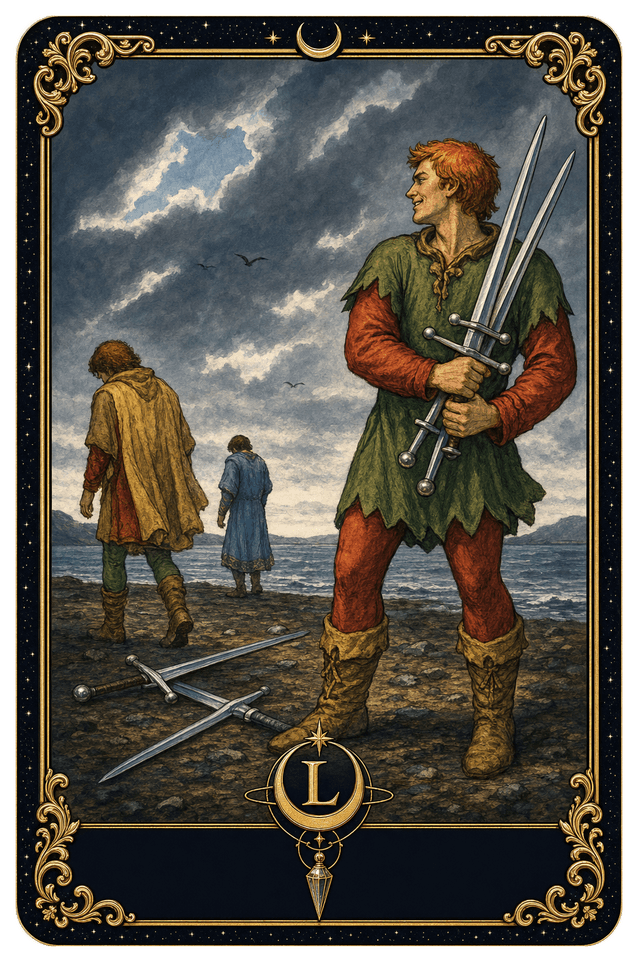
A man with a smirk gathers up three swords, with two more lying at his feet. Two figures walk away toward the water, one with his face in his hands. The sky is torn with ragged cloud. He has won, and no one will stand with him. This is conflict, defeat and hollow victory.
Uprightconflict
Uprighta hollow victory
Uprightpride
Uprightdefeat
Reversedmaking peace
Reversedregret
Reverseda lingering grudge
Upright
Someone wins this, and it costs too much. The Five of Swords shows a fight in which pride matters more than what is right: hard words, humiliation, winning at any price. Ask yourself whether you need to win this argument. If you are the one who lost, pick up your dignity and walk away. Not every battle deserves you.
Reversed
Now the fight is over and the damage is being counted. There is a wish to make peace, regret over what was said, or an old conflict still smouldering because someone holds a grudge. Apologise where you owe it, forgive where you can, and do not go back for another round.
In love
Arguments that wound. One of you needs to be right and the other pays for it. Words are used as weapons. Stop keeping score. For someone alone, a past relationship has left bitterness or distrust behind. Do not bring that fight into the next one.
In work
The atmosphere is hostile: rivalry, unfair tactics, someone who takes the credit or wins by underhand means. Do not join in. Protect your interests, choose your battles, and refuse any success that would cost you your integrity.
Yes or no?
No. This is a conflict with no real winner, and you do well to leave it.