
When the Reading Says No: The Ethics Real Readers Learn
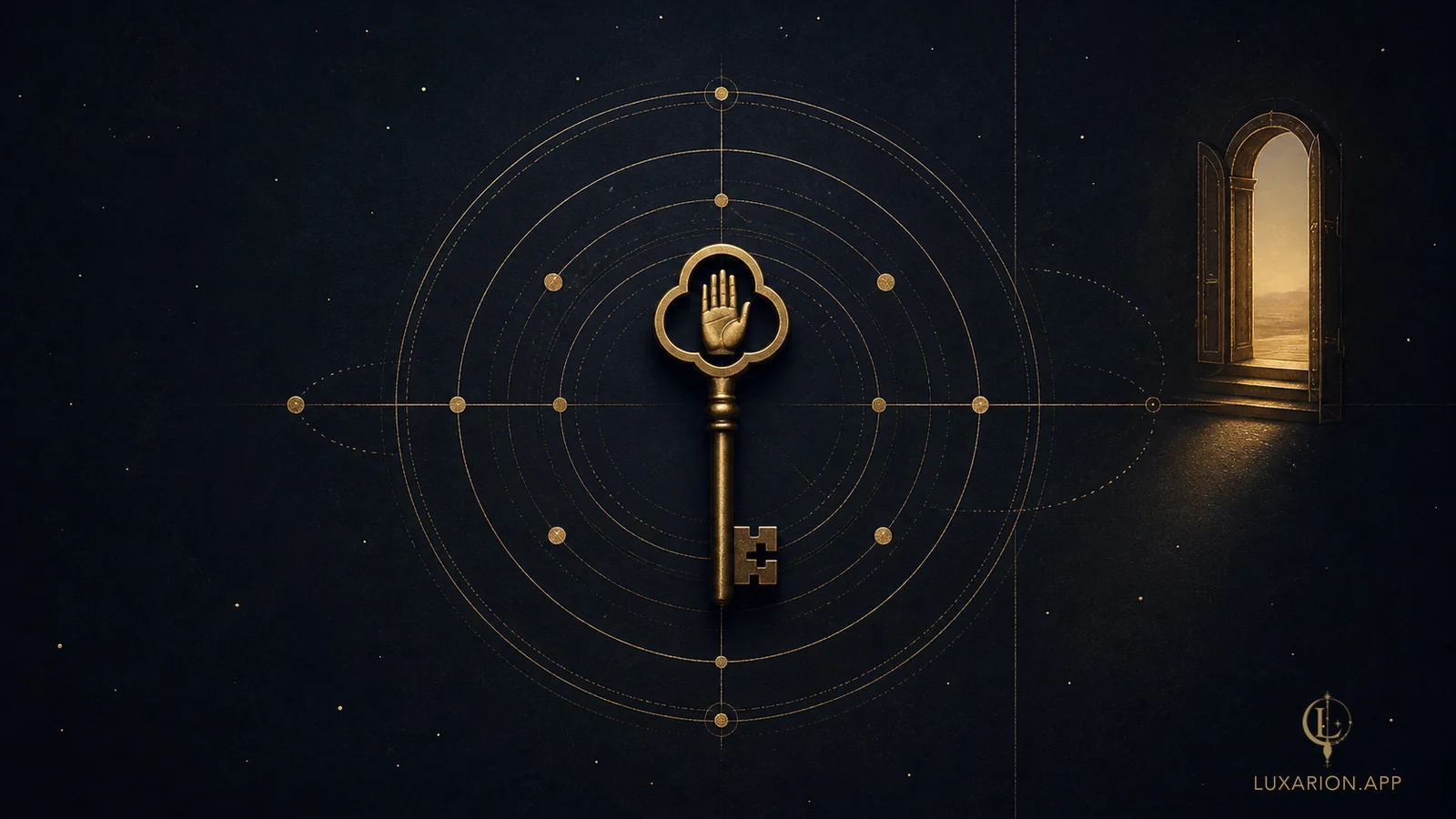
The oldest skill in every divination craft is knowing when to refuse: what the traditions forbid, why the certain reader is the risky one, how to stop.
Everything else in this library has been about how to read. This one is about the harder skill — the one that separates a craftsperson from a performer.
Knowing when not to.
Every serious divination tradition has a doctrine of refusal, and it is not squeamishness. It is the discipline that keeps the whole practice honest: the load-bearing wall behind every other room. A craft that cannot say no has no way to mean yes.
What the traditions actually forbid
The prohibitions are old, specific, and strikingly consistent across crafts that never met — which is the first thing worth noticing about them.
You do not read for someone in fresh grief or acute fear. The cup, the cards, the chart will only mirror the storm back, and a person drowning does not need a photograph of the water.
You do not answer questions about a third person's private heart or hidden acts. That is surveillance. The coffee tradition, the tarot tradition and the rules of horary astrology all draw the same line, and we traced it in how to ask about love.
You do not deliver a fixed death or a doomed diagnosis. No lineage of palmistry ever read lifespan in a line — a myth we dismantled in hands change — and no reading tradition claims the ground a physician stands on.
You do not answer the same question asked twice in desperation. The classical horary rule that a repeated question is not yet ripe is really a rule about the asker's readiness, not the sky's.
Four crafts, four continents, four vocabularies. One list. That convergence is not a coincidence, and the reason for it is the subject of the next section.
Why the same four rules keep appearing
Traditions that share no language and no lineage do not arrive at identical prohibitions by chance. They arrive at them because each one is a scar.
Every rule on that list is the fossil of a harm that a practice discovered the hard way and then wrote down so that the next generation would not have to discover it again. This is exactly how professional ethics form in every field — the Hippocratic tradition is a list of the same kind, and modern medical ethics is largely a record of what went wrong before the rule existed.
Look at what each prohibition protects and the pattern is obvious.
The grief rule protects against a real mechanism: a person in the acute hours of loss or in panic will take an ambiguous image and fill it with the worst thing they are already carrying. The reading does not calm the storm; it gives it a shape and a date.
The third-party rule protects privacy — the absent person never consented to be discussed, and a craft that reads them has quietly become an instrument of someone else's suspicion.
The death and diagnosis rule protects the boundary of competence. These are domains where the craft has nothing to offer and where being wrong is catastrophic.
The repeated question rule protects the asker from themselves, which is the subtlest of the four and the one beginners abandon first.
Once you see them as scars rather than superstitions, they stop feeling like restrictions and start reading as accumulated experience — which is what they are.
Why the certain reader is the risky one
Here is the counterintuitive core, and every seasoned practitioner arrives at it eventually: the reader to trust least is the one who is never uncertain.
A frightened person hands a reader enormous, temporary power. The whole ethical weight of the craft rests on not using it. Someone arrives vulnerable, wanting an answer, prepared to believe — and for the length of that session the reader can say almost anything and be believed. That is the situation the rules exist for.
The reader who always has a definite answer, who never says "this is beyond what a cup can tell", who can locate a precise catastrophe in any spread, is not gifted. They are unsupervised.
The traditions guard against exactly this with the doctrine of the humble instrument. The cup holds a sitting. The cards hold up a mirror. The chart describes weather. None of them issues verdicts — and a reader who speaks as if they do has quietly promoted themselves from interpreter to oracle.
The tell is easy to describe and easy to check. A practitioner with years behind them says "I don't know" during most readings, and says it without embarrassment, because in their understanding of the craft not knowing is a normal state rather than a failure. If you have sat with a reader for an hour and they have never once said it, that is information about the reader, not about their gift.
The two questions before every reading
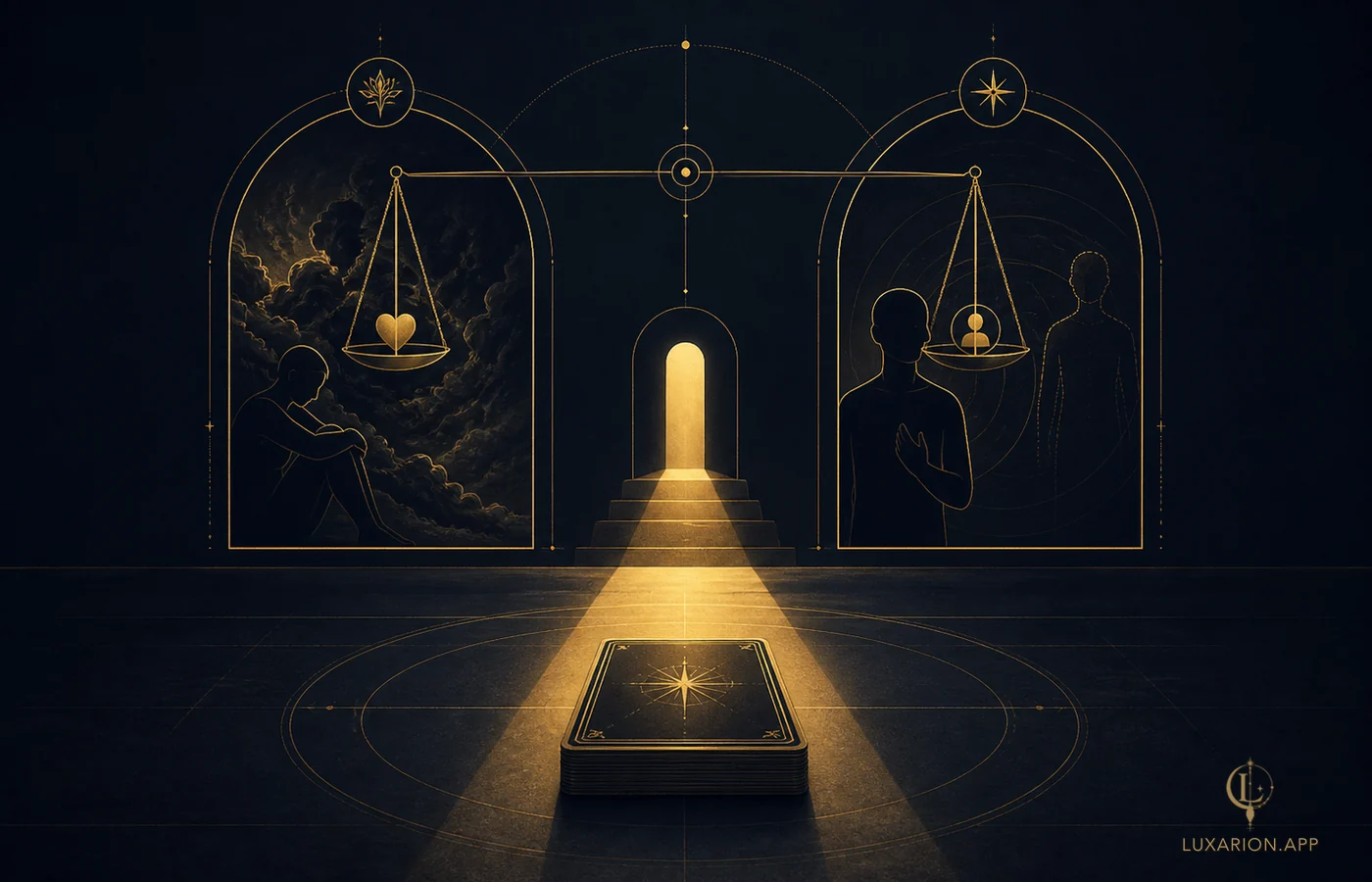
Long-practised readers run a silent checklist before turning a single card, and it has two items.
First: can this person bear any answer right now? Not will they like it — can they carry it? If the honest answer is no, if they are in the acute hours of a loss or asking from the floor of a panic, the reading is postponed, not performed.
Second: is this mine to read? If the question is really about someone who is not in the room, the craft's move is to turn it gently back toward the only person present, or to decline.
Two questions, five seconds, before any material is touched. They are the whole of the doctrine in practice, and everything below is elaboration on how to act when either answer is no.
It is worth noticing what is not on the list. Nothing about whether the question is serious enough, whether the person deserves an answer, whether the reader feels inspired. The checklist is entirely about capacity and standing — which is the mark of an ethic that was built by people who had actually done harm and did not want to again.
Postponement is not refusal of care
The single most useful distinction in this whole subject is between saying no to a reading and saying no to a person, and beginners routinely collapse them.
Someone in the first week of a bereavement does not need to be told that this craft has nothing for them. They need to be told that this is not the week, and to be offered something that is available now: a cup of coffee without a reading in it, a conversation, a return in a month.
Practitioners describe this as the difference between closing a door and moving an appointment. The words matter. "I won't read this" and "not today, and here is why" produce completely different rooms, and the second one keeps the person able to come back — which is often the entire point, because the useful reading is the one they will be able to hear in six weeks.
The traditions have a phrase for this in more than one language, and the sense is always the same: the matter has not ripened. It says nothing about the person's worth and everything about timing, which is why it can be said without wounding.
And where the need is beyond the craft entirely — where someone is in danger, or unwell, or needs a professional the reader is not — the mature move is the plainest one: say so, and point at the right door. Knowing where the referral lies is part of any competent practice, not an admission of failure.
How to say no without wounding
The skill is in the delivery, and it can be taught. Practitioners across crafts converge on a handful of moves.
Name the boundary as belonging to the craft, not to the person. "The cup doesn't read other people's intentions" is a statement about the cup. "I don't think you should be asking that" is a judgement about them. The first closes a door without a bruise; the second leaves one.
Give the reason. A refusal without a reason reads as disapproval, and people fill silence with the worst interpretation. One sentence of explanation prevents an hour of speculation.
Offer the version you can do. Almost every forbidden question has an adjacent permitted one. "What is he thinking about me?" becomes "what is your position in this, and what would you need to see?" That turn is the most-used move in the craft and it satisfies the real need behind the question far more often than the original would have.
Do not moralise. The person asked a human question. Lecturing them about why it was the wrong question is a second, unnecessary refusal.
Stop cleanly. If a reading needs to end early, end it and say why in a sentence. Trailing off, hedging, or filling the rest of the time with vague material is worse than stopping, because it teaches the querent that something was too bad to say.
The refusals built into the material
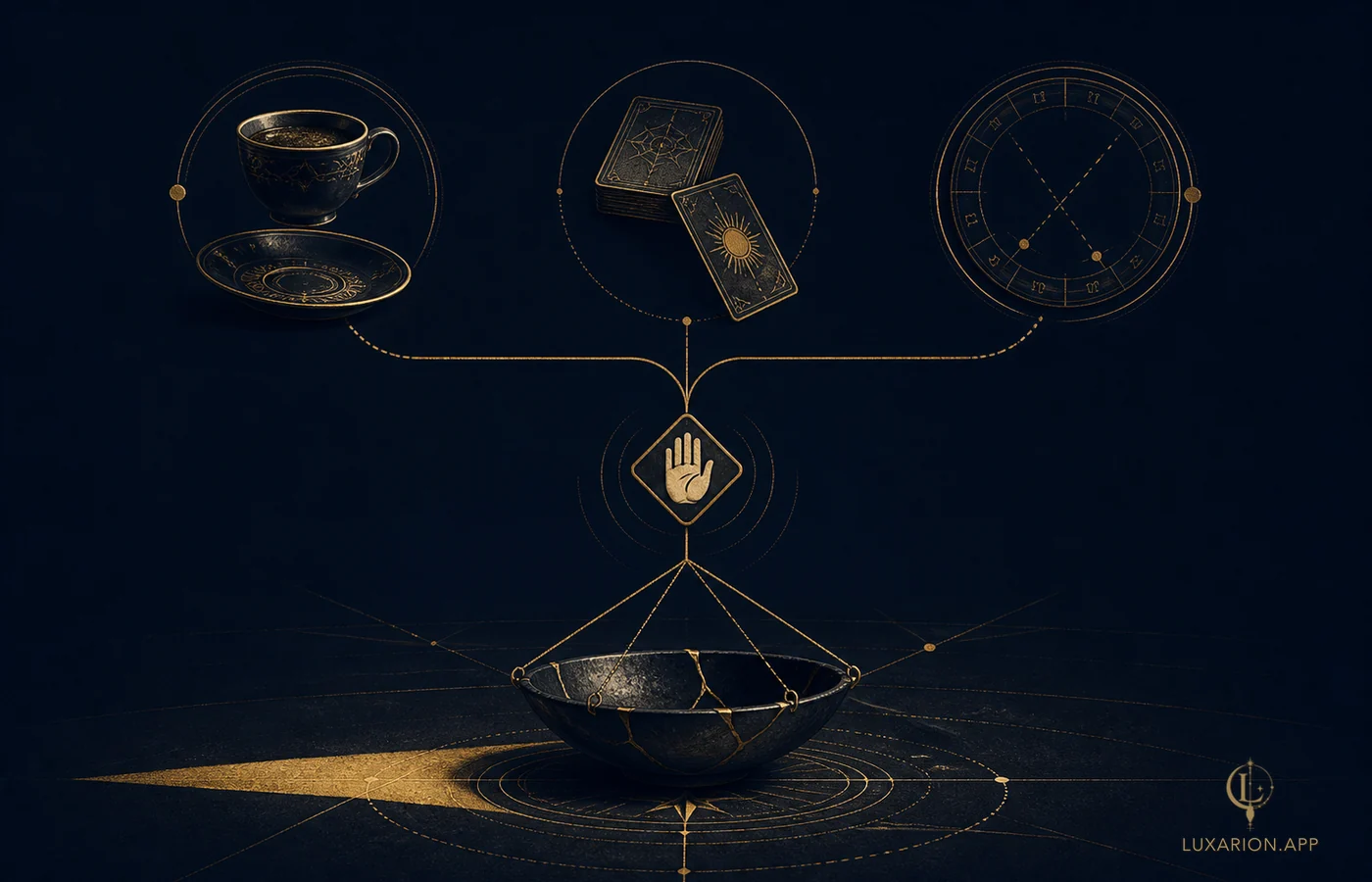
What is striking about the older crafts is that they did not leave refusal entirely to the reader's judgement. They built it into the objects.
In the coffee tradition, a cup that will not lift from the saucer is read as a matter not yet ready to be spoken about, and the reading stops there. In tarot, a card that falls from the deck during shuffling, or a spread that comes out incoherent, is treated in many lineages as a sign to stop rather than a puzzle to force. In horary practice, several classical "considerations before judgement" invalidate a chart outright — the question is malformed, the moment was wrong, the reading does not proceed.
These are not superstitions bolted on. They are institutional design, and rather good design at that. A rule that lives in the material cannot be argued away by a reader who is having a confident day, and it gives a practitioner a way to stop that does not require them to claim personal authority.
That last point is the reason such rules survive. Saying "I have decided not to read this" puts the reader's judgement on trial. Saying "the cup didn't lift" ends the session without a contest. The tradition understood that refusal is socially expensive and gave its practitioners a way to make it cheap.
When the querent pushes back
The hard part is rarely deciding to refuse. It is holding the refusal when someone is upset, and this is where practitioners actually get tested.
The most common form is not aggression but pleading — the question re-asked slightly differently, the assurance that they can handle it, the offer of more money. Every reader who has worked for any length of time knows the shape of it.
What the traditions counsel is repetition without escalation. Say the same sentence again, in the same tone, without adding new reasons. Adding reasons invites debate; the person will argue with the reasons and you will find yourself defending a position rather than holding a boundary. One sentence, unchanged, is remarkably effective and considerably kinder than a lengthy justification.
And when the pressure comes with an offer of payment, the answer becomes simpler rather than harder. A boundary that money can move was not a boundary. Every honest lineage in this field is explicit about this, because the alternative is the oldest form of harm in the trade — which is the next section.
The oldest bad practice, named plainly
There is one specific abuse that every craft in this family warns about, in every century, in every region, and it deserves to be stated without euphemism.
A reader manufactures alarm and then sells the remedy for it.
The mechanism is always identical. A frightening reading is delivered — a curse, a blocked path, a catastrophe forming — and the same person who identified it offers, for a fee, the thing that will remove it. Often the fee escalates. Often the danger is described as urgent so that there is no time to consult anyone else. This is straightforward fraud wearing the clothes of a tradition, and the traditions themselves say so.
The structural protection is worth knowing because it is simple: the person who names a problem should not be the person selling the cure. That separation is the norm in every field where it matters, and it is exactly the norm this abuse violates.
There are practical tells, and they are the same everywhere. Urgency that forbids consultation. A price that rises once you are frightened. A remedy available only from the person who found the problem. Insistence that you tell no one. A reading that leaves you more dependent on the reader than when you arrived.
None of that resembles the craft as it is actually practised. The tradition's own answer to a hard card is another card, not an invoice — as we set out in the Tower is a mercy, where the answer to the most feared image in the deck is the Star, which nobody sells you.
Reading for someone who is not there
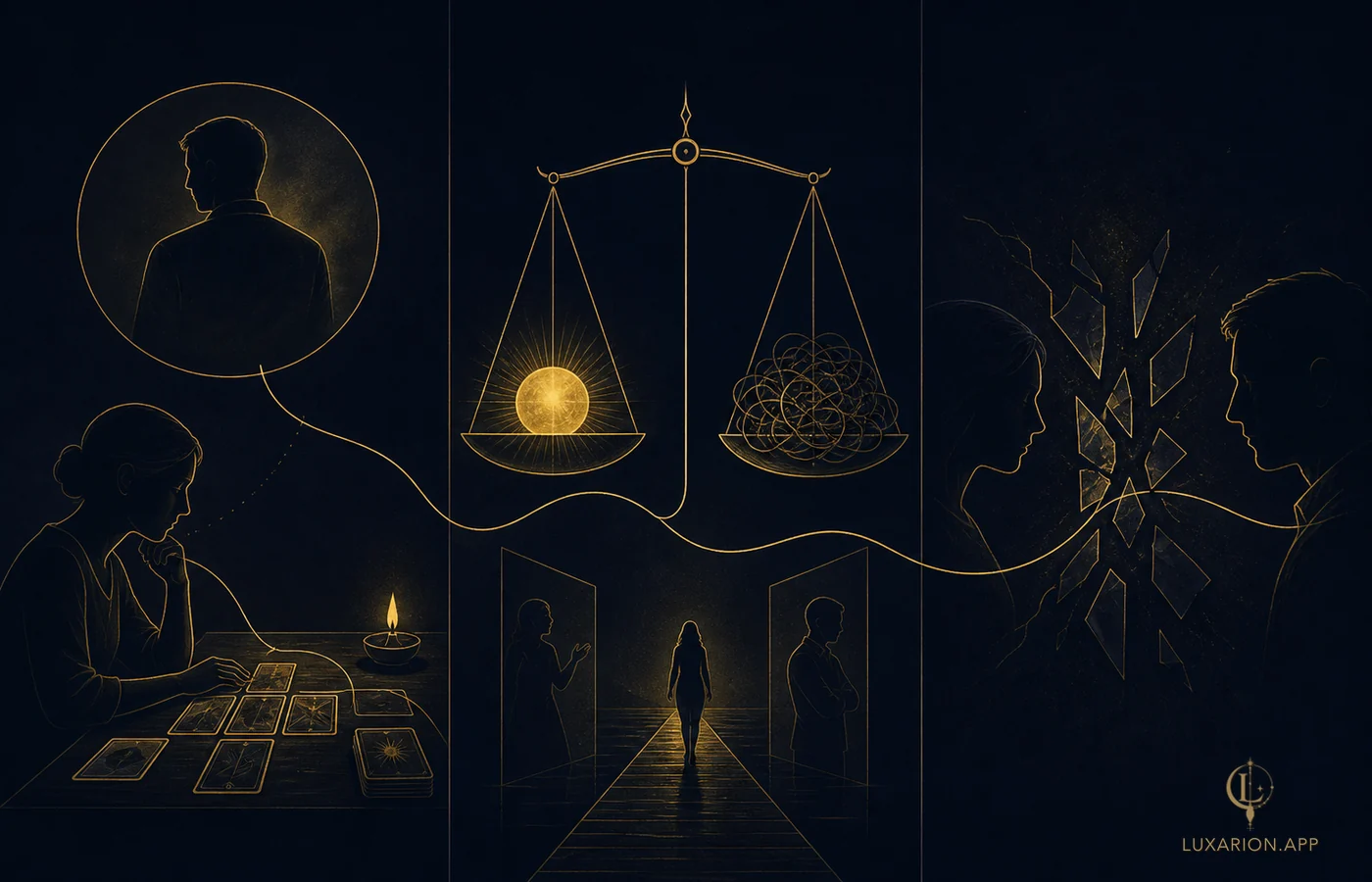
This is the prohibition that gets tested most often, because the request is so understandable, and it is worth explaining rather than merely asserting.
Someone wants to know what a partner feels, whether a colleague is undermining them, what a parent really thinks. The desire is entirely human. And the craft's refusal is not primarily about the absent person's privacy, although that matters. It is about what the reading would actually be doing.
A reading of an absent person cannot be checked, cannot be corrected, and will be carried back into a relationship as though it were evidence. It arms one party in a dispute with something that feels like knowledge and is not. Practitioners describe the aftermath consistently: the reading becomes a fixed belief about the other person, and the relationship is then conducted against that belief rather than against the person.
What the craft offers instead is a genuine substitute rather than a consolation prize. The question turns: not what they feel, but what you are doing with not knowing. Where you are in it. What you would need in order to ask them directly. What it would cost to keep not asking.
Readers report that this turn is almost always accepted, and that the answer people leave with is more useful than the one they came for. That is not a happy accident. It is because the real question underneath "what do they feel about me" is usually "what do I do now" — and that one is legitimately readable.
The repeated question
The subtlest rule on the list, and the one that most needs its reasoning spelled out.
Someone receives an answer they do not want and asks again — the same evening, the next week, from a different reader. The traditions treat this as a signal rather than an offence: the question has not ripened, or the answer has not been absorbed, and either way another reading will not help.
The reasoning is not mystical. A reading is a structured occasion for looking at something. Looking twice in an hour does not produce more information; it produces a search for a more comfortable image, and it teaches the person that they can shop for the answer they want. Once they have learned that, the craft cannot tell them anything, because they will simply keep drawing until the material agrees with them.
The same logic governs the daily practice, incidentally — re-drawing is the failure the tradition warns about most consistently, and we set out why in one card a day.
What a practitioner does instead is name the pattern and set a horizon. Not today, and not this week. Write down what you were told, and look at it in a season. That instruction does more for the person than a second reading ever could, and it is also the honest answer.
What the ethic protects
It is worth being clear about who all of this is for, because it is not only the querent.
It protects the person in the chair — from a frightening sentence they cannot unhear, from a verdict about their own life delivered by a stranger, from being sold something they do not need.
It protects the reader. A practitioner without boundaries burns out, and quickly. Being asked to carry every crisis, name every outcome and be certain on demand is not sustainable for anyone. Refusal is what makes a long practice possible.
It protects the craft. Every tradition in this family has had its reputation shaped by the small number of people who ignored these rules, which is why the practitioners are so consistently vocal about them. The rules are not defensive posturing. They are the thing that distinguishes the household craft from the version that gave it a bad name — a distinction we drew in is coffee reading real? and in is tarot accurate?.
And it protects the reading itself. A craft that will say anything means nothing. The refusals are what make the material trustworthy on the occasions when a reader does speak — which is the whole argument, compressed.
Reading for yourself: the hardest refusal
Everything above is easier to apply to someone else, which is why the traditions give the self-reader special warnings.
All the rules still hold, and all of them are harder to enforce with no second person in the room. You are the one who decides the question is fair. You are the one who decides you can bear the answer. And you are the only one who will know if you draw again.
Practitioners who read for themselves use a small number of safeguards, and they are worth copying. Write the question down before you begin, so you cannot quietly change it afterwards. Write what you saw before interpreting it. Do not read for yourself in the acute hours of anything — the rule that protects a grieving querent protects you identically. And do not re-draw; if you are tempted, that is the reading.
The most useful self-rule of all is a horizon. Whatever you drew, look at it in a season rather than in an hour. It converts a practice that can easily become anxious into one that accumulates, which is the difference between a habit that helps and one that does not.
The short version
Compressed to what a practitioner actually carries, the doctrine of refusal is four lines.
Not in the acute hours. Grief and panic are not the conditions under which anything ambiguous should be read. Postpone, and mean it kindly.
Not about the absent. Turn the question back to the person in the room. There is always a version that belongs to them.
Not beyond the craft. No dates of death, no diagnoses, no verdicts. Say what the material can carry and stop there.
Not twice. A repeated question is a signal, not a request. Set a horizon instead.
Around those four sits a fifth that is less a rule than a posture: say "I don't know" out loud, often. It is the sentence that keeps everything else honest, and it is the one that the practitioners with the most years behind them use most freely.
That is the ethic. It is older than any of the individual crafts that hold it, it was assembled from actual harm rather than from principle, and it is the reason a reading is worth having at all. If you would like one conducted inside those limits, that is what our spiritual reading is — a table where no is a complete answer, and where the reader will say it when it is the true one.
The library teaches the craft. A reading applies it to you.
Get your personal reading