
How to Ask About Love: The Question Is Half the Reading
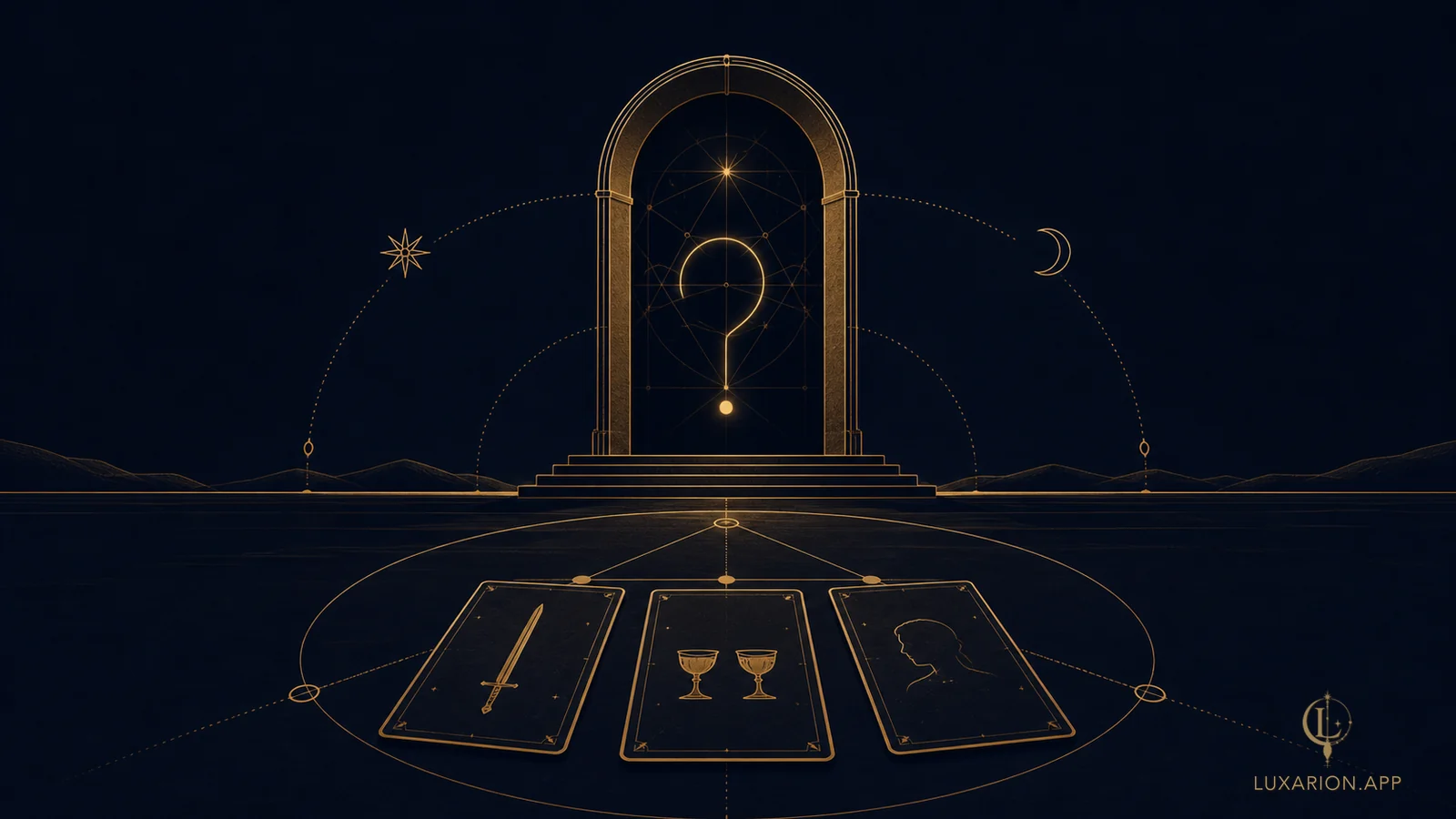
Every divination lineage teaches question-craft first: what horary astrology's strict rules, tarot's open questions and the ethics of third-party readings all know about love.
Watch an experienced reader work and you will notice something the client rarely sees: most of the session's skill is spent before a single card is turned. It is spent on the question. Love questions arrive at every reader's table more than all other questions combined, and they arrive in the worst possible shape — because longing writes terrible questions.
A lineage built on question-craft
This is not a modern therapeutic gloss; it is the oldest technical layer of the divination arts. Horary astrology — the branch that answers a single question from a chart cast for the moment of asking, codified in England by William Lilly's Christian Astrology (1647), still the working manual three centuries on — refuses malformed questions outright. The question must be sincere, singular, and genuinely undecided; Lilly warns against askers who test the astrologer, ask twice, or ask what they have already resolved. The tradition understood something profound: a divination system is a mirror, and a blurry question produces a blurry face. Ask carelessly and even a perfect oracle can only echo your confusion back with better production values.
The three shapes love questions arrive in
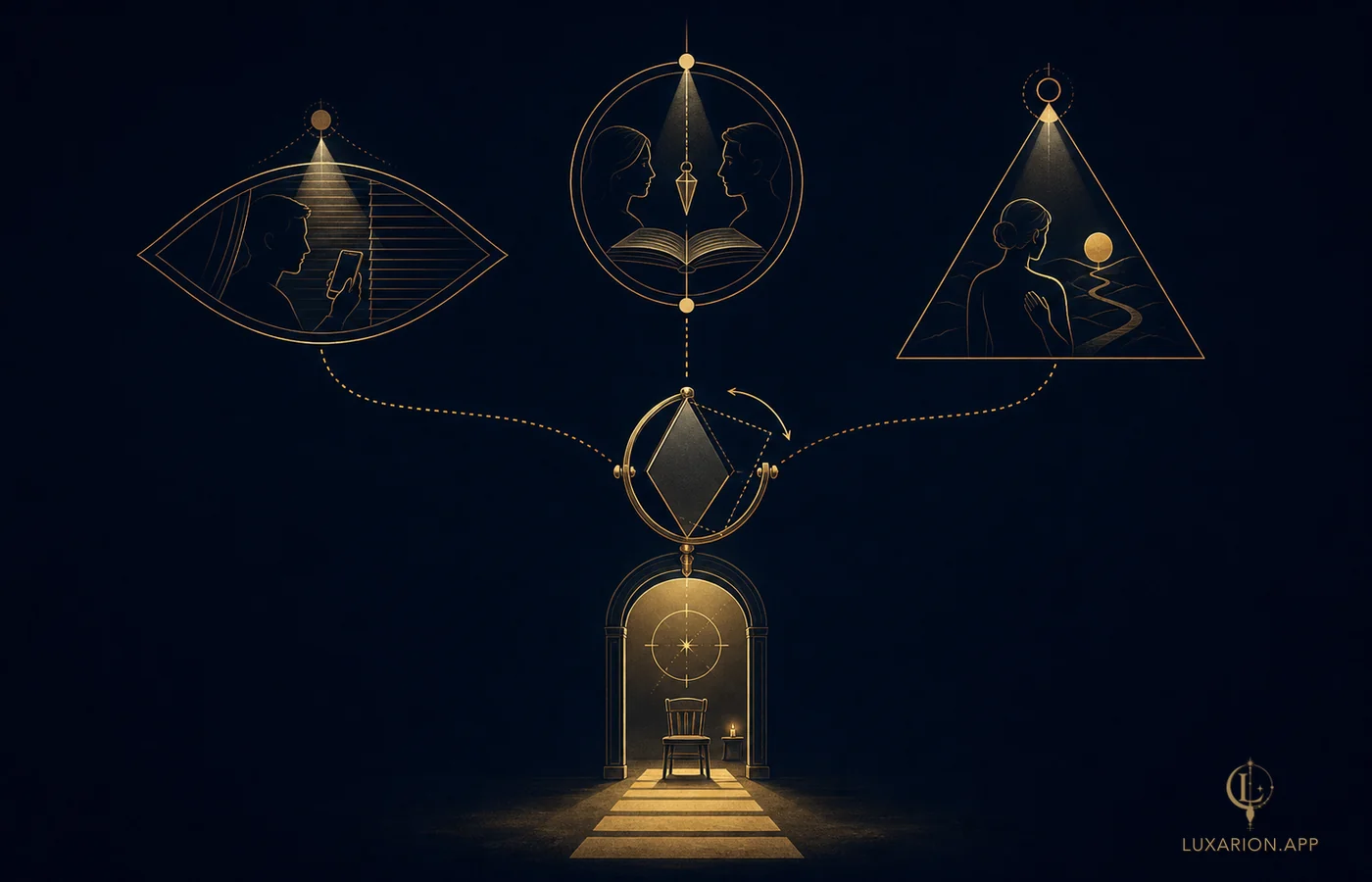
Twenty years at any reading table sorts love questions into three shapes. There is the surveillance question — what is he thinking, who is she texting — which no honest craft can answer and no kind craft should. There is the verdict question — will we end up together, yes or no — which treats two free people's future as if it were already printed somewhere, waiting to be leaked. And there is the orientation question — what is this longing asking of me, what pattern am I repeating, what would loving well look like this month — which is the only shape that gives a reading room to work. The reader's first craft is conversion: taking a surveillance or verdict question and, gently, with the client's consent, turning it ninety degrees until it faces the only person in the room.
The absent third

Here the tradition draws its sharpest ethical line, and readers with long practices are strict about it: the person you love is not present, and a reading about their private heart, conducted without them, is surveillance dressed in velvet. The old horary practitioners had a version of this too — Lilly's rules bind the asker to their own concern. The workable form is always the relational one: not does he love me? but what is true about how I am loving? Not will she come back? but what am I keeping open, and at what cost? This is also where charts help more than verdicts ever could — two full charts, read together, give a couple language rather than prophecy, as we showed in Compatibility Is a Verb.
Building the question
The craft, concretely. Ask one thing — a question with an 'and' in it is two questions wearing a coat. Ask about a season, not an eternity: 'this autumn' gives the reading a frame that 'ever' dissolves. Ask about your side of the door: your pattern, your next step, your cost. And ask when you can bear any answer — the old rule that a question asked in desperation is not yet ripe is the same rule we explore from the reader's side in When the Reading Says No. A daily single-card practice is the gymnasium where this muscle builds; a person who has asked one clean question every morning for a year cannot be handed a bad reading, as we suggest in One Card a Day.
What a good love reading returns
Ask a well-built question and something almost strange happens: the reading stops being about the other person at all. The cards, the cup, the chart — they begin to describe you in love: your reach, your guard, the exact place your generosity turns into disappearance. That is not a consolation prize. It is the only information that was ever yours to act on. The beloved remains what they have always been in every honest tradition — free. And the question, well asked, gives you back the same gift.
The library teaches the craft. A reading applies it to you.
Get your personal reading