

Compatibility Is a Verb: What Two Charts Actually Show
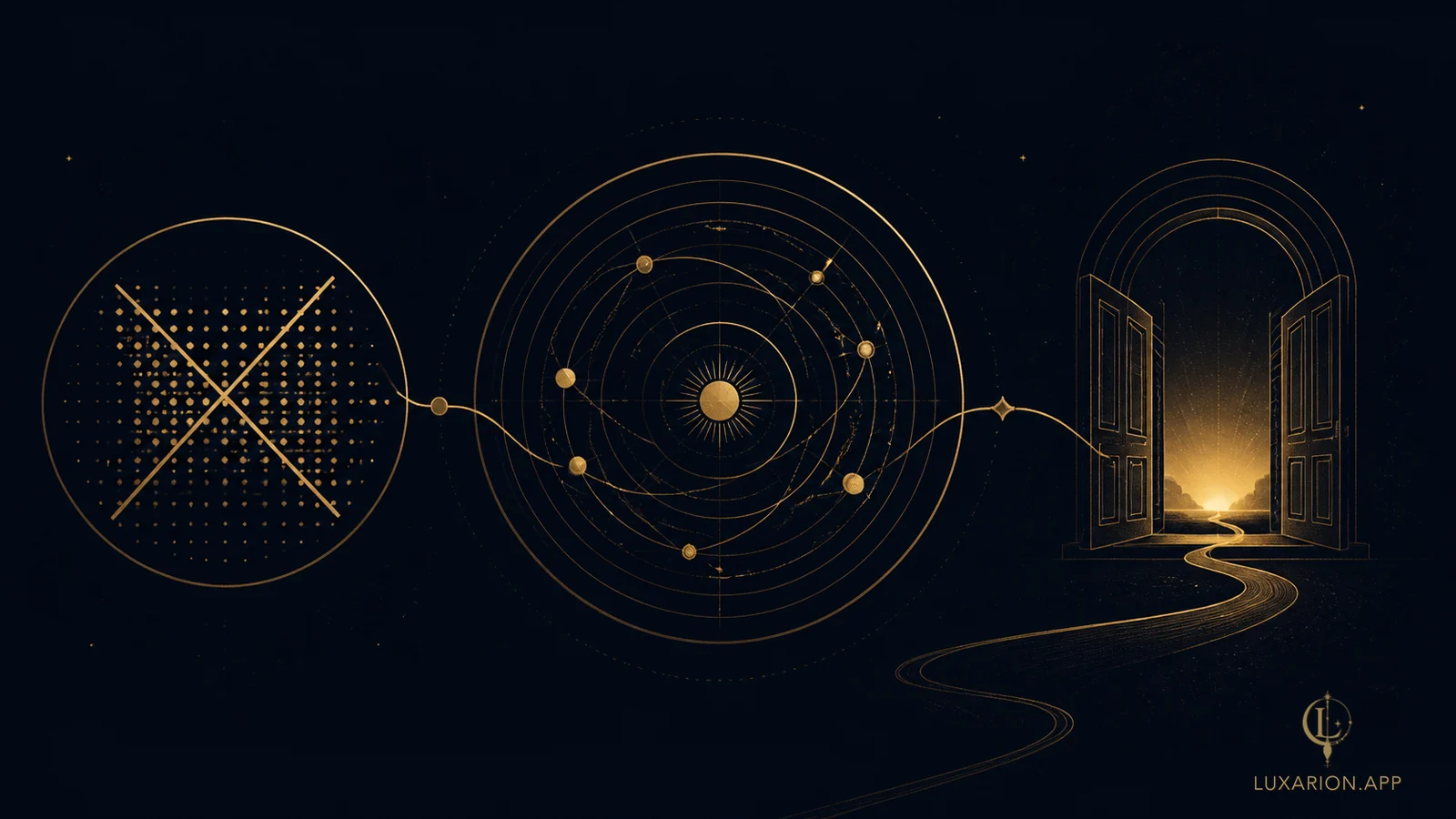
Sun signs are the first page. The craft compares two whole charts — Moons, ascendants, angles — and reads the weather that forms between them.
Ask an astrologer whether two people are compatible and watch what they reach for. Not a grid. Two charts, laid one over the other, and a set of angles measured between them — because what the craft reads is not a pair of labels but the weather that forms where two skies overlap.
That is the whole distance between the version of this subject everybody has met and the full version practitioners work in. The first starts from two Sun signs and how their temperaments meet — a true first page. The second reads where one person's Moon falls against the other's Saturn, whose Venus sits on whose ascendant, and how close those contacts run — and it produces a description of a living thing rather than a score.
Ptolemy was already doing it the second way in the second century. Every serious lineage since has done the same. The sign pairings in a magazine column are the first page of that much older practice, and mistaking the first page for the whole book is where almost every argument about this subject goes wrong.
So this piece does two things. It sets out what a chart comparison reads — the contacts, what each means, and what the reading shows about where a bond is heading. And it deals with the census study people cite, which measured something the tradition does not claim.
The census study, and what it measured
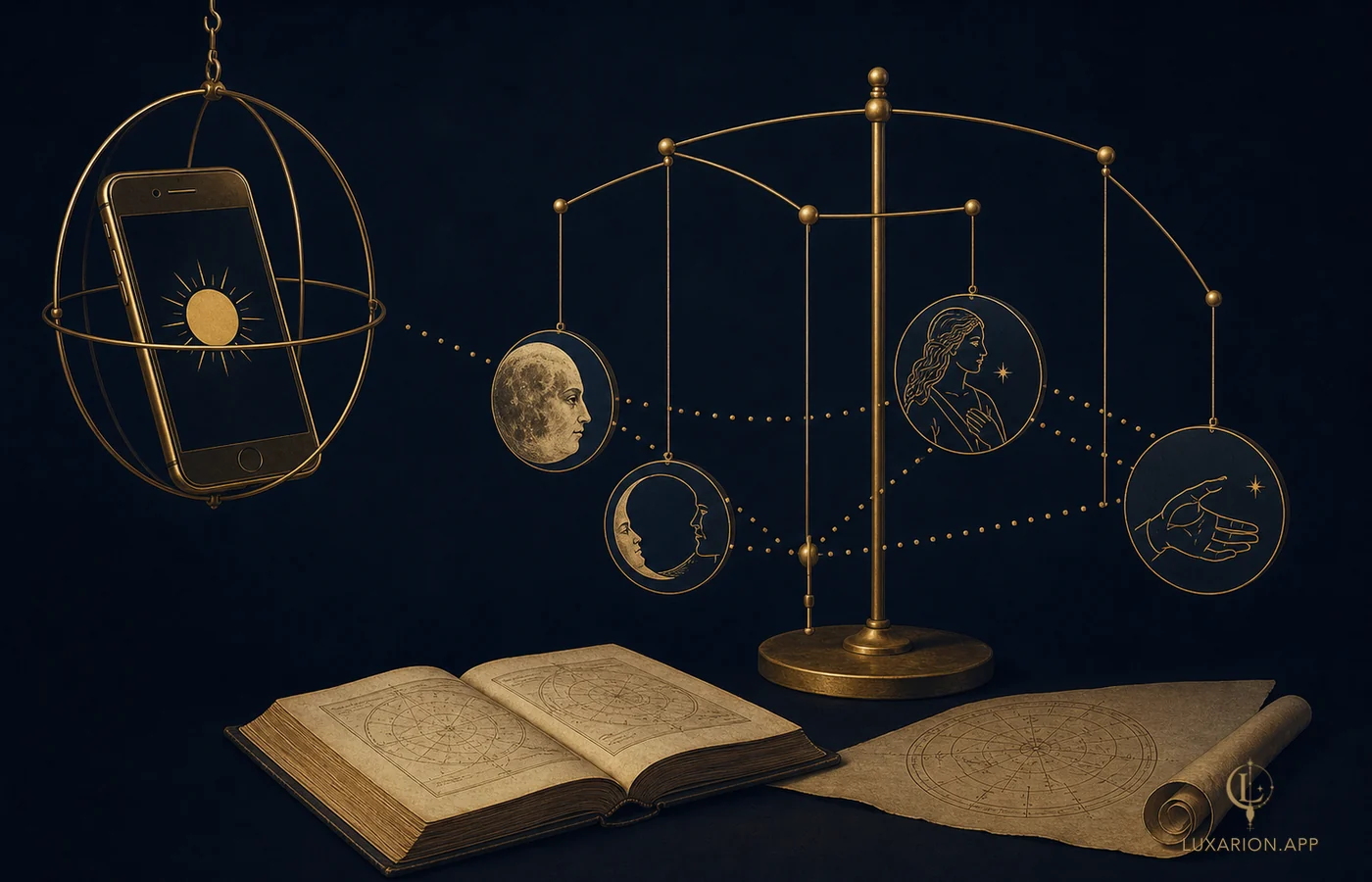
One study gets raised whenever this subject comes up, and it is worth knowing exactly what it counted.
In 2007 the demographer David Voas, then at the University of Manchester's Centre for Census and Survey Research, used the 2001 census of England and Wales to count one thing: whether some pairings of sun signs marry more often than others. The dataset was more than ten million married couples, and no pairing turned up more often than chance.
Be exact about what that measured. A census counts who marries whom by birth month. Astrology does not hold that the Sun sign decides who a person marries; it reads how two temperaments meet once they have — and it weighs far more than the Sun: the Moons, the ascendants and the angles between two charts, none of which a census can see.
Which is why the finding landed among practitioners with a shrug. To see why, you have to know what the old sources looked at when they were asked about a marriage.
Ptolemy, treating the subject in the Tetrabiblos in the second century, weighs the harmony of the luminaries — the Sun and the Moon — and especially the Moons: how two people's needs, moods and daily rhythms sit together. The Sun is one factor among many and not the decisive one. Working practitioners today start in the same place, for the same reason: the Moon changes sign every two and a half days and the rising sign every two hours, so both discriminate between people, and the Sun barely does.
That is the order of weighting Ptolemy set out eighteen centuries before anyone ran a census. The Sun sign is the opening indication — the first thing to know about how two temperaments meet — and the Moons and ascendants carry the finer grain of the bond, which is why a count of birth months touches only the first page of the reading.
Hold the distinction clearly. The study counted marriages by birth month. The practice reads the bond itself, and a full reading needs two birth times, which no census has ever held.
What a chart comparison offers instead of a score
The heart of the practice is synastry: laying two full charts over one another and measuring the angles between them. It produces a weather map of a relationship — where it is warm, where it strains, and which way the bond is moving.
Where one person's Moon meets the other's Saturn, the reading names a place where comfort will be asked to grow up: reliable, a little dry, needing deliberate warmth. Where Mars squares Venus, it names a friction that is also the spark. A bond is read in its contacts and their direction, which is why a serious practitioner describes it rather than giving it a number.
How that measurement actually works — and why an aspect means nothing without a stated tolerance — is a whole subject on its own, and it has its own piece: how two charts are actually compared. What matters here is the shape of the output. It reads the living weather between two people — where the warmth is, where the collisions recur, and which way the bond tends when it is left to itself.
The grammar of the thing
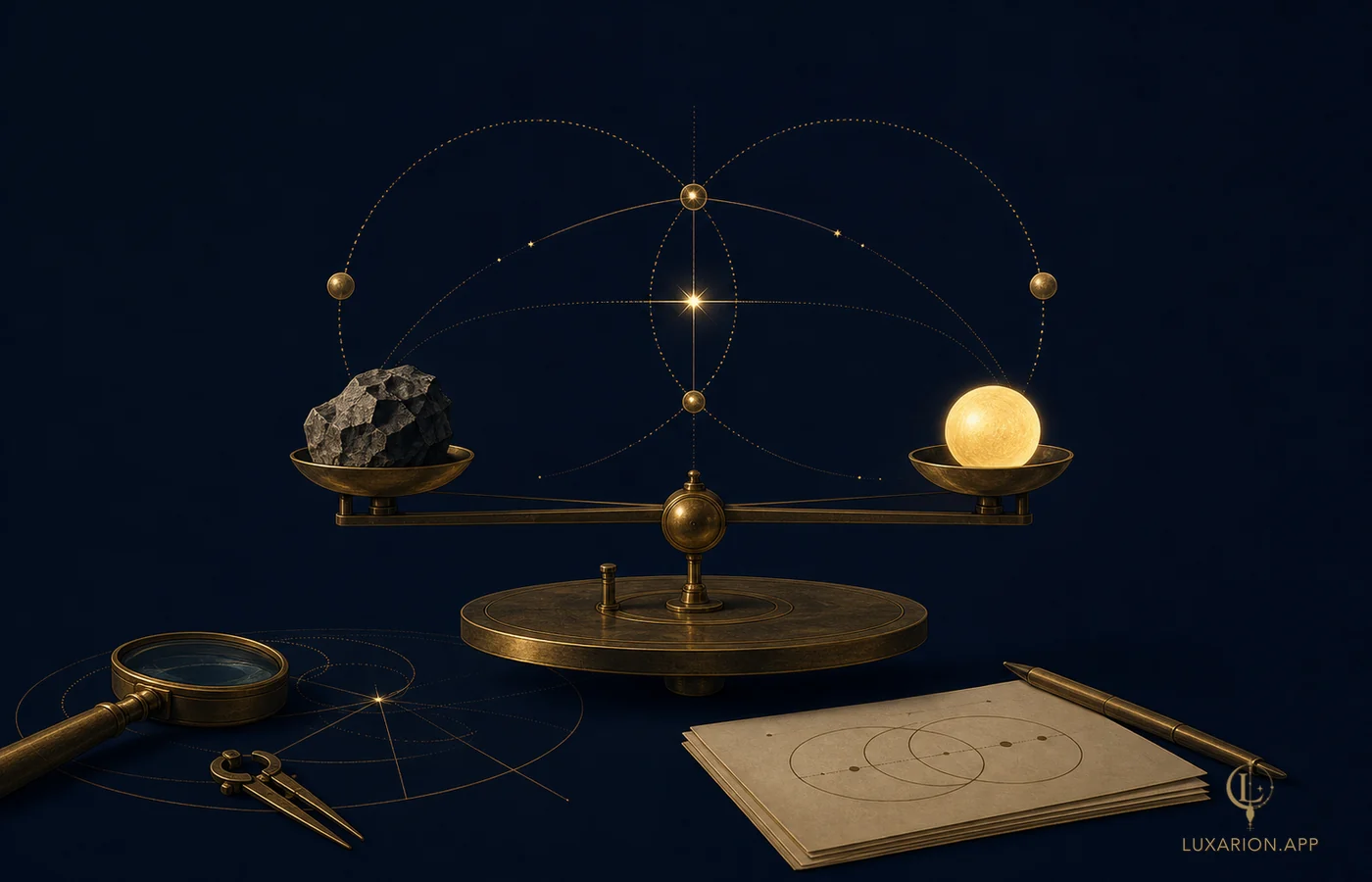
Which brings us to the sentence the article is named for, and it is the answer experienced readers give when someone asks whether they are compatible.
Compatibility is not a noun you possess. It is a verb you conjugate.
The chart contact that plays as friction between two people who avoid conflict plays as heat between two who know how to argue. The dreamy Moon–Neptune contact is enchantment in year one and fog in year seven — unless the two of them build the habit of asking each other plain questions. The chart shows the contact and where it tends; what the two do with it moves the road.
That is the tradition's own maxim — the stars incline, they do not compel — applied to two people at once. The chart shows where the bond is heading and what it asks of each person; the two of them walk it.
What this looks like in practice
A chart comparison gives a couple two things: a reading of where their bond is heading, and a non-accusatory vocabulary for the places they will keep meeting on the way.
"Your Saturn sits on my Moon" is a gentler sentence than "you always make me feel judged". It names what the planet is doing between them — the same recurring collision, without assigning fault — and it opens a conversation where the other sentence closes one.
That is what a comparison gives: the weather of the bond, its direction, and a shared language for its difficult places. It does not hand down a score, and it leaves the choice to stay with the two people whose bond it reads.
Two rules the practice holds itself to
No serious reader pronounces a relationship doomed. The tradition's own maxim — the stars incline, they do not compel — applies double when two free people are involved. A reader who says "leave him, the charts are bad" has left the craft for theatre.
A comparison describes the default weather, and people are not their defaults. Every long marriage is full of contacts that "should not work" and were simply worked. The map is real and worth having; the two of you are the ones walking.
A comparison can be read for one person asking about a bond, or for two people looking at it together — and the version two people look at together gives them the shared language this article describes. We take the question up from the asker's side in how to ask a question about love.
Common questions
So is zodiac compatibility real? Yes. Sun-sign compatibility is the opening indication — how two temperaments meet — and chart comparison is the full craft: it reads the contacts between two whole charts, and what it gives you is a description of how this particular bond behaves — where it warms, where it grinds, and where it is heading.
Why do compatibility charts and apps still use sun signs? Because they only have your birthday. Anything more needs two full charts, and most tools are not asking for that. Ours works that way too, deliberately: the compatibility checker is free, needs no account and answers in seconds, which is the right shape for a first look. When two people want the version this article describes, a compatibility reading asks for both charts because that is what the method requires.
Are some pairings genuinely difficult? The tradition says some contacts are harder work, not that some people should not be together. The distinction is the whole subject.
My partner and I are "incompatible signs" and it is going fine. Exactly as the craft would expect. The Sun signs are the first page; your Moons and ascendants carry the rest of the bond, and they are often where two "difficult" signs find their harmony.
What would actually be worth looking at? Both Moons, both rising signs, and the tight contacts between the two charts. That needs birth times, which is the practical cost of the more serious version.
Where to go from here
If you want the quick version, the compatibility tool does what it says on the tin. If you want the version this article has been describing, it starts with two real charts: the birth chart calculator is free, and a compatibility reading works from both charts rather than two birth months.
And if the sun sign has never quite described you, there is a reason and it has its own piece: why you are not your sun sign — the same argument as this one, turned on a single chart instead of two.
The library teaches the craft. A reading applies it to you.
Get your personal reading