
The Lot of Fortune: Where Sun, Moon and Ascendant Meet
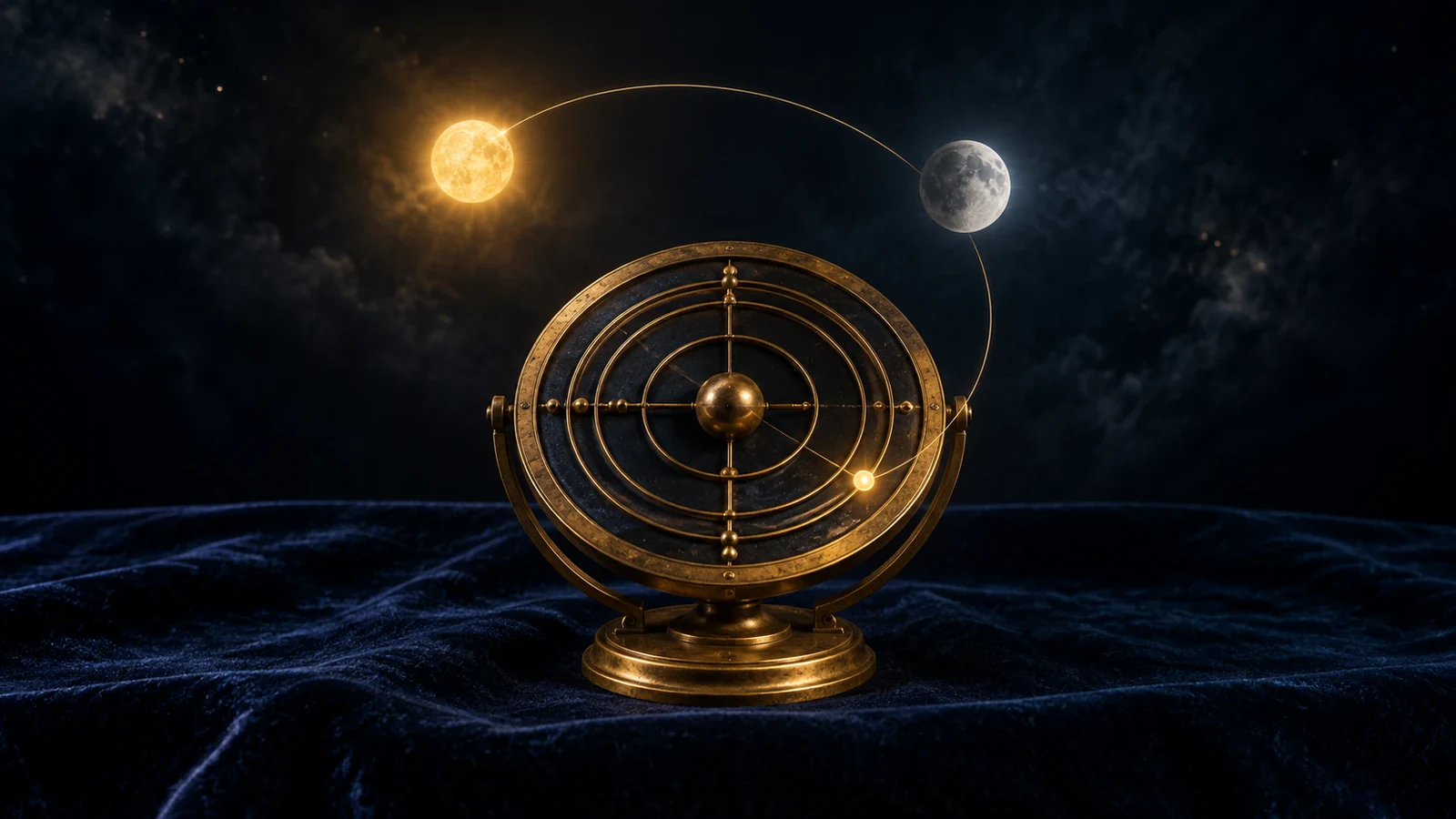
A small mark with a large name. Where the Sun, the Moon and the rising horizon meet, the tradition reads livelihood and what circumstance brings.
On your birth chart, the Sun, the Moon and the Ascendant stand in a relationship that can be measured. A small mark gives that relationship a place on the zodiac, and a name heavy with expectation: Fortune.
The mark is an address. A planet has its own place in the sky; Fortune is built from three places, the two lights and the rising horizon, and that is what makes its geometry worth following.
The Lot of Fortune asks for two kinds of attention. First the point is calculated, by a stated rule. Then it is read, inside the whole chart. The first finds where it falls; the second says what it means that it falls there.
In the tradition, Fortune is the place where the light of the Sun and the Moon meets the rising horizon, and it is read for the body's fortune, for livelihood, and for what comes to a person from circumstance. In a life today it shows where capacity meets a setting that can receive it: the support, the resources and the openings through which effort bears fruit.
What is a lot, and why does this one have two names?
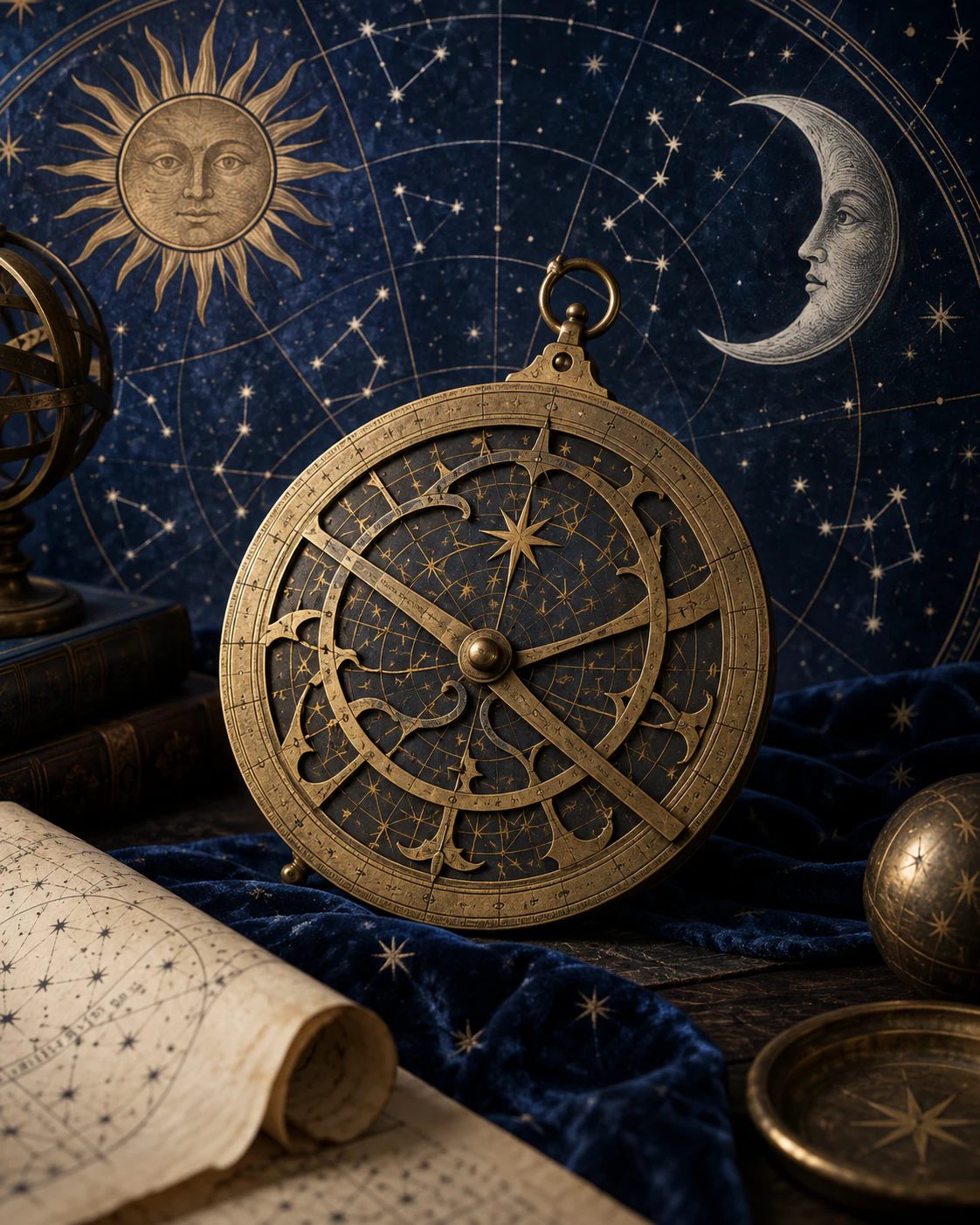
A lot is a calculated position on the zodiac. The Lot of Fortune is also called the Part of Fortune, and the two names mean the same thing: a place set apart by calculation from three other places in the chart. It has no body in the sky, and it holds no fixed quota of happiness.
The calculation uses the zodiacal longitudes of the Ascendant and the two lights. Longitude here means position around the circle of the zodiac, counted on one continuous scale from 0° up to, but not including, 360°. It has nothing to do with the geographical longitude of your birthplace.
Reading past the name
"Fortune" suggests money, chance, circumstance or a favourable turn, and modern writing drifts towards effortless fulfilment. Ptolemy reads it more exactly. In the Tetrabiblos, the Lot governs material acquisition, and its reading turns on the ruler of its sign and the planets in relation to it.
The lots are older than the name "Arabic parts" that later attached to them. They belong to Hellenistic astrology, and Ptolemy's text already has the Lot of Fortune.
Ptolemy and the roads to livelihood
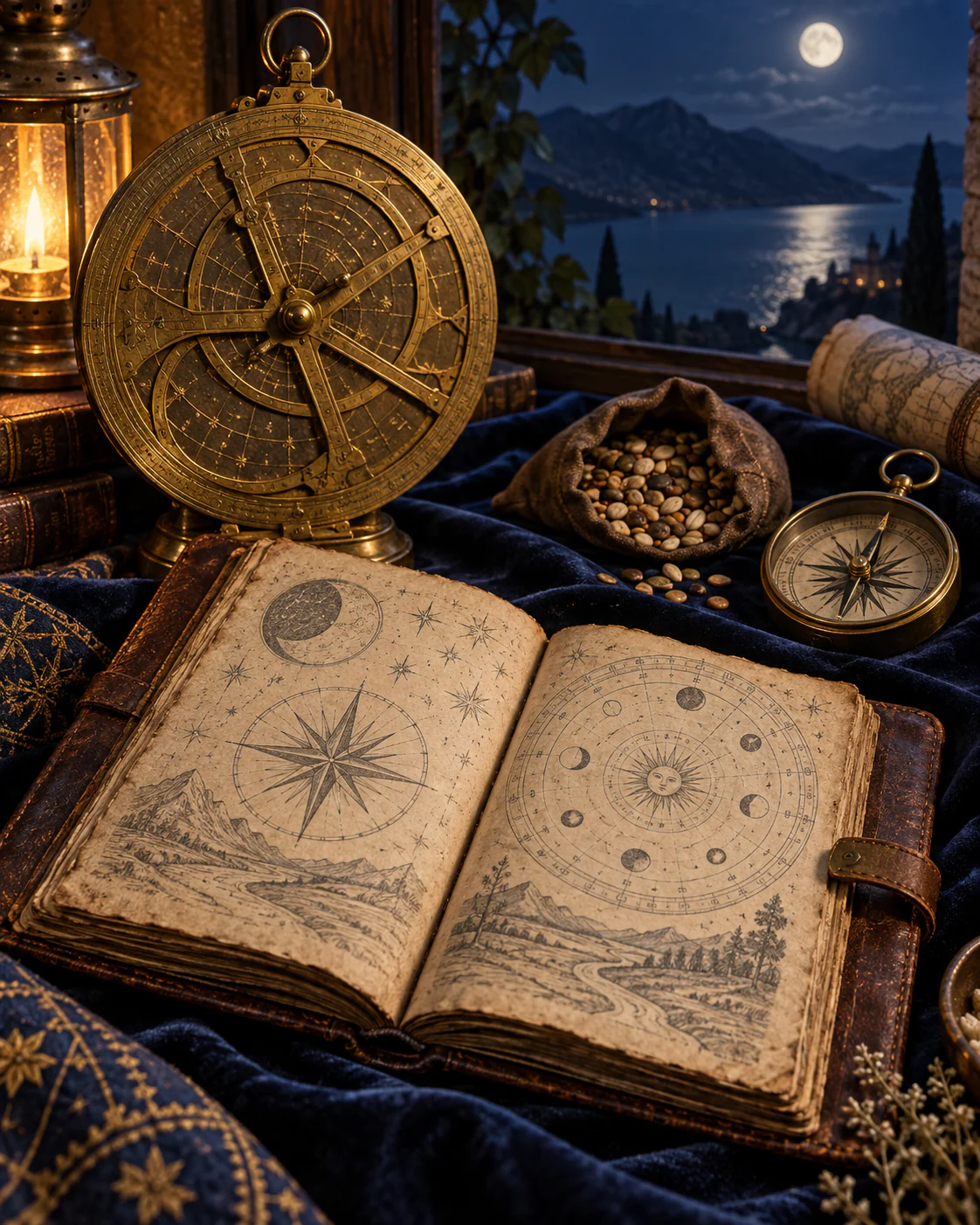
In the chapter "Of Material Fortune", the second of the fourth book of the Tetrabiblos, Ptolemy reads acquisition from the ruler of Fortune's sign, its strength and the planets in aspect to it. Then he names the roads by which wealth comes. When the ruling planet is Saturn, it comes through building, agriculture or shipping; Venus brings it through gifts from friends or women; Mercury, through eloquence and trade.
The three roads differ in kind: sustained material work, a relationship that gives support, and the gift of speech and exchange. In a life today, the question they open is where your capacity meets a setting that can receive it: a craft that needs a place, a connection you are ready to accept, a skill whose value you are learning to name. The whole chart shows which road is yours.
Day, night and the arc between the lights

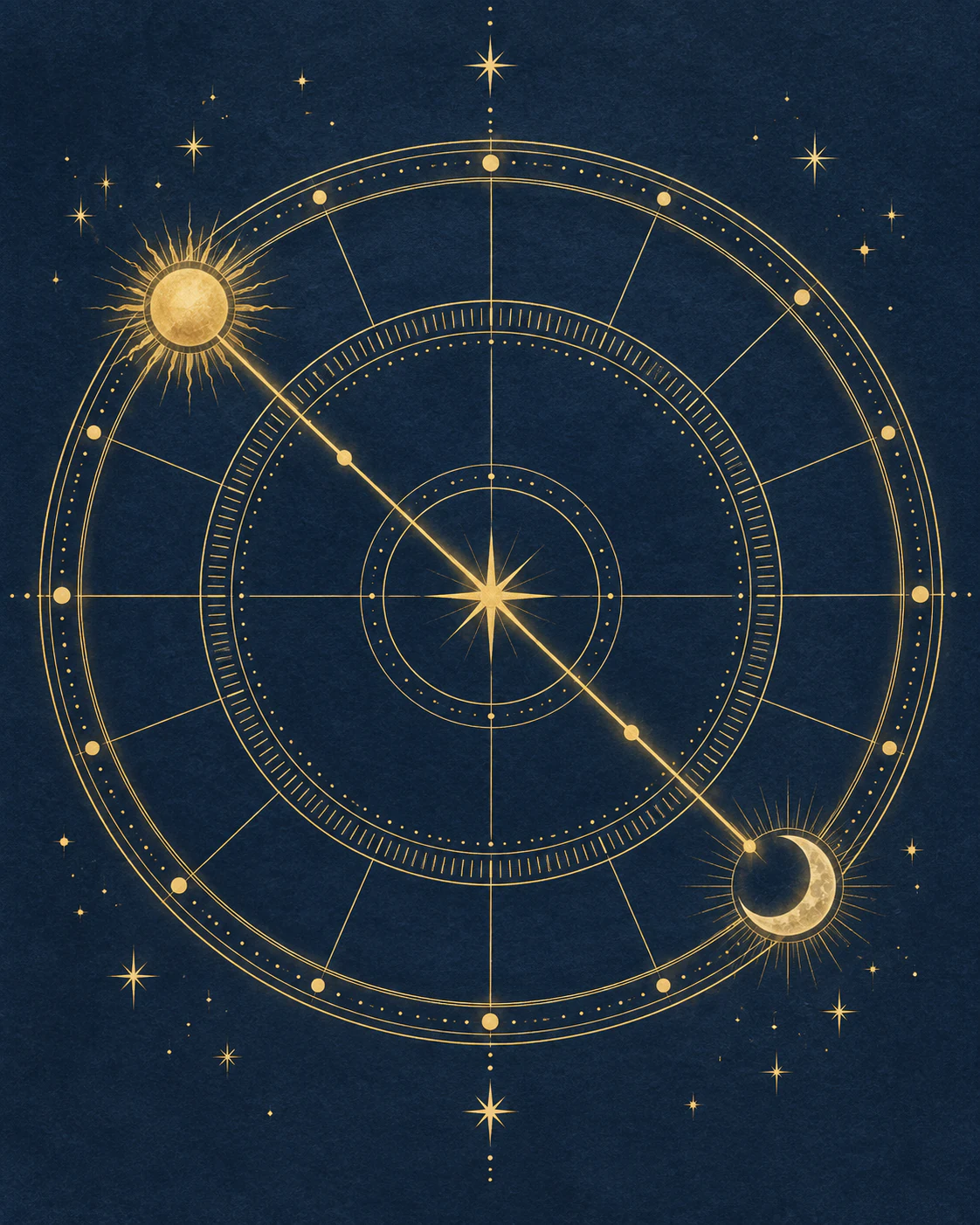
Imagine the Sun and the Moon marked on a plain circle. Measure the arc from one light to the other in the order of the signs, then lay the same arc off from the Ascendant. Where it ends is the Lot.
The picture teaches what a memorised sum cannot. It shows why the point moves when any of the three moves, and why reversing the arc changes the result so much.
The Ascendant is the point of the zodiac rising on the eastern horizon at the time and place of birth, so the date alone cannot give it. The rising sign has an article of its own, and Luxarion's free birth chart shows the Sun, the Moon and the Ascendant with sign and degree: the three positions the Lot is made from.
By day and by night
A chart is a day chart when the Sun stands above the horizon at birth, and a night chart when it stands below. The tradition calls this division sect, and the widely used rule turns the arc round by night:
- By day: Fortune = Ascendant + Moon − Sun
- By night: Fortune = Ascendant + Sun − Moon
A Sun exactly on the horizon needs a stated convention, and a family memory of "just after dawn" is too loose to settle it.
Ptolemy's own rule
Ptolemy, in the third book of the Tetrabiblos, takes the distance from the Sun to the Moon by day and by night alike, and that is the other convention in wide use. Dorian Gieseler Greenbaum's study of how the Hellenistic astrologers calculated the lots of Fortune and Daemon sets out both rules and the difficulties of their transmission. Two calculators that disagree about a night chart are often following these two rules. The question to ask is which formula produced the position, and a good astrologer names the rule and the reason for it.
A worked example
Take three positions chosen to make the arithmetic plain: the Ascendant at 100°, the Moon at 200°, the Sun at 50°.
By the day formula, 100 + 200 − 50 = 250°, which is 10° Sagittarius. By the night formula, the same numbers give 100 + 50 − 200 = −50°. Add 360 to bring the result back onto the circle: 310°, which is 10° Aquarius.
The numbers belong to no one's chart, since no one is born both by day and by night. They show what changing the formula does: the same three positions give 10° Sagittarius by one rule and 10° Aquarius by the other.
Why a minus sign is no omen
A negative result simply falls outside the notation chosen for the circle. Adding 360 brings it back inside, and a result above 360 comes back by subtracting 360. Only the writing changes. Minus fifty and three hundred and ten name the same place on the circle, and the minus sign carries no misfortune.
Each sign occupies thirty degrees, counted from 0° Aries: Aries runs from 0° to 30°, Taurus from 30° to 60°, and so on round to Pisces. To turn a position into a sign, find its thirty-degree segment and count the remainder. The day result, 250°, falls in the segment that begins at 240°, Sagittarius, ten degrees in.
A chart printed in degrees within signs has to be turned into whole-circle longitudes first. The Moon at 20° Libra is 200°, because Libra begins at 180°. Adding only the degrees written inside the signs, and dropping where each sign begins, gives a wrong point.
Four checks before the reading
Before the Lot is read, four things are checked, in order. The data (the date, the recorded time, the place and the time standard in force) decide the Ascendant and the frame of the chart. The method (the formula, the zodiac and the house system) decides the result, and two displays can use different settings. The placement is the degree, the sign and the house adopted; a degree and a house label answer different questions. The question is the circumstance you bring, and it turns a symbol into a reading of your life.
Where the birth time came from
An exact-looking time comes from a birth certificate, a family memory or an estimate, and each carries a different weight. The date must be in the right calendar, with the place and the time standard that applied there. A slip in copying survives into a beautiful chart, and the chart's polish proves nothing about the entry.
The Ascendant moves faster or slower with the latitude and the sign rising, so the source and precision of the time are noted for each birth, with no single allowance applied to all.
When two calculators disagree
Compare what went in, and how. Are the time zone and the birthplace the same? Does one reverse the formula by night? Do both use the same zodiac and the same house system? A different house system changes the house the Lot falls in and leaves its longitude where it was; a different formula moves the longitude itself. Most contradictions dissolve there. Where the settings are hidden, the two results cannot yet be compared.
Reading the placement
Fortune is read through its sign, the ruler of that sign, its house and its relationships with the planets, within one system followed through. Keywords gathered from unrelated guides until they produce the answer you hoped for make a reading of wishes.
Ptolemy's own passage on material fortune is already far subtler than "this house equals riches", and a reading today keeps the point inside the whole chart. The house Fortune falls in names the field of life where its gifts arrive; the twelve houses set out those fields one by one.
Fortune and the life around it
Suppose your reading points to resources and support. The question then is what makes your effort sustainable, and what help you overlook because you think achievement has to be solitary.
The same theme matters differently to two people in different circumstances, which is why a serious reading asks about your actual situation. A generic paragraph about "natural abundance" makes the point sound important and says nothing about you.
Fortune shows where capacity meets circumstance. Where do you receive support well? Which setting lets an ability you already have flourish? When does accepting help become part of taking your place? The chart answers through Fortune's sign, its ruler and the planets that touch it, and the rest of the chart sets those answers inside the story of a life. A natal chart reading at Luxarion reads that whole chart from your birth date, time and place.
Opportunity, and the capacity to receive it
The Sun, the Moon and the Ascendant give the point its geometry, and their meeting speaks of intention, rhythm and the way you enter a situation. Sometimes the effort is ready and the setting that can receive it is still taking shape. Sometimes the support is already there, and recognising it is the new step.
The precise question is what makes an opportunity inhabitable for you. Fortune answers through the relationship between the resources you carry and the conditions around you: the chart gives the field, and your circumstances make the question your own.
An invented comparison
Take two people offered the same role. One has stable support and time enough to accept. The other would have to move, arrange care and give up an important commitment.
"Opportunity is arriving" is true for both and helps neither. The reading asks what receiving it would require of each, and whether those conditions are in place. Fortune speaks about conditions, and two people with the same placement live under different ones.
Questions readers ask about the Lot of Fortune
Is the Part of Fortune the same as the Lot of Fortune?
Yes. They are two English names for the same calculated point.
Can I find it without a birth time?
Only approximately. The Lot is built on the Ascendant, which depends on the time and place of birth and moves quickly through the day. With an estimated time the Lot is an estimate and is read as one, while the parts of the chart that do not depend on the hour stand on their own.
Why do two websites give me different signs?
Usually because the inputs or the rules differ: the time, the time zone, the zodiac, the night formula. Compare those first. For a night chart, the reversal alone can move the Lot into another sign.
Does it reveal where I will become rich?
It shows how wealth comes. Ptolemy reads material fortune from the ruler of Fortune's sign and the planets with it: Saturn's wealth comes through building, agriculture and shipping, Venus's through gifts, Mercury's through eloquence and trade. The chart shows which road carries your livelihood.
Is it the same as Jupiter?
No. Jupiter is a planet, the greater benefic; Fortune is a calculated point. Popular writing gives both the word luck, and in the chart they do different work.
Must the night formula always be reversed?
That depends on the rule the astrologer follows. The reversal by night is in wide use, and Ptolemy kept the same direction by day and by night. A good reading states its rule with the chart.
Take a clear chart into the reading
Keep a short note with the chart: where your birth time came from, the place and the date, and the settings of the chart you are looking at. Where something is uncertain, say so.
Then ask about a life, and leave the jackpot aside: what supports my capacity to receive an opportunity, which resources do I recognise, and which conditions make them hard to use? The Lot is one voice in the chart, and the Sun, the Moon and the rising sign, the three it is made from, speak for much more of you.
A natal chart reading with Luxarion reads the chart whole: the two lights and the Ascendant that Fortune is made from, and every planet and house among which they stand.
The arithmetic finds the point. The rest of the sky tells you what it is for.
The library teaches the craft. A reading applies it to you.
Get your personal reading