Living by the Moon: What Each Phase Is For
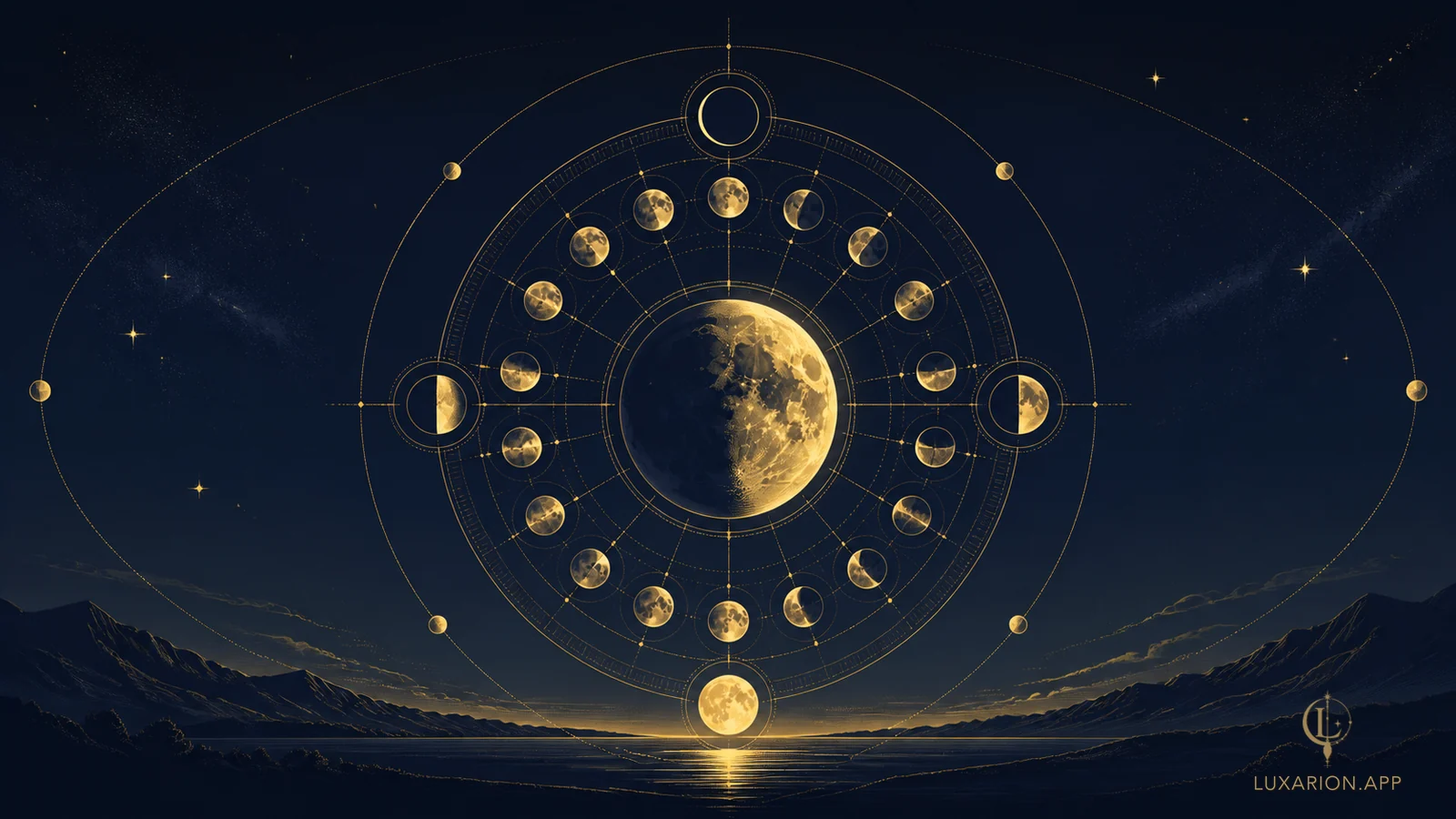
The Moon waxes and wanes on schedule, and the tradition times its works to it: what each phase is for, the twenty-eight stations, and a month to run.
Look up tonight and you can tell, within a day or two, where you are in the month. No device, no calendar, no one to ask. Every human culture that has ever kept time started here, and the practice this article describes is the one they built on that fact: a month-long clock for the work, marked out overhead, arriving on time whether or not you were watching it.
What follows is that practice as the tradition keeps it: the four-beat month and what each beat is for, the twenty-eight stations the old astronomers mapped, and a concrete month you can run. The rule underneath it is old and simple. The Moon is the nearest and swiftest of the lights, and her light grows from the new crescent to the full and shrinks back to the dark: what should increase is begun while she waxes, and what should be removed is worked while she wanes.
You may have read that science settled the matter. What was settled is narrower. In 1985 the psychologists James Rotton and Ivan Kelly published a meta-analysis in Psychological Bulletin pooling thirty-seven studies of hospital admissions, psychiatric episodes, crisis calls, homicides and other crime, and across the lot the phase of the Moon accounted for no more than one percent of the variance in those records.
Keep that finding precise: it concerns institutional statistics, not the whole of what a person may notice in themselves across a month, and not what the tradition reads in the Moon — the quality of the waxing and the waning, the lodging a work is begun in, the Moon in a chart. The tradition never claimed the Moon fills emergency rooms, and nothing in the work below rests on that.
What the Moon governs
In the tradition the Moon is the light that carries the heavens' influence down into the world of growth and decay — moisture, the body, the tides, the rise and fall of things. That is why the old rule of increase and decrease is attached to her and not to any other light.
Every calendar is a treaty with the sky, and the moon signed the first one. Long before hours and time zones the month was the moon — the English word still remembers. What that inheritance offers is a rhythm you can read: a ready-made clock for the work, visible from anywhere, arriving on time, requiring no equipment.
A month is also the right size for a sincere attempt at something — long enough to be a real try, short enough that you cannot lose interest before it ends — and the sky refuses to let you lose count. That is the practical gift. The older one is that each phase carries a quality of its own, and a work begun in the right one goes with the grain.
The four-beat month
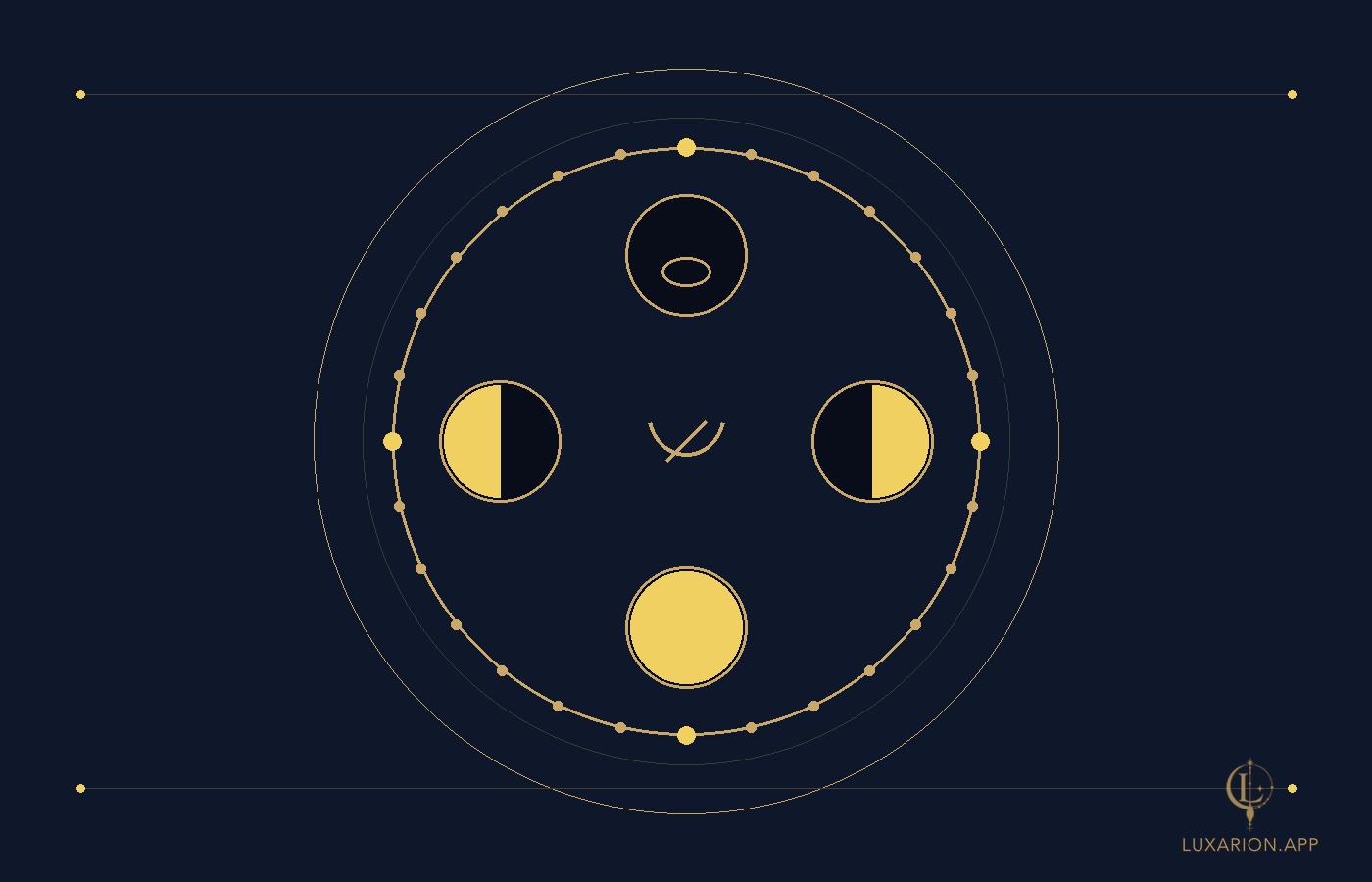
Practitioners mostly work the simple cycle of phases, and each of the four carries its own kind of work.
New moon, the dark. Intention: the private planting of one seed. One, not a list.
First quarter, a week on. Friction. Whatever you planted meets its first resistance, and the practice is to expect that rather than read it as failure.
Full moon. Culmination. The light is at its height and what you planted is lit whether you like its shape or not. The tradition counts it the strongest night of the month: the night works of increase reach their peak, and the honest review night.
Last quarter. Release: the waning week, when the work turns to removal — deciding what does not travel into the next month, and undoing what should not remain.
That is the core of the method. The four moments are visible from any window and arrive on time, and what each one carries is what the tradition has always timed its works by: increase with the growing light, removal with the waning.
The twenty-eight stations
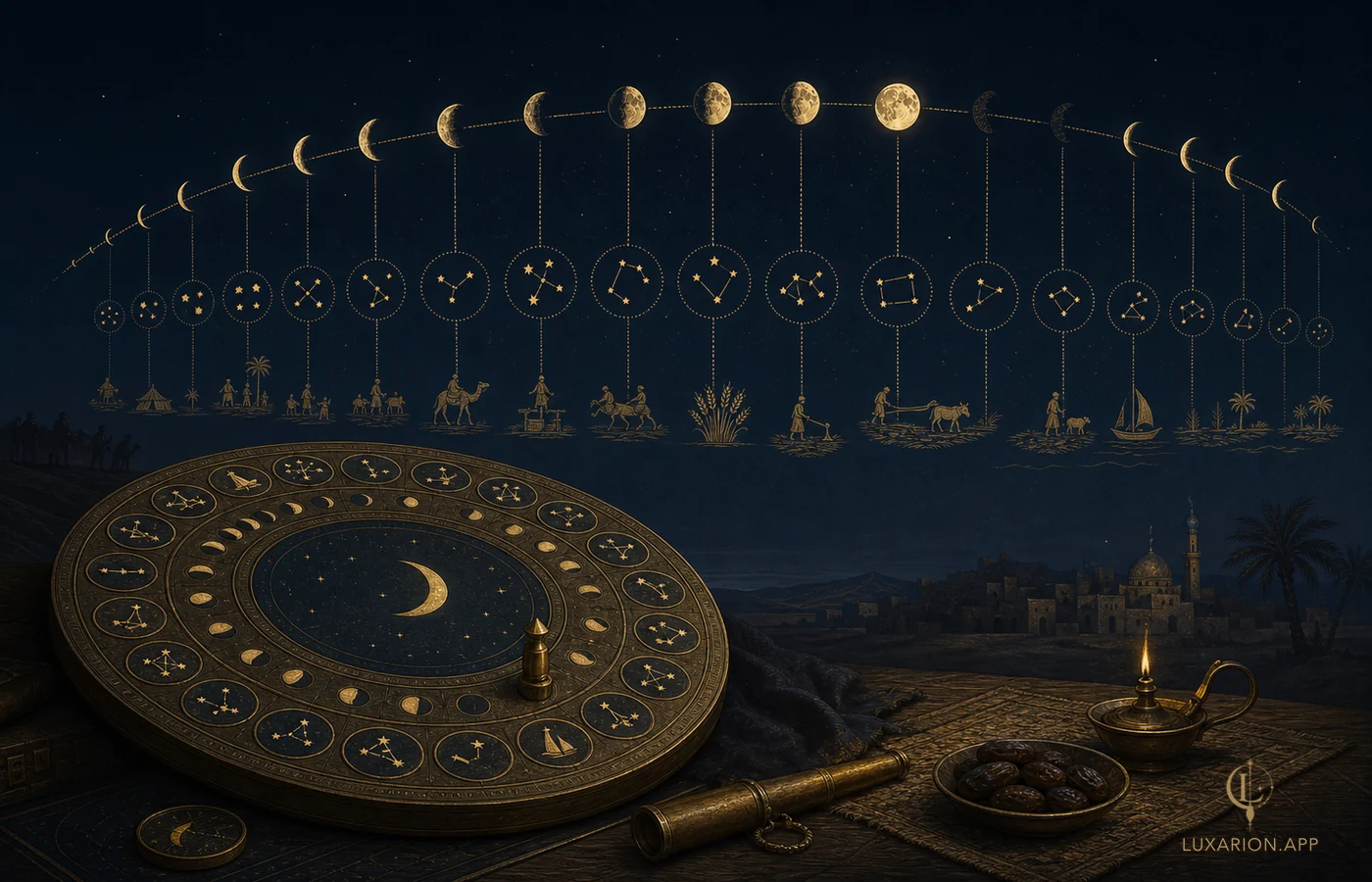
The refined form of moon-watching was never only the phases.
Arab, Indian and Chinese astronomers divided the Moon's monthly path into stations — in the Arabic tradition the twenty-eight manāzil al-qamar, one for each night's lodging. Desert travellers navigated by them, farmers timed sowing by them, and the almanac trade carried them into every market town for centuries. The Arabic manuals of the craft went further and gave each lodging its works: which suits travel, which suits love and reconciliation, which suits undoing what was knotted, which suits the making of a ring.
You do not need the whole apparatus to see what it was for. A sky with addresses turns time from a river you drown in into a road with inns, and each inn keeps its own trade. That is why a ring or a work of attraction is set in one lodging rather than another: the timing is part of the work.
Bright nights and sleep
Sleep is where the old observation and the new studies meet.
People have always said they sleep lighter at the full. Some sleep studies report slightly shorter or later sleep around it and others have not found it, and the effects reported are small. If you notice it in yourself, take it into account: hold the full-moon review early in the evening rather than late.
The crowd statistics above — the emergency rooms, the arrest records — measured something else, and the tradition never staked its reading of the Moon on them.
A month of practice, concretely
Here is the shape long-term practitioners settle into, and it takes about ten minutes a month.
New moon: when you see the new crescent, open the month with the oldest words for it — the prayer on sighting the crescent, asking that the month come with blessing, faith, safety and peace. Then write one sentence. This month I am tending ___. Put it where the evening lamp will find it.
First quarter: one check-in. What resisted, and was the resistance information or just weather?
Full moon: the month's real review — the long version of the nightly practice in the evening return. Read what you wrote in the dark and answer it in the light.
Last quarter: subtract. One habit, one open loop, one grievance you are done carrying. This is the half of the month the tradition gives to works of undoing; ruqya and the remembrance of God keep no calendar and serve at any hour.
Then the dark again, and a new sentence. Twelve honest attempts a year, with the sky keeping score.
The two moons
Worth separating, because they get run together constantly.
The Moon in the sky tonight is the calendar. The Moon in your birth chart is a fixed position at the moment you were born, read as a description of your instinctive needs rather than as a monthly event — which is a different subject with its own piece, what your moon sign means.
They are cousins, not the same officer. The same craft reads both, and it reads Mercury's little season the same way in Mercury is not your enemy.
Common questions
Does the full moon affect behaviour? The tradition reads the full as the height of the month — the strongest night for works of increase, and the night what has been growing shows itself. The crowd statistics found little in admissions and arrest records, which is a narrower question than the one the tradition asks.
Does it affect sleep? Many people sleep lighter at the full, and some studies report the same; hold the month's review early on that evening.
Should I plant by the moon? The almanac tradition sows in the waxing half, with the growing light, and practitioners time every work of increase the same way.
Do I need an app? No. The four moments are visible from a window, which is the entire point of choosing this clock over another.
What if I start mid-cycle? Start at the next dark moon. Waiting up to four weeks for a clean beginning is itself part of the practice.
Where to go from here
For tonight's phase without doing the arithmetic, Daily Cosmos shows where the Moon is now alongside the day's reading, so the four moments arrive without you having to track them. The daily horoscope there is free for everyone and makes a workable companion to the monthly rhythm.
If you want the natal Moon rather than tonight's, the birth chart calculator gives the placement free. If you want the daily rather than monthly version of the same practice, one card a day is the smaller instrument.
The library teaches the craft. A reading applies it to you.
Get your personal reading