

Your Moon Sign, and What to Do If You Don't Know Your Birth Time
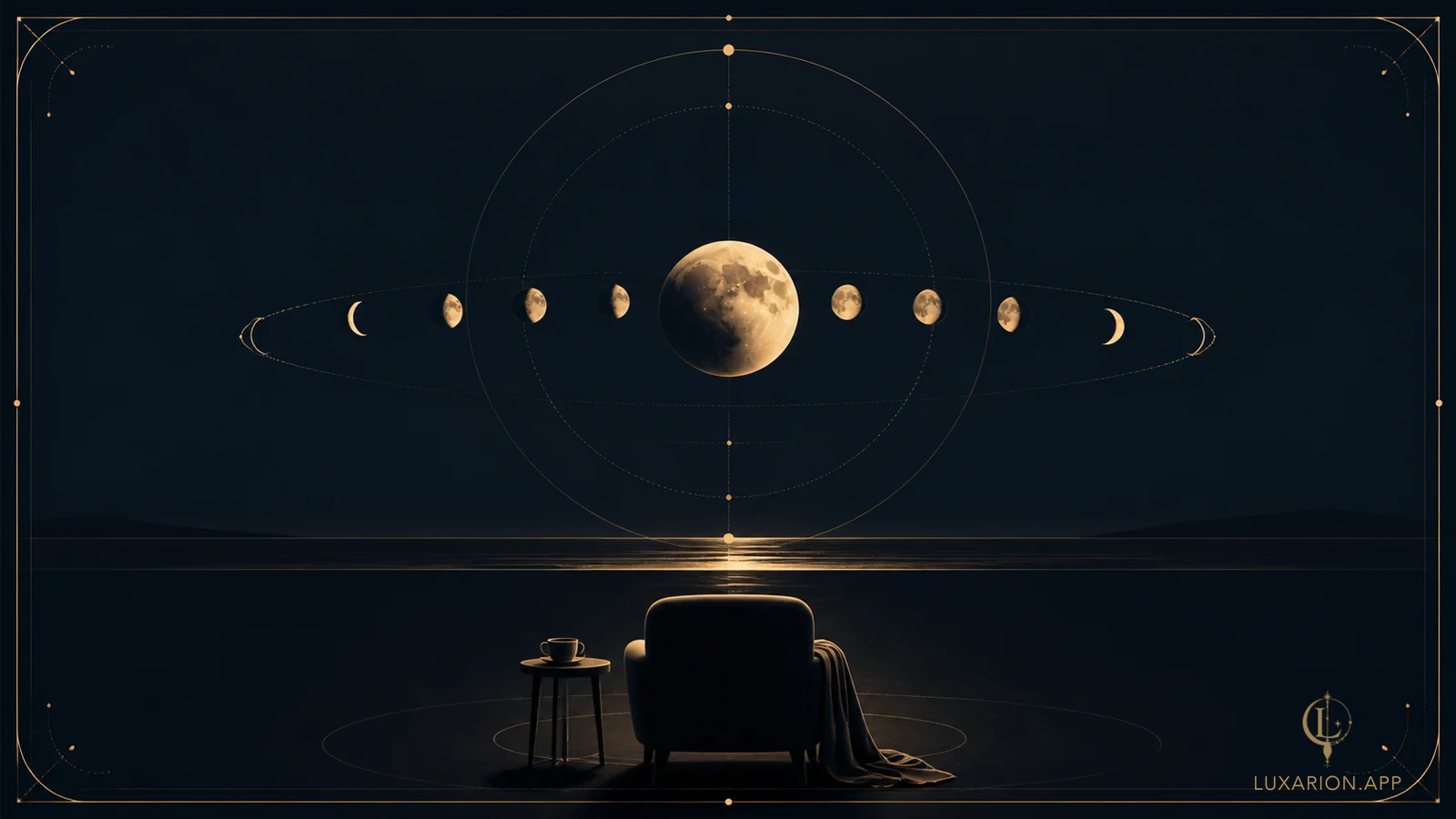
The Moon changes sign inside about 44 days in every 100, so a calculator that assumes noon gets some people wrong. Here is how to tell.
Most people arrive at this subject through a calculator, type in a birthday, and get a one-word answer back. The question worth asking about that answer is whether it is correct — because for a meaningful minority of people it is not, and nothing on the results page says so.
Here is what the Moon sign is, followed by a way to find out whether yours is one of the uncertain ones.
Your moon sign is the zodiac sign the Moon occupied at the moment you were born, in the same sense your sun sign is the sign the Sun occupied. The tradition reads the Sun as what your vitality runs on and the Moon as the private, instinctive layer underneath — what safety feels like to you, how you settle yourself, what you reach for when tired or frightened.
The speed is the whole story

Everything interesting about the Moon sign, including the birth-time problem, comes from one number.
The Moon completes a circuit of the zodiac in a sidereal month of 27.32 days. Divide that by twelve signs and the Moon crosses one in 2 days, 6 hours and 39 minutes. The Sun takes about a month to do the same thing.
Two consequences follow, and they pull in opposite directions.
The good one: this is exactly why the moon sign tells you something the sun sign cannot. Two people born four days apart share a sun sign and almost certainly do not share a moon. The Moon is the reason the same "Aries" can be a firebrand or a homebody underneath, and it is the most useful single correction to the flattening described in why you are not your sun sign.
The awkward one: something that changes every two and a quarter days changes during a lot of days. Twelve sign changes per 27.32 days works out to 0.44 per day — meaning a sign change falls somewhere inside roughly 44 days in every 100. If you were born on one of those days, your birthday alone does not determine your moon sign. The hour does.
Whether a date-only answer is safe
When you give a calculator a date and no time, it has to assume one, and almost all of them assume noon. That assumption is wrong for you if the Moon changed sign between the hour you were actually born and midday.
You can estimate how often that happens. Births are on average six hours away from noon, and a sign change falls in a given stretch of time at a rate of 0.44 per day, so the noon default should misfire for something on the order of one birth in nine. Treat that as a rough figure rather than a measured one: it assumes births are spread evenly around the clock, and they are not — scheduled deliveries cluster in the morning, which pulls real births closer to noon and pushes the true error rate somewhat below the estimate. The point survives the imprecision. It is not rare.
Two things to do about it, in order.
Find the time before you decide you cannot. More people have access to it than assume they do. It is often written on a hospital record or a birth certificate, depending on the country and the era, and where the paperwork has gone missing a parent or grandparent frequently remembers the part of the day.
If the time is genuinely gone, ask a narrower question. Instead of "what is my moon sign", ask "did the Moon change sign on my birthday" — an ephemeris answers that directly. Most of the time the answer is no, and your date-only result is solid. When the answer is yes, you have two candidates rather than one, and the honest thing is to hold both.
What not to do is pick between the two candidates by which description sounds more like you. Both will sound like you. That is a property of how the descriptions are written, not evidence about your chart, and choosing that way quietly converts a measurement into a personality quiz.
Reading the Sun and Moon together
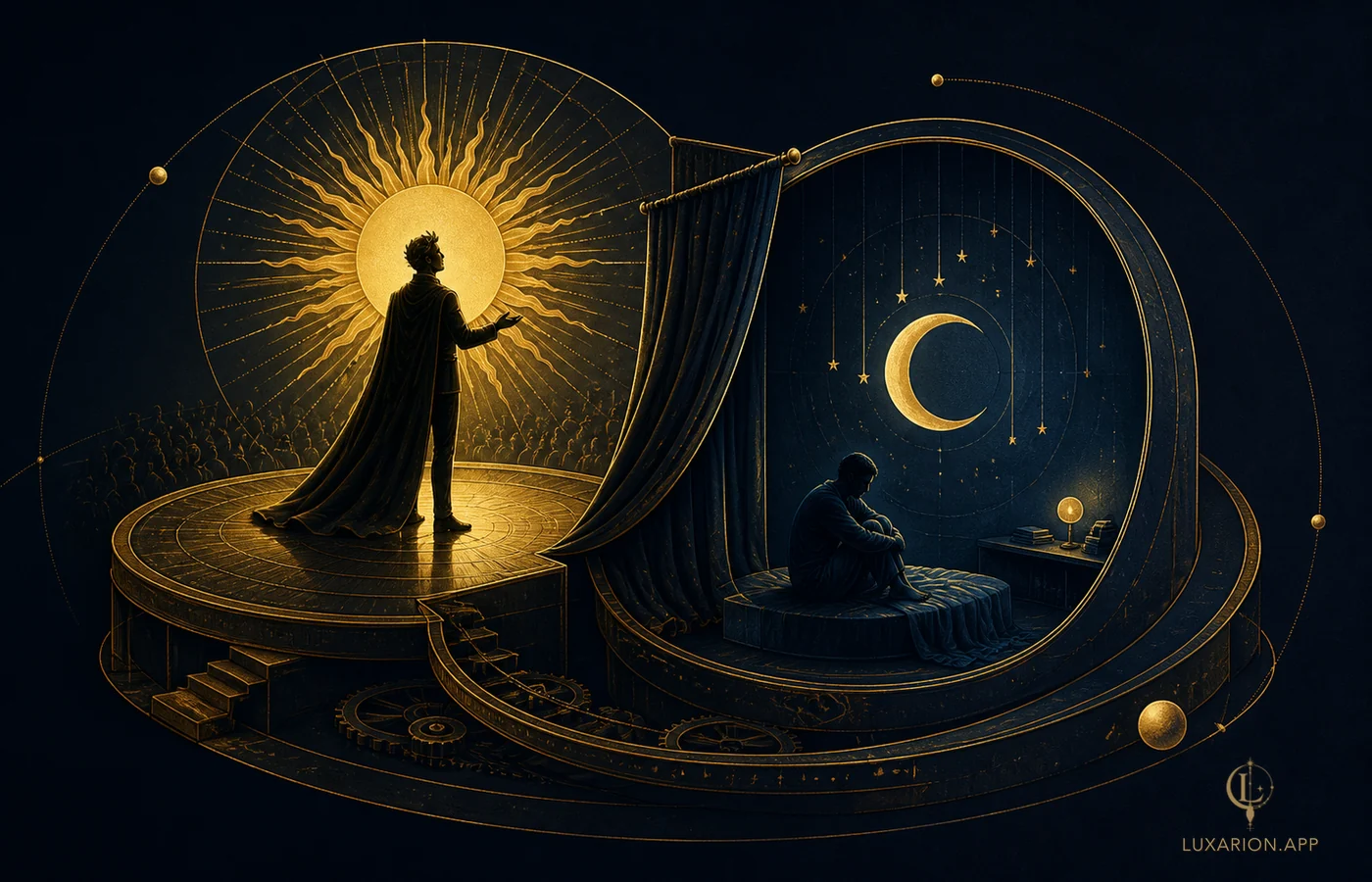
Once you have the placement, the readings worth anything are about the combination rather than the label.
A confident Leo Sun with a retiring Pisces Moon describes someone who performs warmth in public and dissolves into sensitivity in private, and who often experiences themselves as a contradiction until they see the two halves named separately. A Capricorn Moon under a Gemini Sun describes quick, sociable surface over a private need for something to be under control. The gap between the outward engine and the inner need is where most of the self-recognition in a chart lives, and it is invisible if you only have one of the two.
The third piece is the rising sign, which moves faster still and is genuinely unrecoverable without a birth time. How the three fit together is its own subject, taken up in sun, moon and rising.
What the label leaves out
"Scorpio Moon" is the beginning of a reading and not the reading.
The tradition also weighs which house the Moon falls in, which planets sit close to it, and what aspects it makes — a Moon beside Saturn is read very differently from a Moon beside Venus, whatever sign both are in. The Moon's phase at birth carries its own reading in several branches. None of that is in the one-word answer, which is why two people with the same moon sign can get readings that share almost nothing.
The usual honest caveat applies to all of it: the positions are calculated astronomy, and what they are taken to mean about a person is interpretation offered by a tradition, not an established fact about how personality works.
Common questions
Can I find my moon sign without a birth time? Usually yes. Around 56 days in every 100 have no sign change at all, and on those the date is enough. On the rest you need the hour, or you accept two candidates.
Why do calculators disagree about my moon sign? Nearly always a time-zone or default-hour difference on a day the Moon changed sign, or one tool using the sidereal zodiac while another uses the tropical one. Check what each assumed before deciding which is broken.
Is the moon sign more important than the sun sign? Several traditional systems weight it more heavily, on the plain grounds that most of a life is not lived in public. It is a difference in emphasis between schools rather than a settled question.
Does the moon sign change as I age? No. The natal placement is fixed at birth. What moves is the Moon in the sky today, which is a different reading entirely — that one is covered in living by the Moon.
My moon sign does not sound like me at all. Worth checking the birth time first, because that is the common cause. If the time is right, the next thing to look at is what else is near the Moon in the chart, which routinely overrides the sign-level description.
Where to go from here
The birth chart calculator computes your Moon alongside every other placement and reports the degree, which is what lets you see how close to a sign change you were born. If it lands within a few hours of one, that is your signal to go looking for the exact time.
For what the placement means once you have it — the house, the aspects, and how the Moon negotiates with the rest of the chart — a natal chart reading works through the whole configuration rather than the label.
The library teaches the craft. A reading applies it to you.
Get your personal reading