

The Evening Return: The Reckoning Kept Before Sleep
The night reckoning the Sufi masters called muhasaba, kept too by Stoics and Jesuits: three questions, a ledger closed before sleep, and its counterfeit.
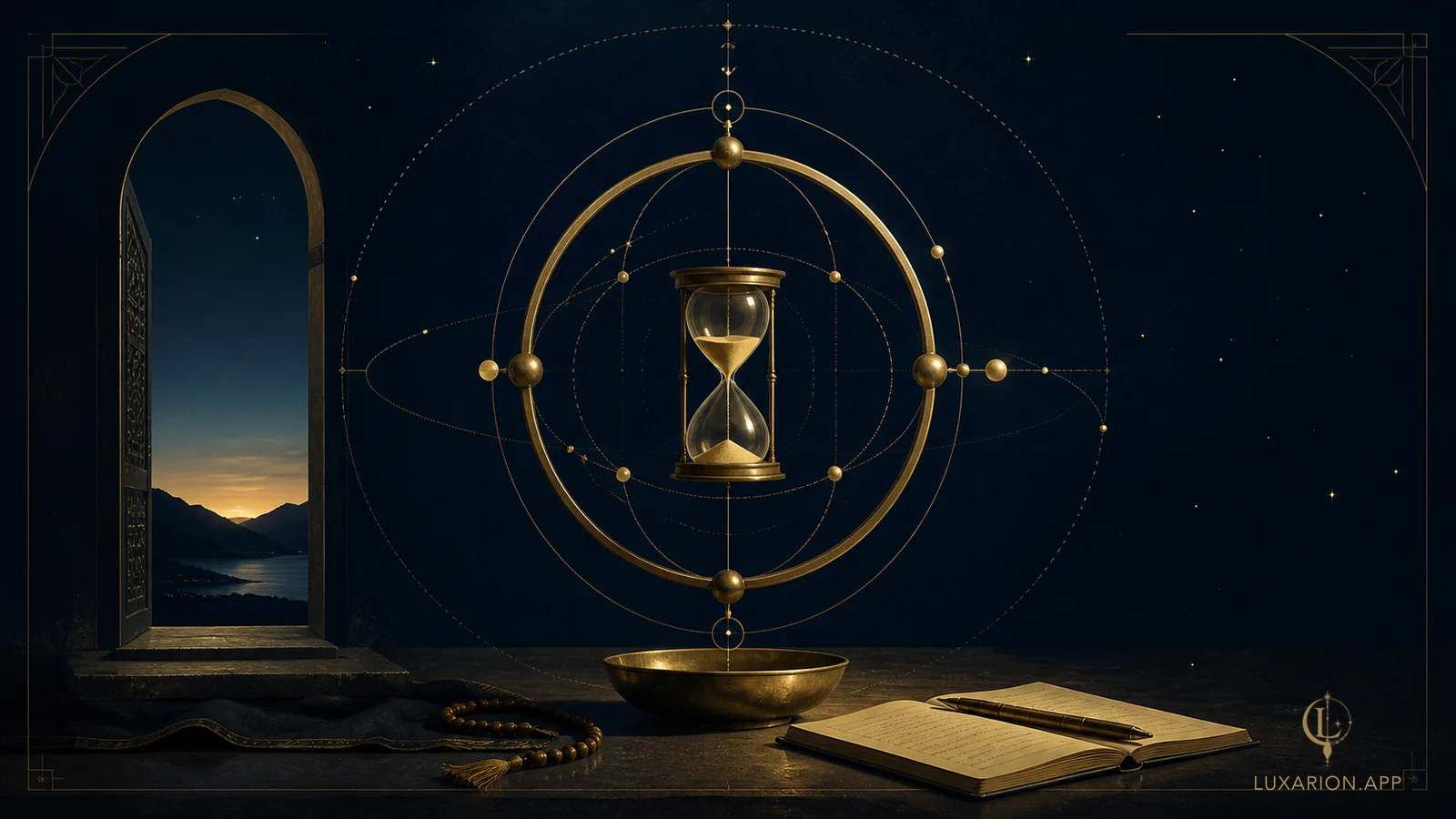
At the end of the day, before the soul is taken into sleep, the house keeps a small reckoning. Sit down. Look at the day. Write what you find. Close with the words of refuge, and sleep.
It is the oldest of the evening practices, and it was never one people's alone. Stoic Rome, Sufi Baghdad and Jesuit Spain each kept a version of it, centuries apart and sharing no vocabulary, and each gave it the same shape: a short account, honest and unhurried, closed before sleep.
The reason is written into the tradition. God takes the souls at the time of their death, and those that have not died, in their sleep, says the Qur'an; the night is the lesser death, and the angels of the day and of the night take turns among people and ascend with their account. Let every soul look to what it has sent ahead for tomorrow. A day is reckoned in any case. The evening return is the part of the reckoning you do yourself, while the ledger is still open.
The clearest ancient description
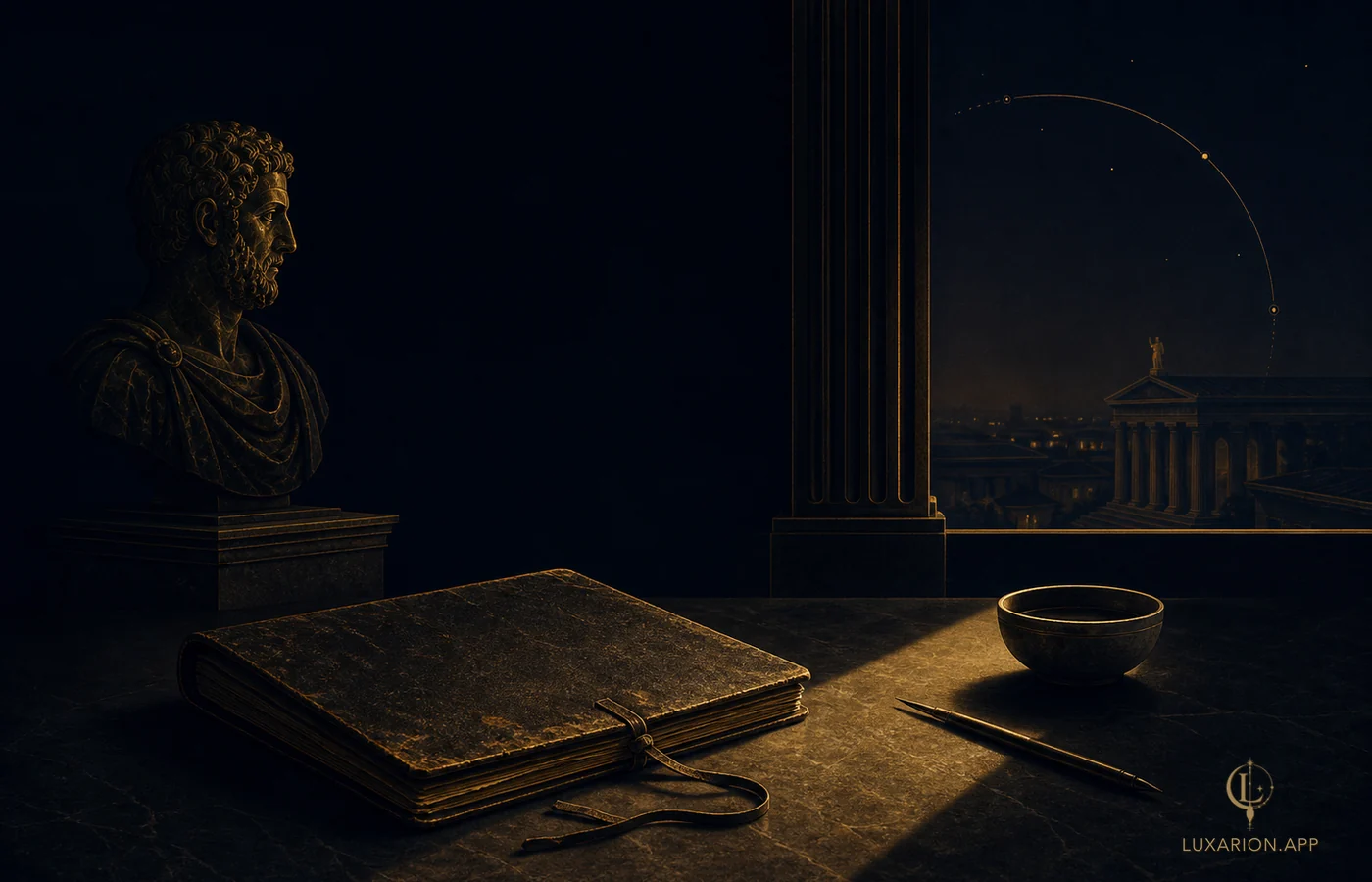
Seneca gives the practice its sharpest account in On Anger, and credits it to his teacher Sextius.
When the lamp is out and the house quiet, he says, he examines the whole day — deeds and words — hiding nothing from himself and passing over nothing. Then comes the detail that turns a tribunal into a practice: he sleeps well afterwards because he has been thorough. The review empties the day rather than prosecuting it.
Notice also what he asks. What have I cured today? What fault did I resist? Where am I better? All three are questions about movement, not verdicts. There is no version of them that ends in "and therefore I am a bad person", which is precisely why the habit survives contact with a real week.
A generation later a Roman emperor kept a private notebook in Greek he never meant anyone to read. We call it the Meditations; Marcus Aurelius called it nothing — the scholarly term is hypomnemata, notes to self. That accident of survival is the best teaching in the book. The evening page works because it is written for no reader but yourself — and the One who already knows the day. The moment you write for an imagined reader you begin performing the day instead of examining it.
The merchant's ledger
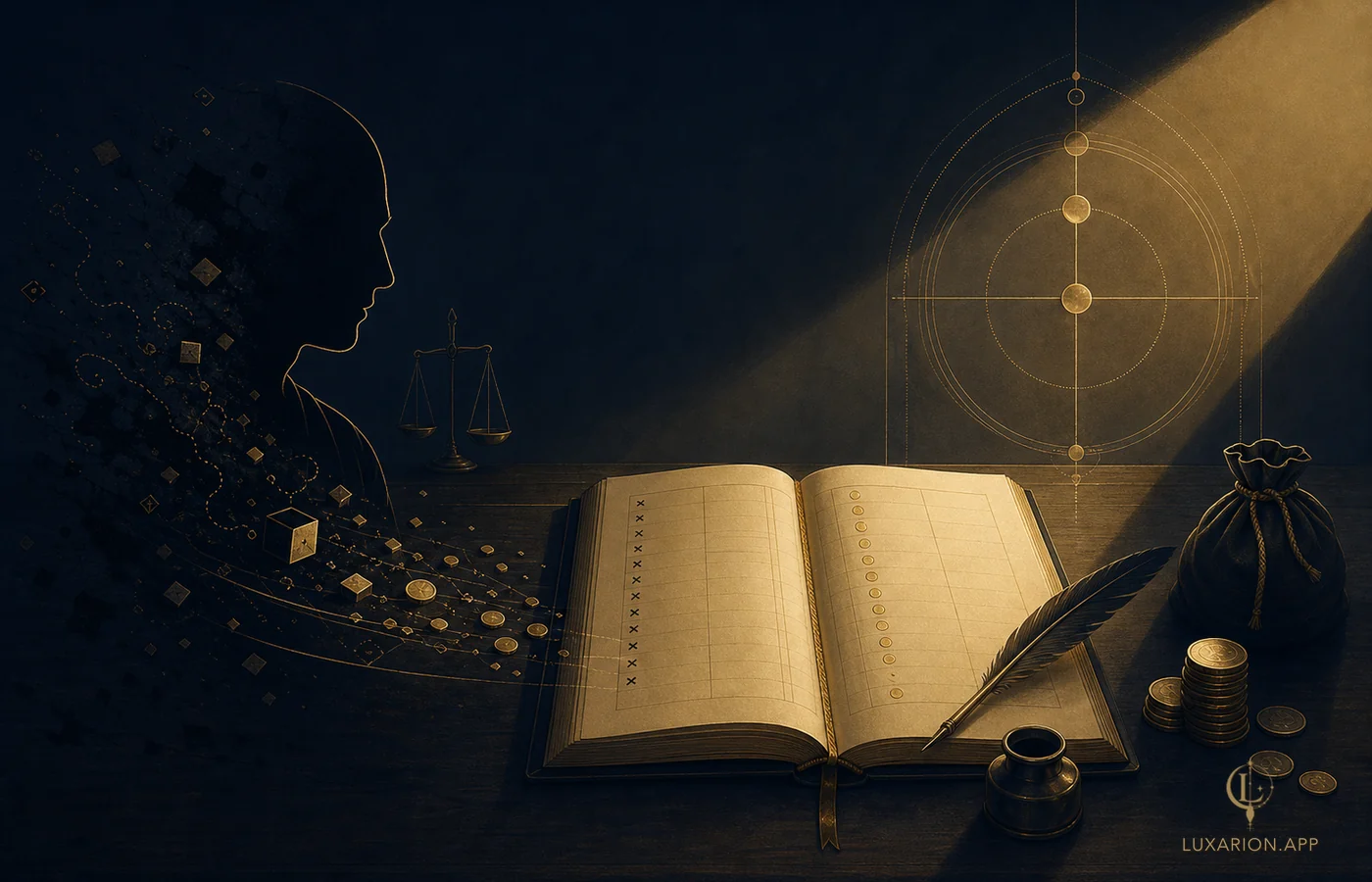
The Sufi tradition reached the same room through another door and gave the practice its most demanding metaphor.
The masters of muḥāsaba — self-accounting — treat the soul as a business partner. Al-Ghazālī devotes a book of his Revival of the Religious Sciences to vigilance and reckoning, and the instruction is to sit with the partner in the evening and go through the ledger entry by entry: not to punish, but because unexamined accounts ruin a partnership.
The genius of the metaphor is its regularity. A merchant does not audit only after a catastrophe; the audit is what prevents the catastrophe from being discovered too late. The saying transmitted from ʿUmar ibn al-Khaṭṭāb — call yourselves to account before you are called to account — carries the same logic in one line.
A reckoning is not a loop
Now the caveat every practitioner learns in the first month, and the reason most attempts fail.
The evening return has a counterfeit, and it is the loop modern clinics call rumination: replaying the day's worst moment again and again, at rising volume, with yourself cast as the villain. It feels like seriousness. It is the opposite. The masters of muḥāsaba knew it by its fruit. A reckoning ends in repentance, a resolve and sleep; the loop ends in despair, and despair of God's mercy is the one conclusion a reckoning may never reach — do not despair of the mercy of God. The loop is a whisper, not an account, and it is answered with refuge rather than with more thinking.
Every tradition that kept the practice guarded against this structurally, and the guards are worth copying exactly.
Fixed length. Ten minutes. Seneca's review ends; the merchant closes the ledger; the Jesuit examen finishes with thanks; the Muslim closes with the words of refuge said before sleep. A review with a defined end cannot become a loop.
Written, not mental. The hand is slower than the spiral. Writing forces one sentence at a time and makes repetition visible, which thinking does not.
The same three questions. What happened. What did I feel. What one thing tomorrow. The third is the load-bearing one: it converts the review into an instruction and gives the day somewhere to go.
The page's role as a witness that neither flatters nor accuses is its own subject, taken up in ink as witness.
Making it survive past week two
Most people who try this stop in the second week, and it is almost never for lack of conviction.
Anchor it to something that already happens every night — the kettle, the last lamp, the door being locked. Same seat, same notebook. Ritual does the remembering so that discipline does not have to, and discipline is the resource that runs out first.
A single card drawn at the day's end reads what the day carried and what the next one brings, and it gives the review its first line; that pairing is described in one card a day. If you want a longer rhythm on top of the nightly one, the lunar month supplies four ready-made review nights, sketched in living by the Moon.
Common questions
How long should it take? Ten minutes. Longer is usually the loop wearing the practice's clothes.
What if I miss nights? Resume without accounting for the gap. A practice that punishes lapses collects lapses.
Morning instead of evening? Morning pages are a different instrument — they clear rather than review, because the day is not there yet to be looked at.
Does it have to be written? The written form has a real advantage: it is slower than thought and it leaves a record you can read back weeks later, which is where most of the value turns out to live.
What if the day was bad? Those are the nights the third question exists for, and the words of refuge before sleep with it. What happened, what did I feel, and what one thing tomorrow — the last one is not optional and not required to be large.
Where to go from here
If you want the practice already furnished, Daily Cosmos gathers the day's card, sky and moon phase in one place and lets you keep a line from it in your own journal — a ready-made anchor for the ten minutes. And if the same thing keeps returning in your pages for months — the same knot, the same door that will not open — that is what a spiritual reading reads: what is at work behind the repetition, and what lifts it.
Start tonight with three lines and no ambition. If you want the practice's monthly companion, that is the lunar month; if you want the reason a page works better than a thought, that is ink as witness.
The core is the one the Stoics and the Sufis agreed on without ever meeting: a day is not finished when it ends. It is finished when you have returned to it once, gently, with the lamp low — and closed the ledger like someone who intends to stay in business a long time.
The library teaches the craft. A reading applies it to you.
Get your personal reading