

Ink as Witness: Why Every Contemplative Craft Ends at a Page

The page neither flatters nor accuses — which is why dream work, card practice and the evening review all end at one. What expressive-writing research actually found.
Notice something about every practice in this library: the coffee cup, the daily card, the dream at dawn, the evening review — all of them, followed far enough, end at the same object. A page. This is not a coincidence of format. The page is the only listener most people will ever meet that neither flatters nor accuses, and every contemplative craft eventually discovers it needs exactly that listener.
The two liars the page replaces
Tell your day to a friend and it improves in the telling — the friend loves you, and your voice edits for the audience. Tell it to your own memory and it degrades — memory is not an archive but a courtroom, re-sentencing the past nightly to match tonight's mood. The tradition of written self-examination — Stoic, Sufi, monastic, secular — is at bottom one insight repeated across centuries: between the flattering friend and the prosecuting memory there is a third witness available for the price of paper. What you wrote on Tuesday is what you wrote on Tuesday. When you return to it in March, it has not softened, sharpened, or taken sides. The masters of the evening review built their whole practice on that stubbornness, as we told in The Evening Return.
What the research actually found
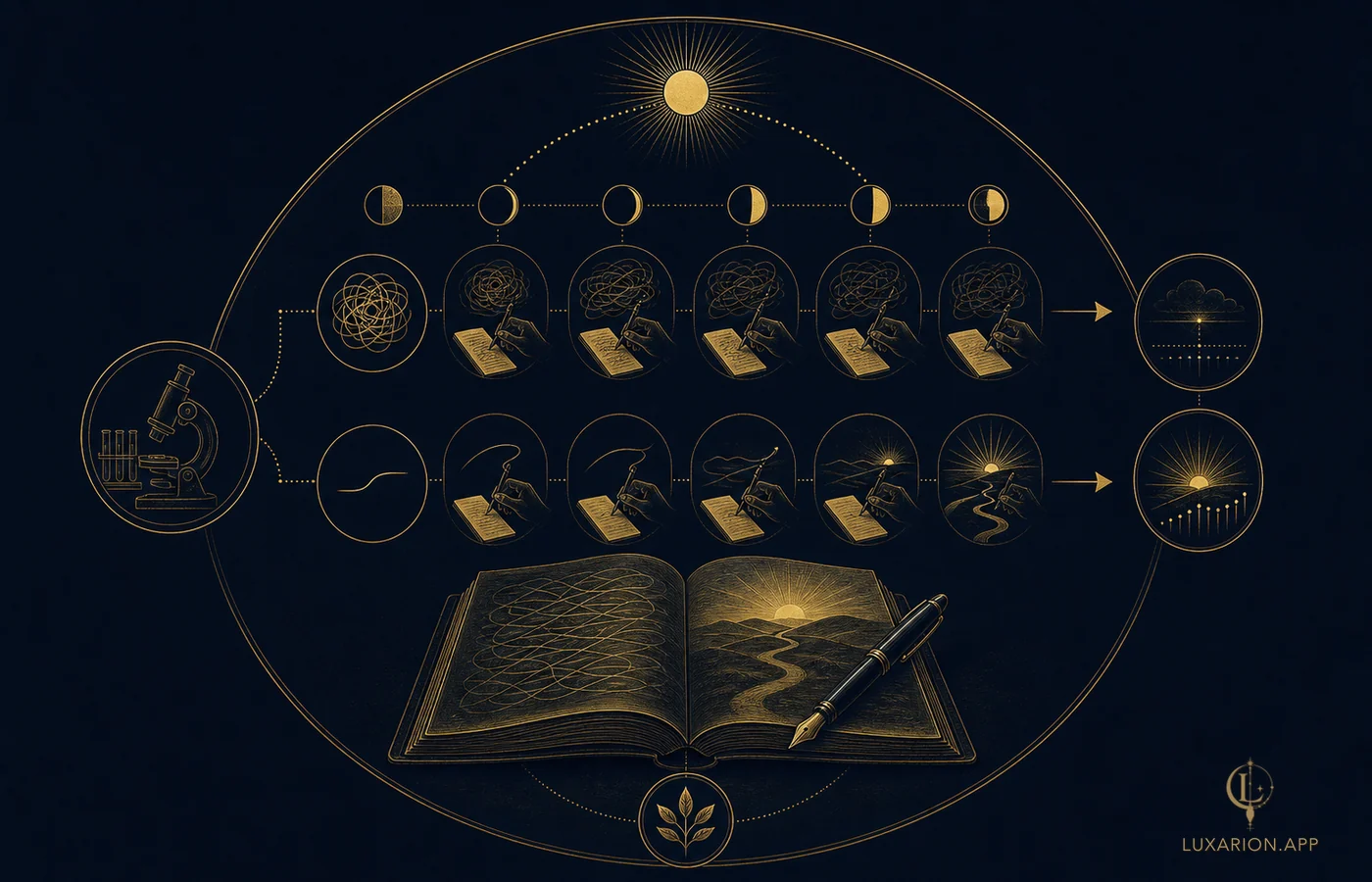
The modern laboratory arrived at the old insight from its own direction. Since the 1980s, the social psychologist James Pennebaker and hundreds of successors have run the 'expressive writing' paradigm: fifteen to twenty minutes of writing about a difficult experience, several days running, against control groups writing about neutral topics. The honest summary of four decades of results is: modest and real. Small average improvements in mood, health markers, even wound healing in some studies — with effects strongest when the writing builds a story over the days rather than venting the same loop. That caveat is the craft's own rule rediscovered: the page helps when it moves — from what happened, toward what it meant. Rumination transcribed is still rumination; we drew the same line for the evening practice, and it holds here.
The witness must be re-read
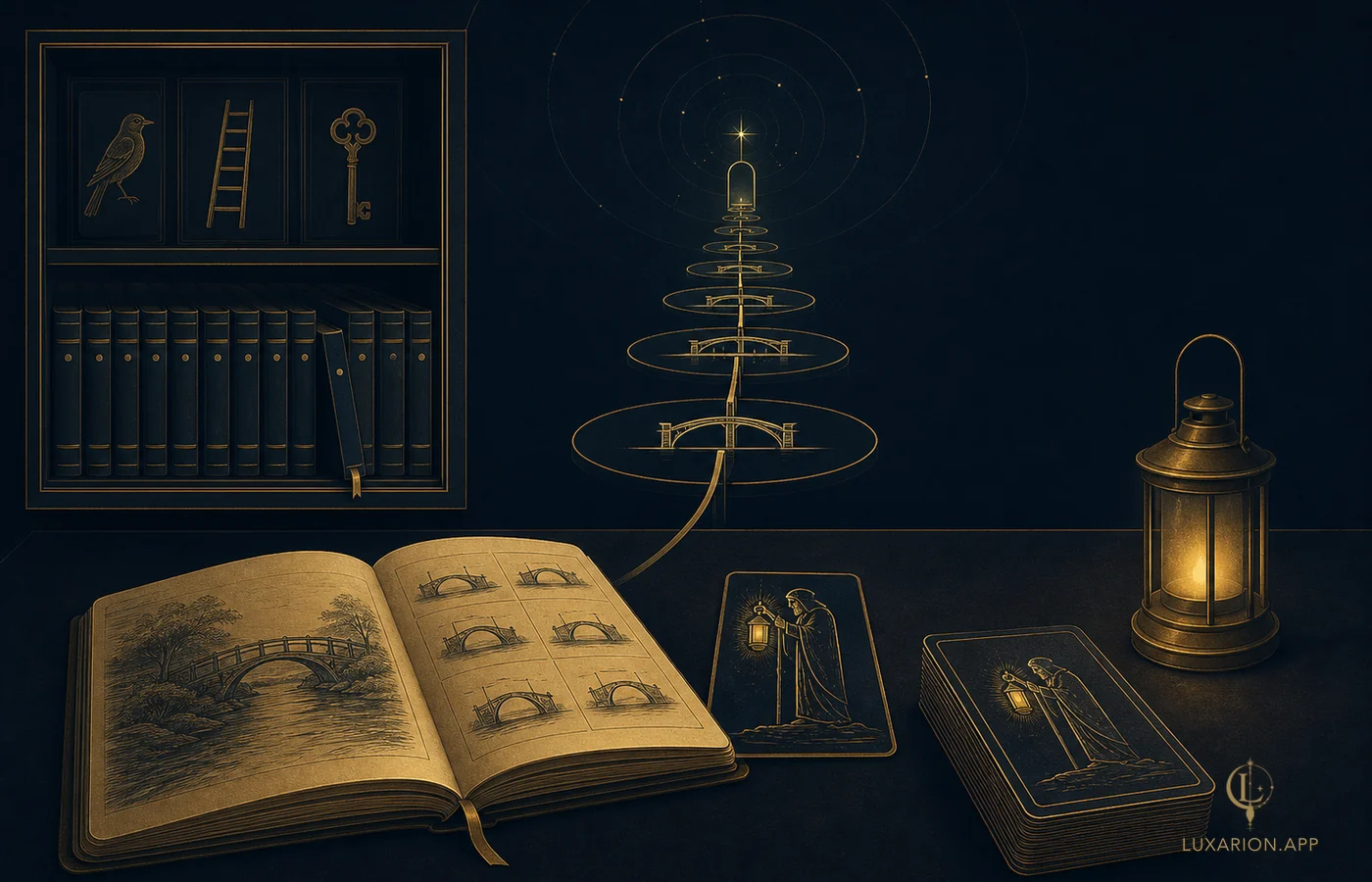
Here is the part beginners skip and practitioners insist on: a record that is never re-read is not a witness; it is a landfill. The dream journal earns its keep the month you re-read it and find the same bridge appearing every time a decision looms — your private alphabet, which we teach the building of in The Bird, the Ladder, the Key. The card journal earns its keep when a year of mornings shows you that the Hermit keeps arriving before your best decisions, not your loneliest ones — the concordance we described in One Card a Day. Set a re-reading rhythm as fixed as the writing rhythm: monthly is enough. The writing is deposit; the re-reading is interest.
Craft notes from long practice
Small rules that recur wherever this is done well. Date everything — the entry that seems trivial today is evidence in a year. Keep one notebook, not five; scattered witnesses cannot testify. Write by hand if you can bear it — not because keyboards are impure, but because the hand's slowness forces selection, and selection is thought. Never write for a reader; the page's whole value is that it has none — the emperor whose private notes became the most-read book of antiquity never intended us to see them, which is precisely why they are honest. And when something is too raw to keep, use the old permission: write it fully, read it once, and burn it. The witness serves you, not the other way around.
The quiet meta-skill
Under all of it, the page is training the same faculty every art in this library trains from a different side: the ability to look at what is actually there — in a cup, a card, a dream, a day — before deciding what it means. Ink buys you the pause between seeing and concluding. That pause has a name in our tradition of essays; we call it The Quiet Sense, and the page is where it does its daily exercises.
The library teaches the craft. A reading applies it to you.
Get your personal reading