


The Extra Door: Reading a House You Have Never Seen in a Dream
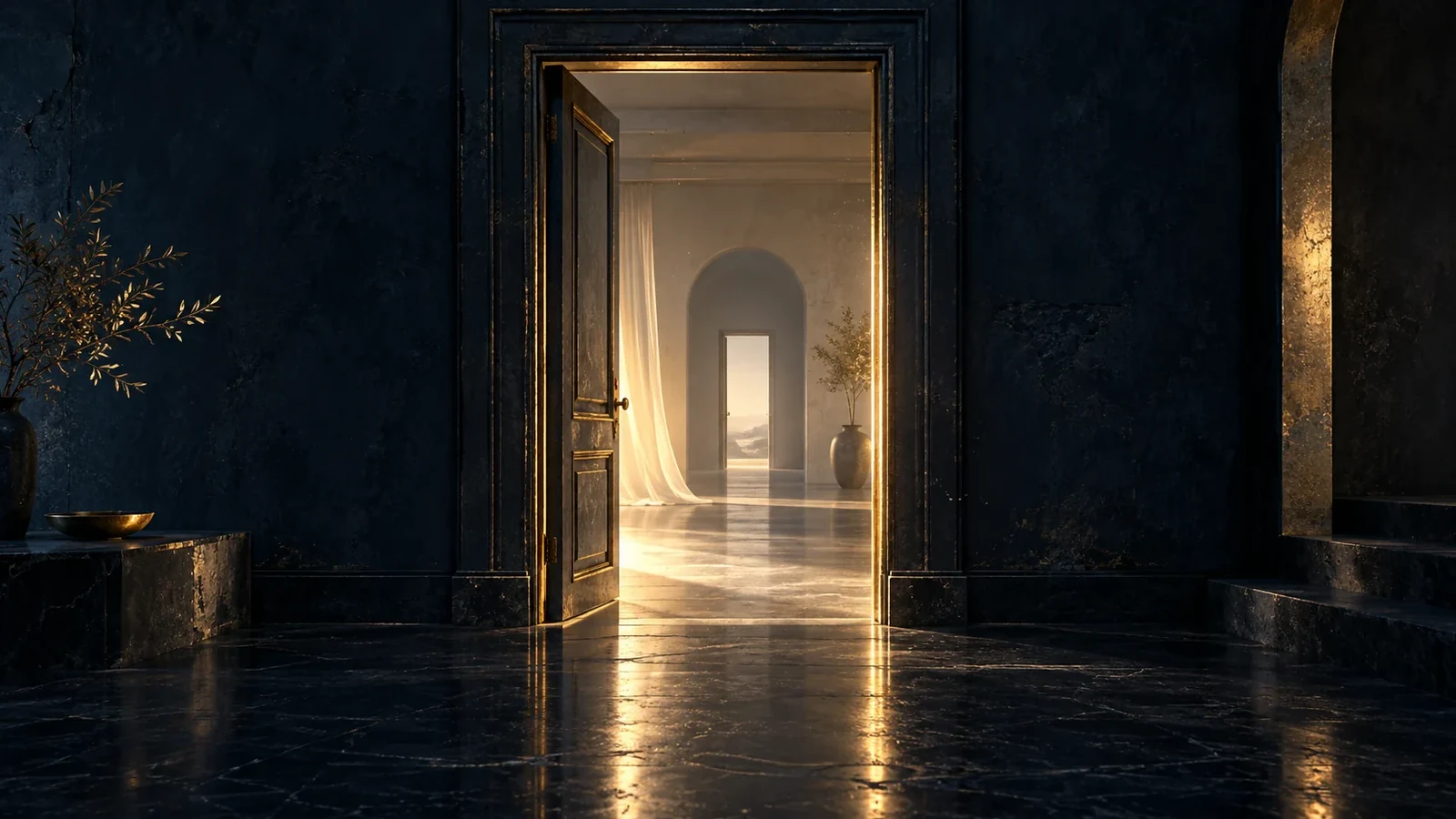
You have never seen this house, yet you know your way through it. The route, the permission to enter and the moment it turned carry its message.
The corridor looks ordinary until you count the doors. There should be three. There are four.
You open the last one and find a room that could not fit inside the house. Sometimes it is empty and waiting. Sometimes someone has already laid a place for you. The architecture is impossible and the feeling is exact: you are allowed here, or you are not; you have found something, or something has been expecting you.
That exactness survives waking. You forget the wallpaper and remember the permission. You could not describe the building, and you can still feel the hesitation at the door.
The reading begins there. A dream about an unfamiliar house carries its message in a route, a relationship and a moment of change. The dictionaries offer a large house for success and a hidden room for a secret talent. The route, the relationship and the turn ask a far sharper question.
A house you have never seen raises the question of belonging; an extra room in a house you know shows your life extending into space you have not yet used. The reading tells them apart, and it starts with who you were when you walked in.
Who you were at the door
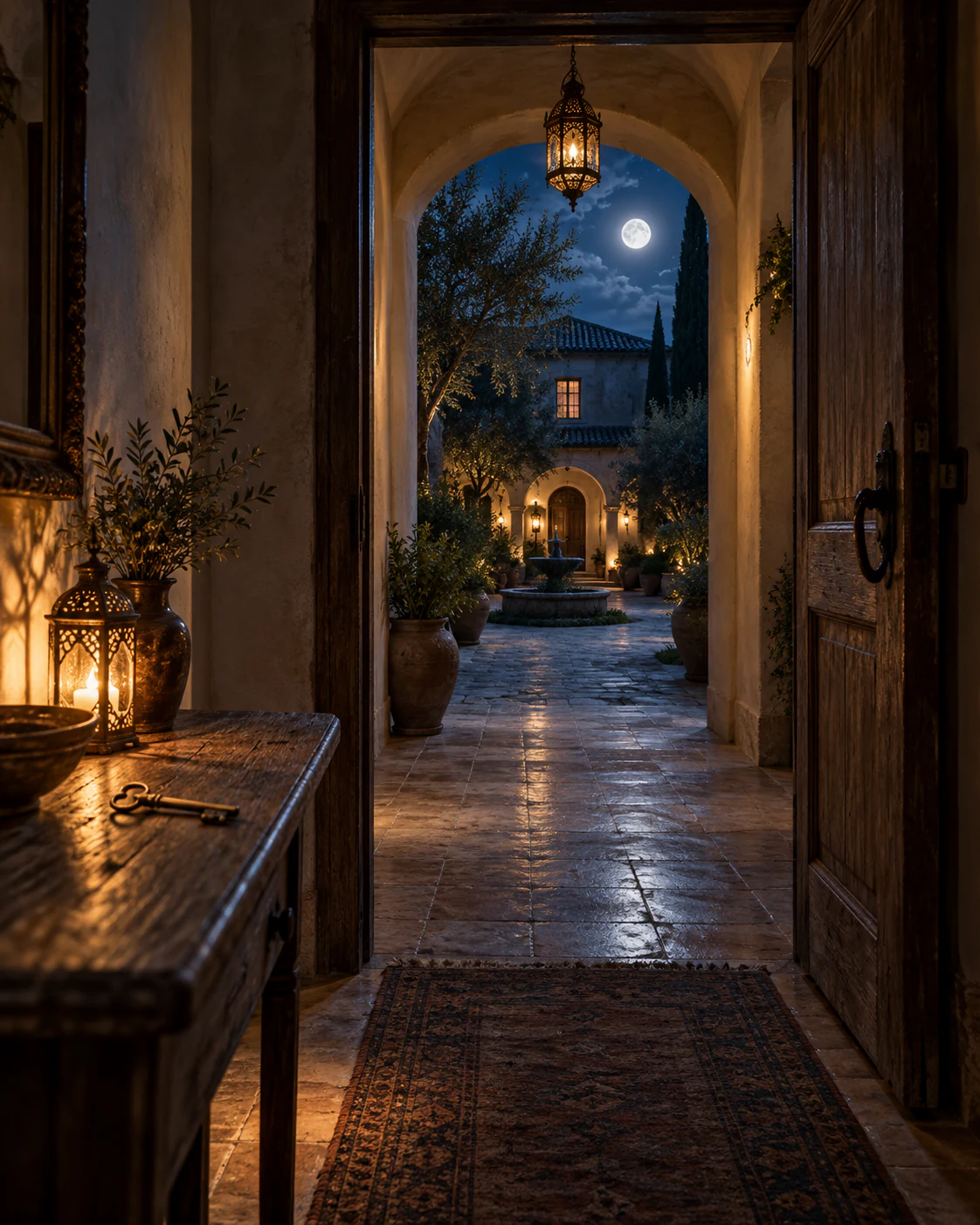
In waking life, a doorway already carries a relationship. You own the place, or you are visiting a friend, delivering a parcel, viewing a flat you might rent, or looking for shelter. A dream keeps the same distinctions, and keeps them exactly.
Imagine two dreams with the same house. In the first, you are invited in and told to rest. In the second, you slip through a window and try not to be noticed. The rooms are equally beautiful. The story of entering them could hardly be more different.
The first is read for reception: care is offered, and the question is whether you can accept it. The second is read for access and concealment, and for whether you feel entitled to be there.
A dream in which you cannot tell whether you are guest or owner has already given you an important detail.
When the unfamiliar house feels like yours
Sometimes you simply know the unfamiliar house is yours. Nobody says so, and no keys change hands. Dream knowledge arrives that way and is written down as it came: "I knew it was mine" is faithful, while "someone must have given it to me" adds an event the dream never showed.
Ownership in a dream speaks of responsibility, of belonging, or of the freedom to arrange a life as you choose. What you did with the place, and the life the dream arrived in, show which.
Four house dreams that should not share one answer
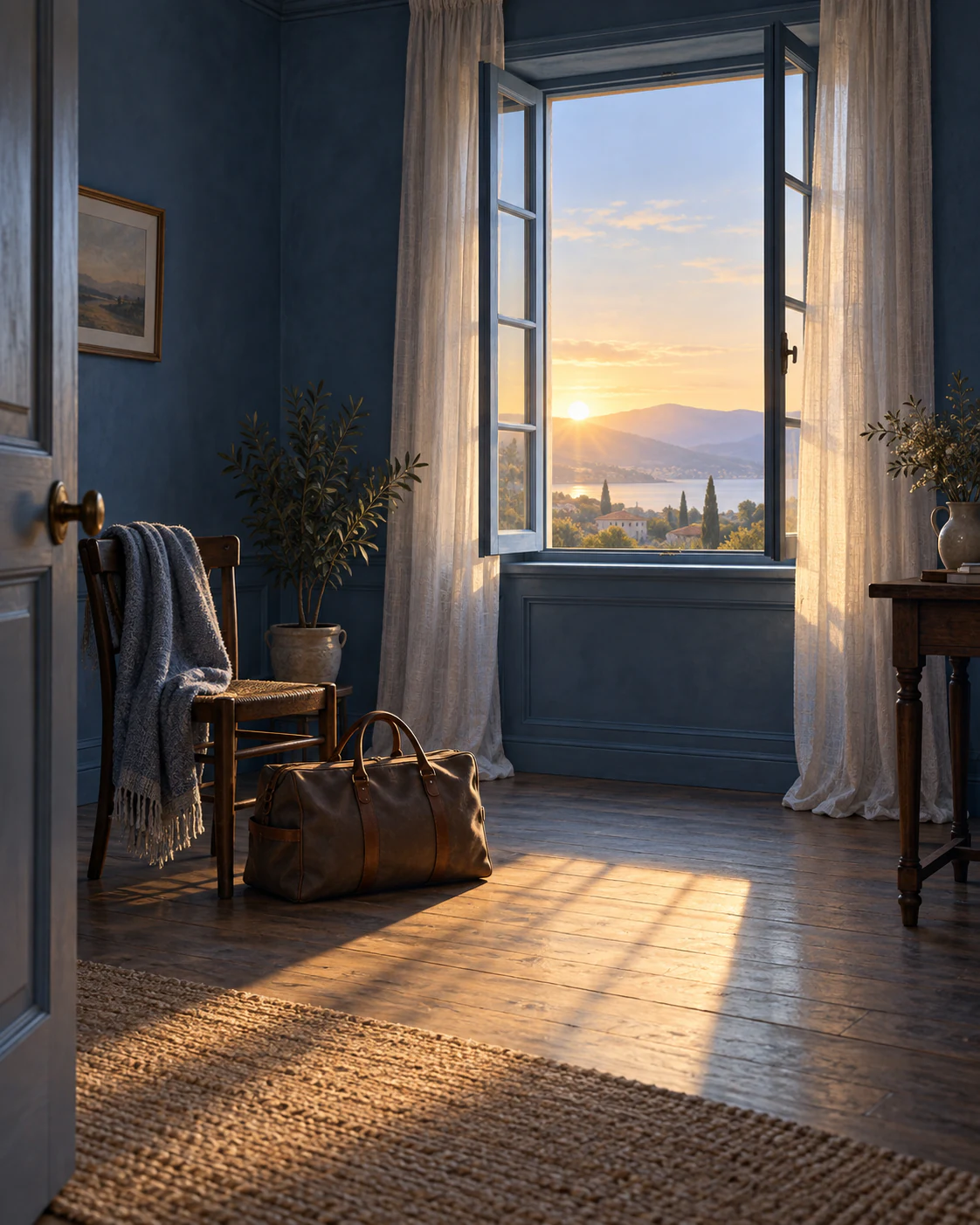
An unfamiliar building, a childhood home with its rooms moved, an extra room and a house you cannot leave are usually filed together, though each turns on a different action.
In a wholly unfamiliar house, recover how you arrived and why you went in: the dream concerns your relationship to the place. In a familiar home rearranged, notice what stayed and what moved, because this dream is about your place within something familiar and how it has shifted. A room you never knew existed turns on how it was found and whether you were allowed in; it shows what has opened to you, or what is still out of reach. A house whose exit keeps moving asks what you were leaving and what turned you back.
The extra room is the easiest to overread. It means more space, and more space arrives in two ways. You find a room and feel delight, or you find it and understand that you are expected to repair it. The first dream speaks of a gift; the second, of a charge laid on you.
A childhood home refuses an automatic answer too, because familiar walls do not make a dream nostalgic. You are retrieving something, rearranging the rooms, leaving by a new door, or looking for a place that used to be yours. Read the action before naming the emotion.
Follow the route until the feeling changes
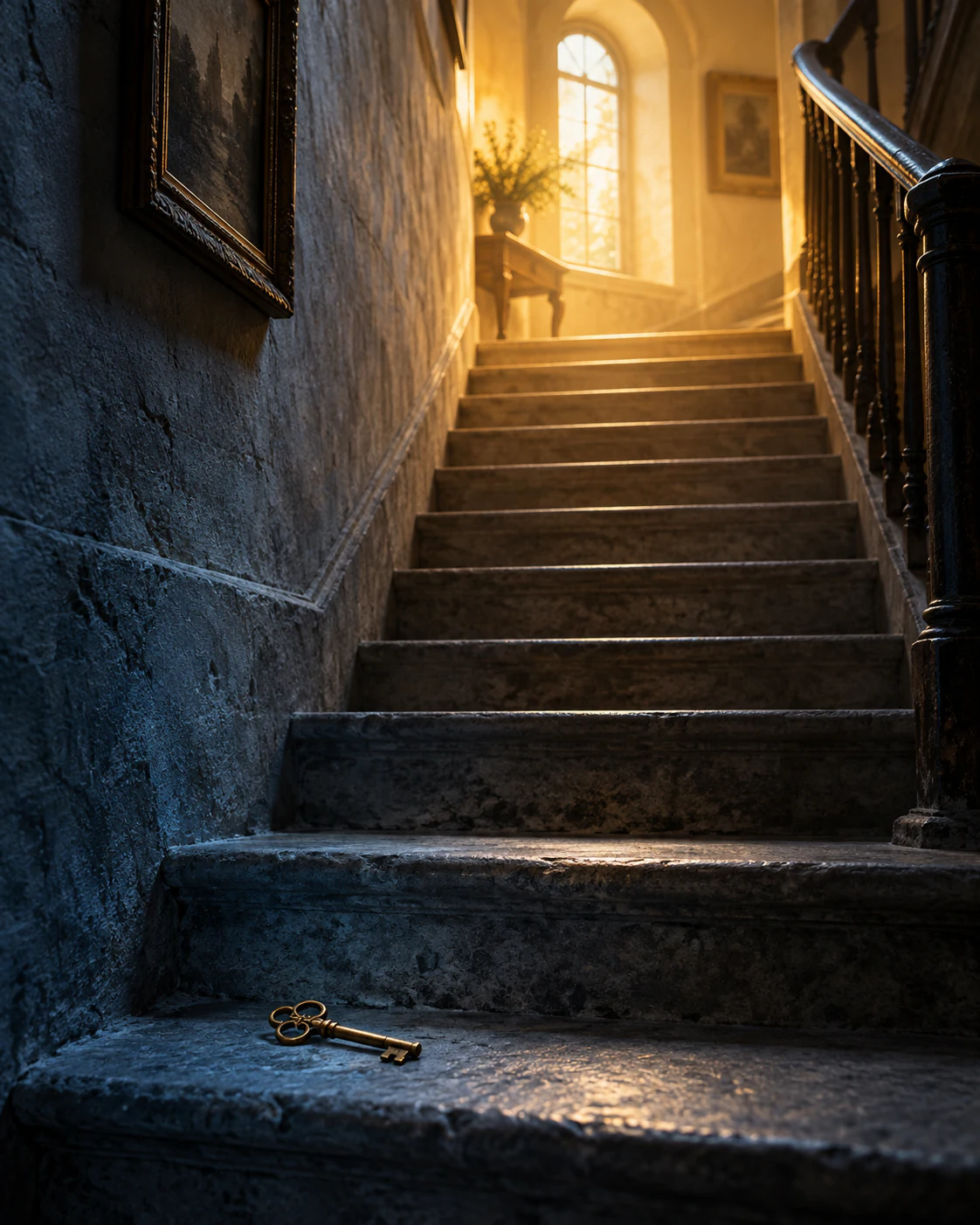
We read every house dream in three movements: the relationship, the route and the turn.
The relationship comes first. What made the house yours, foreign, welcoming or forbidden? Separate what someone said from what you simply felt, and keep both in the account.
Then the route. Did you enter a room and then grow afraid, or were you already afraid and went in anyway? Did the staircase lead somewhere, or did the climbing become the whole dream? Sequence keeps one striking image from swallowing everything around it.
Then the turn: the moment your experience changed. A stranger moved your belongings. A door opened without effort after you had spent the whole dream looking for its key. Nothing in the room changed at all, and you suddenly knew you could stay.
At the turn, one question decides the reading: what became possible, impossible, permitted or required at that moment? The building stays whatever the dream made it (shelter, encounter, memory, a spiritual invitation), and a detail the dream left open stays open.
A closed door can protect as well as exclude
The obvious reading of a locked door is obstruction. First ask which side of it you stood on. A door you cannot open speaks of access. A door you lock to keep a quiet room speaks of a boundary, and one you chose.
A dark hallway turns the reading towards trust, uncertainty or concealment, and your conduct in it decides which: crossing it calmly and hiding in it are two different dreams. Note what guided you, what you were waiting for, and whether the feeling changed when the light came.
Precision gives the dream more room.
A room is where something new in a life becomes visible. An empty room shows what there is now space for; a room prepared for you speaks of receiving and of belonging. A key moves the weight towards access and stewardship, a new exit towards a changed bond with what you are leaving. Water in the house, rising on the stairs or seeping under a door, brings a reading of its own, set out in dreams about water.
These details come into focus when the whole route is read at once, from the feeling at the threshold to the detail you carried into morning. A dream interpretation at Luxarion reads them that way, with the question you are living with beside them.
Three dreams, three turns
Three invented dreams show the method, each turning at a different place.
The room with a desk already waiting
A dreamer enters an unfamiliar house and is shown a quiet room. A desk faces the window. They feel relief, then find a stack of work someone expects them to finish. They leave without sitting down.
The turn is from welcome to obligation. The dream speaks of an opening in waking life that brings a new duty with it, or of a dreamer who cannot accept an invitation without waiting for the bill. The ending decides. If the dreamer loved the work and leaving felt like a loss, the dream is about hesitation before a commitment they want, and the feeling at the end weighs as much as the first sight of the room.
A childhood house with a staircase to the sky
A dreamer recognises the family home and finds a staircase that was never there. It climbs to an open terrace. They stay up there, looking outward, with no wish to go back down.
Calling this nostalgia misses its direction. The movement runs away from the familiar interior towards a new view: the past has taken a different place in the dreamer's life and no longer encloses them. A personal association can overturn this: if the terrace resembles a place where the dreamer once felt unsafe, the outward gaze is vigilance, and the reading turns with it.
A spacious home where every chair is taken
A dreamer is warmly greeted in a large house. Each time they try to sit, someone says the seat belongs to another person. In the end they stand beside the door.
The dream separates being welcomed from having a place. It points to a role, a relationship or a circle that gives recognition and no room for what the dreamer needs. It accuses no one; its next question goes to the dreamer's circumstances, and to what one honest conversation would make clear.
The first question the tradition asks
Before a house is read at all, the tradition asks what kind of dream it is. The Prophet taught, in the hadith gathered in Sahih Muslim, that dreams are of three kinds: glad tidings from God, a grieving dream from Satan, and what the self talks of to itself. An unfamiliar house can be any of the three, and the dream shows which in what it leaves in the heart on waking, in whether its rooms were lit or dark, in how it ended.
The dream books that carry the name of Ibn Sirin were compiled by later hands, from the school that followed him. What they hand down is a way of reading: the dreamer's state, the detail, the season in which the dream came. It is the way of reading this article practises: a house is read for the person who dreamt it, at the time they dreamt it. How the classical interpreters read a dream sets the method out in full.
Write it down so it can be read
Write the dream in three short passages: what happened, what you felt, and what you concluded after waking. The division is simple, and it guards the account against hindsight.
"There was a room beyond the kitchen" describes an event. "I felt it belonged to me" describes an experience. "I think I need more privacy" is an interpretation. Keep all three if they are true to what you remember, and keep them apart, so that the reading works from the dream itself. Merged into "the dream told me to leave", they give it only your conclusion.
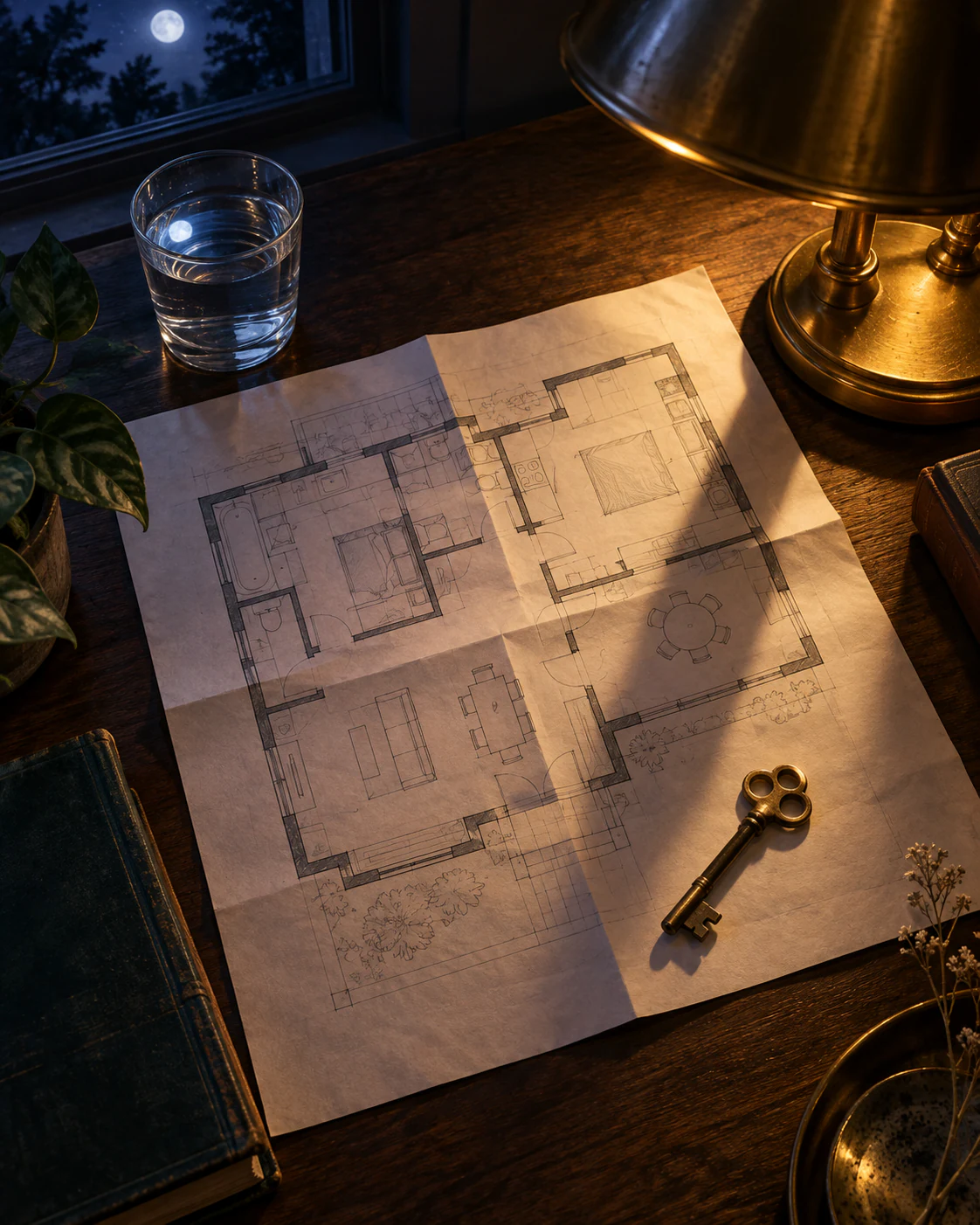
Then sketch the route. A line is enough: entrance, corridor, room, exit. Mark the point where the feeling changed. Where you cannot remember a connection, leave a gap. A gap is more useful than an invented staircase.
Add one sentence about the question in your waking life: a new role, a shared home, a family responsibility come back, the old question of where you belong. Then choose one question the scene itself raises, such as "Why did I refuse a room I wanted?" or "What changed when the door opened?" A precise question receives a precise reading.
When the same house returns
Compare relationships before furnishings. Were you a visitor last time and a resident this time? Was the room locked, then open? Did the person guiding you disappear? Did you finally leave without searching for an exit?
Take three accounts from three nights: "I waited outside." "I was shown around." "I began arranging a room." Read in order, they carry the dreamer from the doorstep into the house. A place is being made ready, and the dreamer is taking it.
If the building stays the same and your feeling changes, the change is the message: a house that once frightened you and now brings peace has spoken across the nights. A house that keeps coming back becomes a letter in your own dream alphabet, and when the return itself is the question, the article on recurring dreams reads the series.
Questions readers ask
What does it mean to dream of a house I have never seen?
It raises the question of your relationship to a place. A welcomed guest, an uncertain owner and someone searching for the way out are having three different dreams, and the reading begins from yours.
Do hidden rooms always represent hidden parts of myself?
Sometimes. A hidden room also speaks of responsibility, privacy, belonging or a relationship, and three details say which: whether you were allowed in, what the room held, and how you met it.
Does a beautiful house mean money is coming?
The reading follows what the beauty let you feel or do. A beautiful house that welcomes you and gives you a room speaks of good arriving, provision among it; one you admire from the doorway and cannot enter shows something seen and not yet yours.
Can an unfamiliar house be a spiritual invitation?
Yes. A house that receives you in peace, lit and prepared, with a place kept for you, and leaves that peace in you on waking, carries the marks of glad tidings, the first of the three kinds the Prophet named. The room you were led to shows what the invitation concerns.
What if I remember only the doorway?
Then the doorway is the dream. Were you approaching, entering, refusing or leaving? Set the fragment down as it is and leave the rest of the house unbuilt: a threshold on its own still speaks, of a beginning, a refusal or a leaving.
Should I act at once on a house dream?
Read the whole dream first: the route, the turn and the feeling it left at the end. When those agree, the step the dream points to is taken with a clear heart.
Bring the house, and the question it left
The strongest detail is often small: a chair you could not use, a doorway you did not cross, a room that was yours before you recognised it. It is read inside the whole account, where it belongs.
Your dream has its own architecture. A dream interpretation with Luxarion takes the door, the room and the feeling that stayed with you, and reads what the house is saying about the threshold you are standing at now.
You do not need the house's address. Start with the moment you knew where you stood inside it.
The library teaches the craft. A reading applies it to you.
Get your personal reading