
The Bird, the Ladder, the Key: Your Own Dream Alphabet
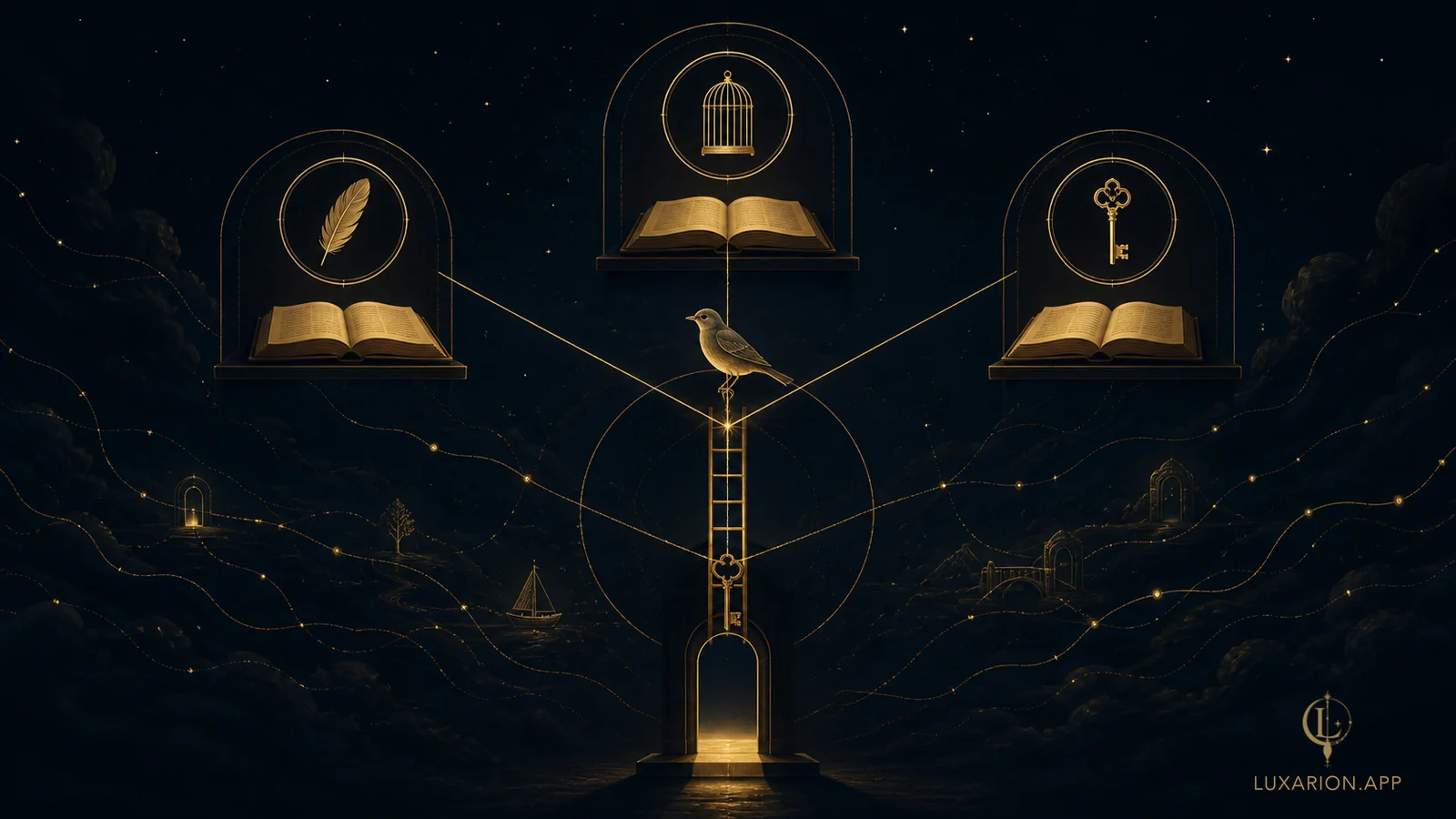
Three dictionaries give three verdicts on the same symbol. That is not a flaw in the art — it is its first lesson, and here is how to build the entry yourself.
Open three dream dictionaries to the same word and you will get three verdicts. The bird is news. The bird is the soul. The bird is a rival.
Beginners take this as proof that the whole art is arbitrary. Practitioners take it as the art's first lesson, and every serious lineage arrived at it independently: the dictionary was never meant to be the last word, because a symbol's true entry is written in the dreamer.
Which raises the practical question this article exists to answer. If the entry is written in you, how do you read it? Not in principle — in practice, this week, with a notebook and forty minutes.
What follows is the method: what the old masters actually did instead of consulting lists, why the same image genuinely means opposite things to two people, the five questions that decode any symbol, a four-week practice that builds your own lexicon, and the specific mistakes that make people abandon this halfway.
What the old masters actually did
The lineages agree on method even where their symbol lists diverge, and that agreement is the strongest evidence we have that the method is right.
Artemidorus, whose second-century Oneirocritica remains the oldest surviving professional manual, sorted every interpretation by the dreamer's trade, status and habits. He says so explicitly and organises whole books around it: the same sea that blesses a sailor's dream burdens a farmer's. He was not being cautious. He had collected thousands of cases and their outcomes, and the readings would not hold still — so he built the variability into the structure of the work itself.
The Arabic tradition institutionalised the same instinct from a different direction. The method attached to Ibn Sirin — which underwrites the great medieval collections — holds that a figure in a dream most often stands not for itself but for an attribute, a role or a season the dreamer associates with it. The interpreter therefore asks about you before your dream. The snake in a herdsman's night is not the snake in a scholar's.
The Persian and Turkish commentaries add the same move under a different vocabulary, sorting readings by the dreamer's station and season of life.
Four traditions, largely without contact, one first principle. That is not a coincidence and it is not a hedge. It is what happens when four groups of people spend centuries actually testing readings against outcomes: they all discover that half the text is the dreamer. We open the full method in how the old interpreters actually worked; this article is the part you do yourself.
Why the same image genuinely means opposite things
This is worth making concrete, because stated abstractly it sounds like an excuse for vagueness. It is not. It is an observation about how symbols acquire meaning at all.
Consider a ladder. To someone who spent a decade climbing an institutional hierarchy, a ladder is ambition, and dreaming of one is about status. To someone who fell from one at work, it is danger. To someone whose father was a builder, it is that father. To someone claustrophobic in their current life, it is escape. All four readings are correct, and no dictionary can arbitrate between them, because the arbitration happens in a life, not in a lexicon.
Consider a key. Access for one dreamer, responsibility for another, a specific lost apartment for a third. The image is the same; the entry differs completely.
Consider a bird. Freedom in one biography, fragility in another, a grandmother's kept canary in a third — and in that third case, the bird in a dream is never about freedom and always about that grandmother, no matter what any list says.
Here is the underlying principle, which the traditions state in their own terms and which is not controversial: a symbol is a compressed memory. It carries what you have loaded into it. Two people who have loaded a ladder with different histories are not looking at the same symbol at all; they are looking at two different objects that happen to share a shape.
Which means the dictionary is not wrong. It is a record of what images have commonly meant, aggregated across many dreamers — genuinely useful as a starting point, and genuinely incapable of finishing the job for any individual. Using one as a final authority is like reading the average of a population and expecting it to describe your neighbour.
The five questions that decode any symbol
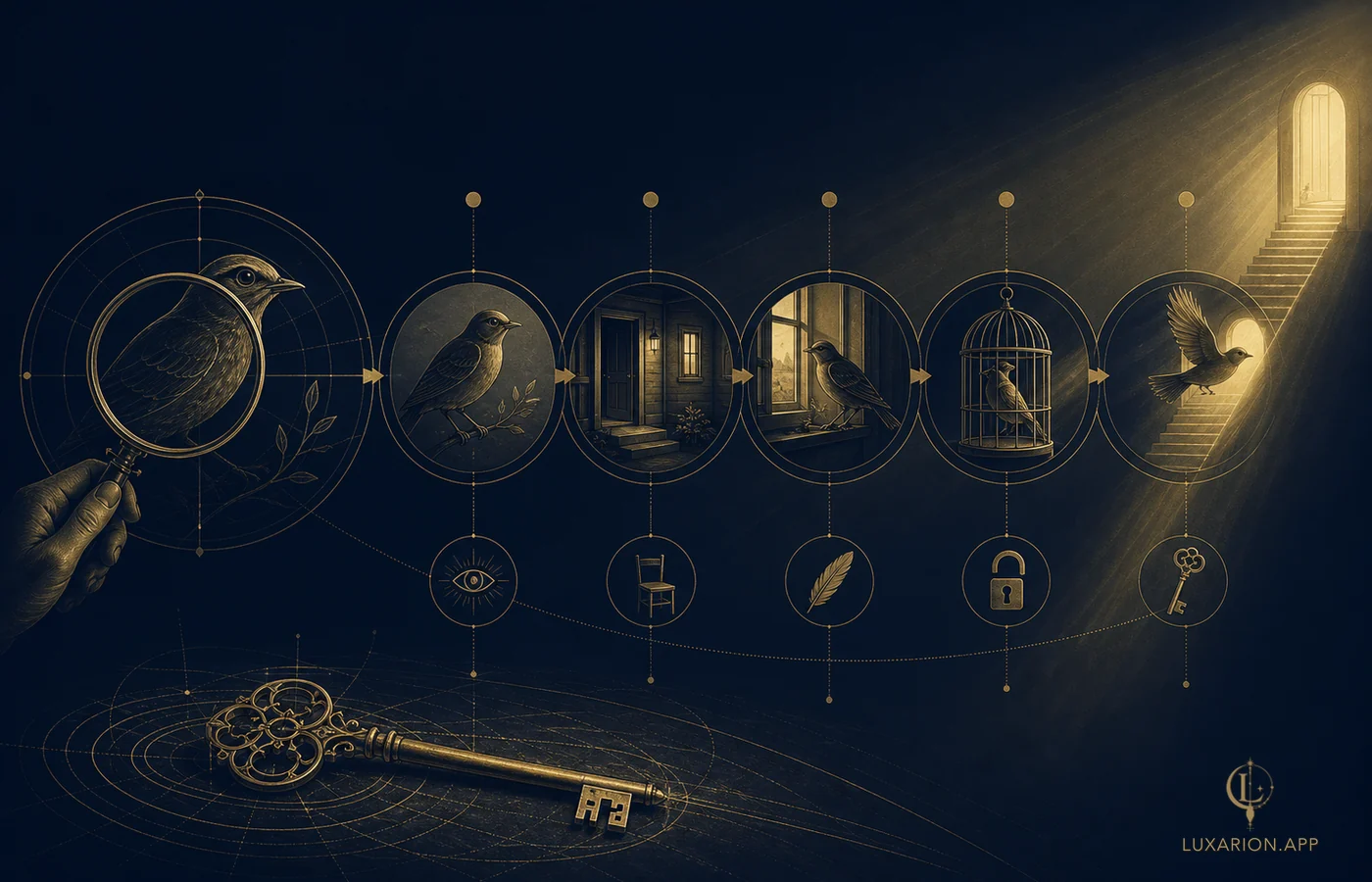
This is the core of the method and it takes about ten minutes per symbol. Take one image from a recent dream and work through these in order. The order matters — each question is designed to be answerable only after the previous one.
1. What is it, precisely? Not "a bird" — which bird. Not "a house" — whose house, which room, what year. Almost everyone reports dreams in generic nouns and the generic noun is where the meaning gets lost. Push until the image is specific enough to draw. Most of the reading is recovered in this question alone.
2. Where have you met it awake? The first real memory that surfaces, not the most impressive one. If a staircase brings up your grandmother's building, that is the entry, even if a dictionary would have said "ascent". Trust the first association over the elegant one; the elegant one is usually assembled after the fact.
3. What was it doing, and what were you doing? A bird flying, a bird trapped and a bird dead are three different symbols. And your position matters as much: watching, holding, chasing, being watched. Most people record the object and forget their own posture, which is half the sentence.
4. What did you feel — precisely? Not "bad". Dread, shame, urgency, tenderness, relief, embarrassment. The classical traditions rank the dreamer's state above the images, and rightly: the same scene in calm and in terror is two dreams. The feeling is also the most reliable part of a dream, because it survives waking better than the plot does.
5. What in your life right now has that exact shape? Not that theme — that shape. If the image was "a locked door I had the key to but didn't use", look for the thing you have the means to open and haven't. This question fails if you rush the first four and works remarkably well if you don't.
Write the answers. Do not do this in your head. The whole point of the practice is producing a record you can consult later, and a memory of having thought about it carefully is not a record.
Building your lexicon: four weeks
The five questions decode one symbol. A lexicon is what you get when you do it repeatedly, and it is the thing that actually changes how you read your own dreams.
Week one — collect, do not interpret. Every morning, seven minutes, before the day overwrites the material: the images, the setting, your state, the ending. Interpreting this early biases the record — you begin writing down the version you expect rather than the one you had. Just collect.
Week two — start the index. Take the images that appeared more than once and give each a page. On the page: the five questions, answered. You will typically have four to six recurring images after a week, and that is enough to start.
Week three — test against the record. Go back through your notes and check whether the entry you wrote holds up. Did "water" mean the same thing on the fourth appearance as on the first? If not, the entry needs splitting: you may have two symbols wearing one shape. This is the week where the lexicon stops being guesswork.
Week four — read a new dream with it. Take a fresh dream and read it against your own entries before consulting anything external. This is the test of the whole exercise, and most people find their own lexicon outperforms any list — not because the lists are bad but because yours is fitted to you.
After a month you will have something no dictionary can give you: a small, verified, personal vocabulary. It will be short — twenty entries is a lot — and it will do more work than two hundred generic ones.
What a month of records reveals
Three things emerge from a sustained record that no single dream can show, and they surprise nearly everyone.
Dreams cluster. Look at the calendar and you will find they bunch in particular weeks. Looking at what happened in those weeks is usually the answer — more reliably than any symbol work. This is the single highest-yield observation in the whole practice and it is invisible without a record.
You have private images. Everyone has images that recur for them and almost nobody else — a specific house, a specific road, a specific missing thing. These are never in any dictionary and they say more about you than every generic entry combined. Your lexicon is mostly made of these.
The proportion of frightening dreams drops. Not because the interpretation changed but because writing interrupts rumination. An image that has been recorded stops circling in the head all day — which is the practical version of the classical instruction not to dwell on frightening dreams, and it works for the reason the tradition gave: attention is what keeps that category alive.
Modern content-analysis work supports the general shape of this. The coded corpora begun by Calvin Hall — tens of thousands of dream reports classified rather than theorised about — found that dream content tracks waking preoccupation closely, and that themes begin and end with life circumstances. Which is exactly what a personal record shows you, in the one sample you actually care about.
The images almost everyone shares
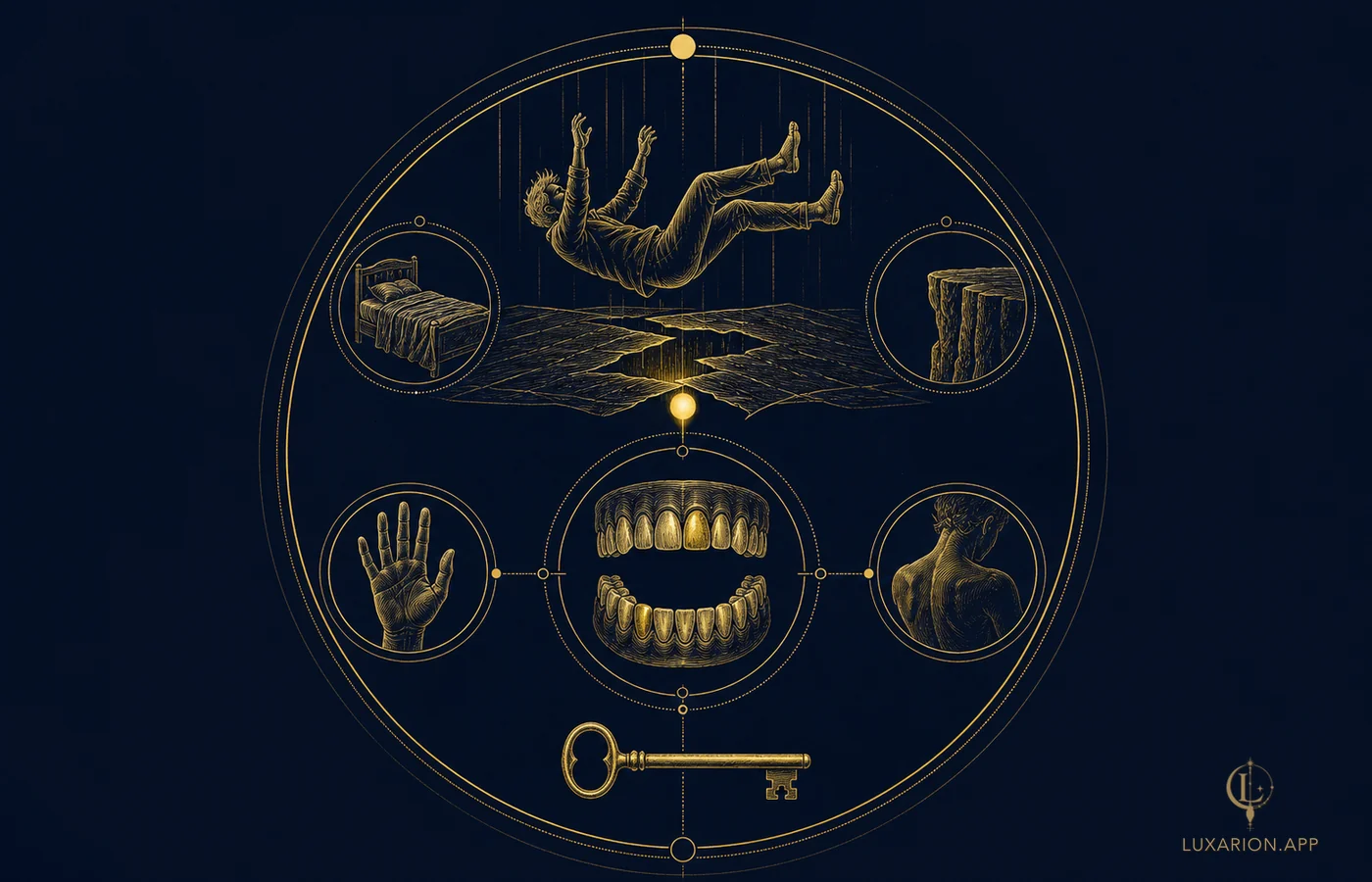
A fair objection at this point: if every entry is personal, why do the great collections exist at all, and why do certain images turn up in nearly every corpus ever assembled?
Because a handful of images sit on experiences that essentially all humans have, and those genuinely do carry a shared core. The personal entry then sits on top of the shared one rather than replacing it. Knowing which is which saves a great deal of confusion.
Falling. Universal, and tied to a real physiological event at sleep onset that almost everyone has felt. The shared core is loss of support. What is personal is what the support was.
Teeth. One of the most cross-culturally consistent images in the entire literature, and one of the most misread. The shared core concerns exposure and the parts of the self that are visible to others. The personal entry names which exposure. We open the whole subject in what the teeth actually carry.
Being unprepared. The exam, the stage, the missing luggage. The shared core is being measured by a standard you did not set. Personal: who is doing the measuring.
Water. Perhaps the most heavily loaded image in every tradition, precisely because water does so many things — it cleans, drowns, sustains and hides. Here the shared core is thin and the personal entry does nearly all the work, which is why dictionary entries for water are so long and so useless.
The practical rule: where an image sits on a universal human experience, start with the shared core and let your entry specify it. Where it does not — a particular house, a particular animal, a particular object — go straight to the five questions and ignore the lists entirely.
What to do when nothing comes
You will hit a symbol that returns a blank. The image is clear, you run the five questions, and question two produces nothing at all. This is common and it is not failure.
Three moves, in order of usefulness.
Describe it to someone who was not there. Out loud, in full sentences. The act of describing forces the specificity that question one demands, and the association very often surfaces mid-sentence. This works better than any amount of silent concentration and it is the single most reliable unblocking move.
Ask what is missing rather than what is present. Dreams are frequently characterised by an absence — a person who should be in that setting and is not, an object that belongs there and is gone. The absence is often the whole entry, and it is invisible if you only interrogate what appeared.
Leave it and come back. Genuinely. Write the image on its page, answer what you can, and let it sit. Entries frequently complete themselves weeks later when the same image returns in a slightly different form and the second version explains the first. A lexicon is built over months, not in an afternoon, and an unfinished page is a normal state rather than a stalled one.
What not to do: reach for a dictionary to fill the gap. An entry borrowed to relieve the discomfort of not knowing will sit there looking authoritative and quietly corrupt every later reading that touches it. A blank page is more useful than a wrong one.
Five ways people get this wrong
These are the failure modes that make people abandon the practice, and all five are avoidable.
Interpreting while collecting. The most common. If you decide what a dream means as you write it, you will record the interpretation and lose the dream. Collect for a week before you interpret anything.
Choosing the impressive association over the true one. Question two produces a first answer and then, a few seconds later, a better-sounding one. The first is nearly always right. The second is your literary taste, not your material.
Treating the entry as permanent. Symbols shift. The house that meant safety at twenty-five may mean confinement at forty. Re-test entries annually; a lexicon is a living document.
Reading other people out of your dreams. Your dream is made of your material. It does not carry news about a third party's intentions, health or future, and every serious tradition draws that line firmly. When a person appears in your dream, the entry you are writing is about what they carry for you.
Skipping the state question. People record what they saw and forget how they felt, then wonder why the entries are thin. The feeling is the most stable and most diagnostic element in the entire dream. If you only have time for one question, use question four.
When the dictionary is still worth opening
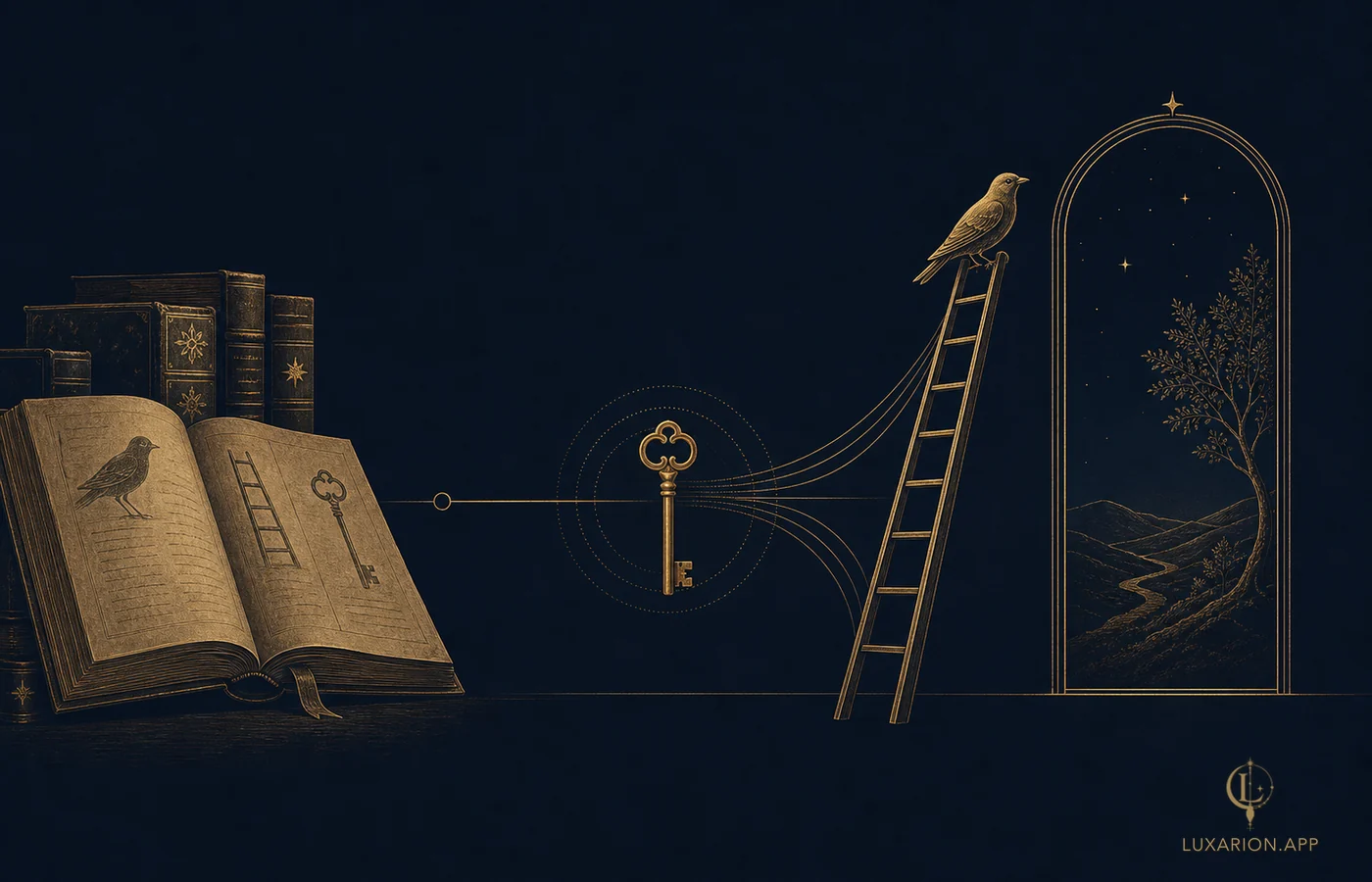
None of this makes the collections useless, and it would be a mistake to read this article as an argument against them. It is an argument about the order of operations.
The old lists are worth consulting after you have answered the five questions, for two reasons. First, they occasionally surface an association you had forgotten you held — a traditional reading will sometimes name exactly the thing you could not, and you will recognise it immediately, which is itself the test. Second, they preserve the accumulated judgement of people who saw an enormous number of cases. Artemidorus was not theorising; he was keeping a corrected field record across thousands of dreamers. That is real knowledge, and it is worth having.
What the lists cannot do is finish the reading, because the finishing step requires a life they know nothing about. Use them the way you would use any body of accumulated craft knowledge: as informed suggestion, expected to be fitted rather than merely applied.
The classical interpreters used them exactly this way. They knew the material cold and still asked the dreamer six questions first. The knowing and the asking were never alternatives.
Three entries, worked
To make this concrete, here are three symbols run through the five questions — not to give you the answers, but to show what a finished entry looks like.
Water. Precisely: a still lake at dusk, not moving. Met awake: a specific summer, a specific silence between two people. Doing: nothing; you were standing at the edge, not entering. Felt: not fear — a very particular reluctance. Same shape now: a conversation you keep approaching and not starting. Entry: water (still) = the thing I stand at the edge of. Note that this entry would be wrong for someone who swims daily.
Stairs. Precisely: narrow, interior, going down. Met awake: the basement of a childhood house. Doing: descending, deliberately. Felt: calm, focused. Same shape now: a piece of work that requires going back into old material. Entry: stairs (down) = returning on purpose. Note that "down" in a dictionary usually reads as decline; here it is nothing of the sort, and the record is what proves it.
A door left open. Precisely: your own front door, at night, no one there. Met awake: a period of living alone. Doing: noticing it, not closing it. Felt: exposed, but not frightened. Same shape now: something you have told people about that you cannot un-tell. Entry: open door = the disclosure I cannot take back.
Notice what all three have in common: the entry is a sentence about a life, not a word. That is what distinguishes a personal lexicon from a dictionary, and it is why it works.
Start tonight
Concretely, in order.
Put paper next to the bed. Not a phone — a phone opens onto everything else and the dream evaporates while you are dismissing notifications.
Write for seven minutes before you move. Images, setting, your state, the ending. Do not organise it. Do not interpret it.
Do not look anything up for a week. This is the discipline that makes the rest work.
At the end of the week, pick your most repeated image and give it a page. Five questions. One entry.
Keep going for a month. The clustering, the private images and the drop in frightening dreams all require about four weeks to become visible. Almost nobody sees them at two.
Your alphabet, not anyone else's
The reason this article exists is that the most common question about dreams — "what does X mean?" — is very slightly the wrong question, and the right one is nearly as short: what does X mean to you?
That is not a dodge. It is the position every serious tradition reached independently, after centuries of actually testing readings against outcomes. The bird is not news, or the soul, or a rival. The bird is whatever you have spent your life loading into birds, and once you know what that is, the reading becomes obvious in a way that no list could have made it.
The work is small. Seven minutes a morning, a notebook, four weeks. And the thing you end up with is genuinely yours — a short vocabulary, verified against your own record, that will read your dreams better in a year than any dictionary ever will.
If you want a second pair of eyes on it — someone who knows the classical material and will ask you the questions in the right order rather than hand you a symbol list — that is exactly what our interpreters do. You can bring your record to a dream interpretation session, and the record makes the session substantially more useful, because most of the first half is normally spent building what you will already have. And if a particular dream keeps coming back while you are doing this, that has its own reading, which we open in why the same letter keeps arriving.
The library teaches the craft. A reading applies it to you.
Get your personal reading