

Love in the Hand: What the Heart Line and Union Lines Show
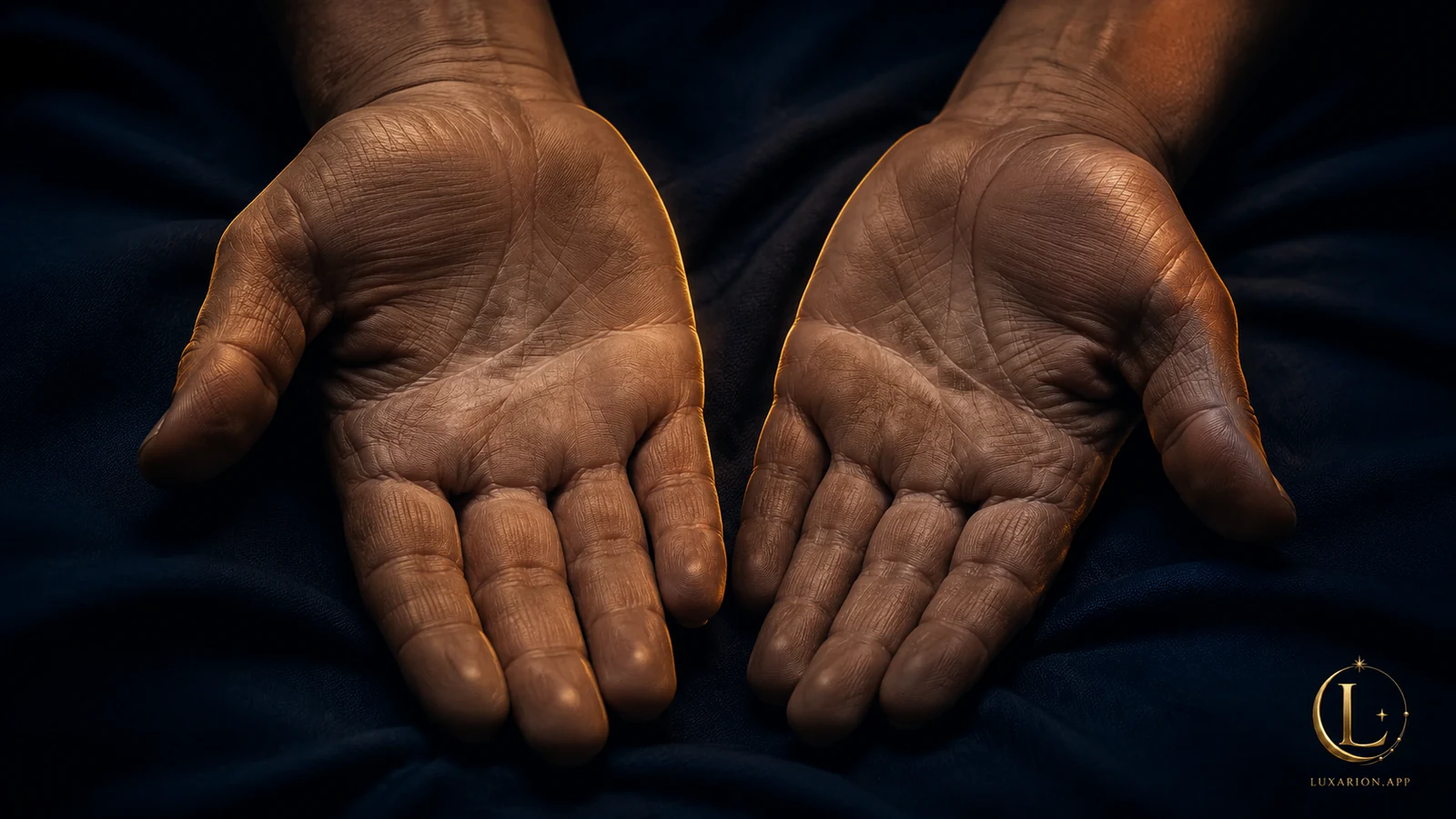
The small lines below your little finger mark the deep bonds of a life. Read with the heart line, they show how you love and where love is heading.
Search for marriage lines and within one page you will be told to hold your hand sideways, look at the small horizontal lines on the edge below the little finger, and count them. Two lines, two great loves. A line that forks, a separation. A line that runs long and unbroken, a marriage that lasts.
It is a satisfying idea, and the tradition reads those lines for something deeper.
Those lines have a name in the older literature — union lines, or attachment lines — and what they were held to show is the number and quality of the deep attachments a person forms, which is a different claim entirely. Not weddings. Not a count of ceremonies. The bonds that mark someone. A person with three of them may have married once and been shaped three times; a person with one may have married twice.
The wedding-count version is a twentieth-century simplification, and it has done real damage: it points people at ceremonies when the hand is showing them bonds, and it leaves them thinking the craft has missed when it has not. The hand was never in the business of counting weddings; what it reads is deeper.
This article is that: what a hand genuinely reads about love, where in the hand it is read, and where it shows love heading.
The heart line is the instrument
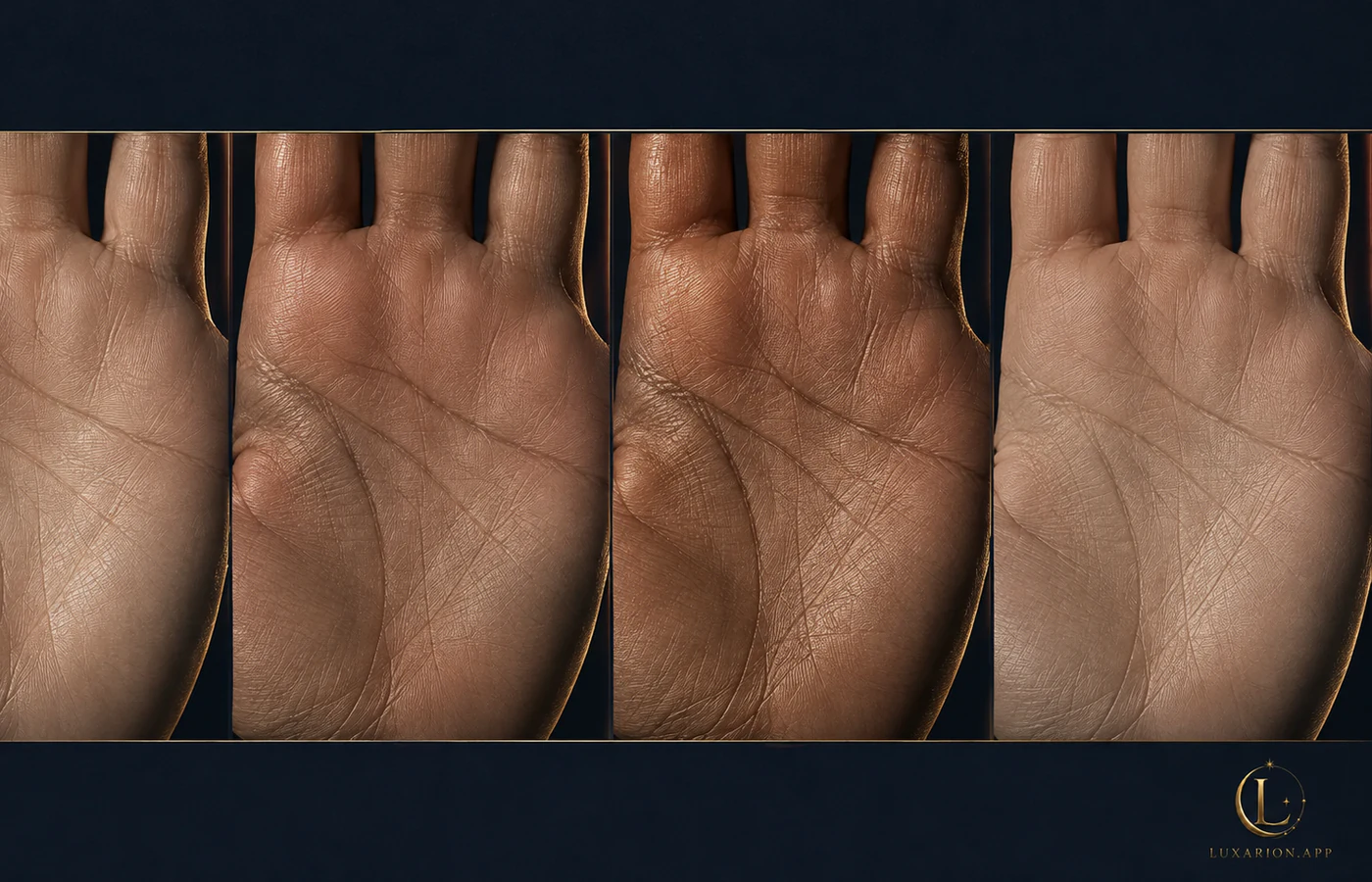
If you take one thing from this, take this: the union lines are a footnote, and the heart line is the text.
It is the uppermost of the three major lines, running across the palm beneath the fingers, and in the classical literature it is where relational reading is done. Not because it is longer or more visible, but because it has more legible variation: where it starts, how it curves, where it ends, how deep it runs, and what branches from it.
Four readings, and the tradition is consistent about them across sources that had no contact.
Where it ends. A heart line reaching up toward the index finger is read as an idealising attachment — high standards, a tendency to see the beloved as better than they are, disappointment when the picture cracks. Ending under the middle finger is read as the more self-contained temperament: attachment on one's own terms. Ending between the two is read as the balance, and it is the commonest.
How it curves. A line that curves upward is read as expressive attachment — the person who says it, shows it, and needs it said back. A line that runs straight across is read as the more reserved kind, which the older texts are careful not to call cold: they call it contained, and note that it often appears in people whose love is shown in what they do rather than what they announce.
How deep it runs. A single clear line is read as consistency; a chained or feathered line, as attachment that comes in many small intensities rather than one deep one. Neither is better and the sources do not pretend otherwise.
Where it starts. A high beginning under the little finger is read as a person for whom relationships start early and matter loudly. Lower, and the reading shifts to someone who arrives at attachment slowly and holds it longer.
These four together give you something with texture — a description of how a person attaches — and none of it requires counting anything.
What the union lines were always read for
It is worth being precise about where the over-reading came from, because the history is instructive.
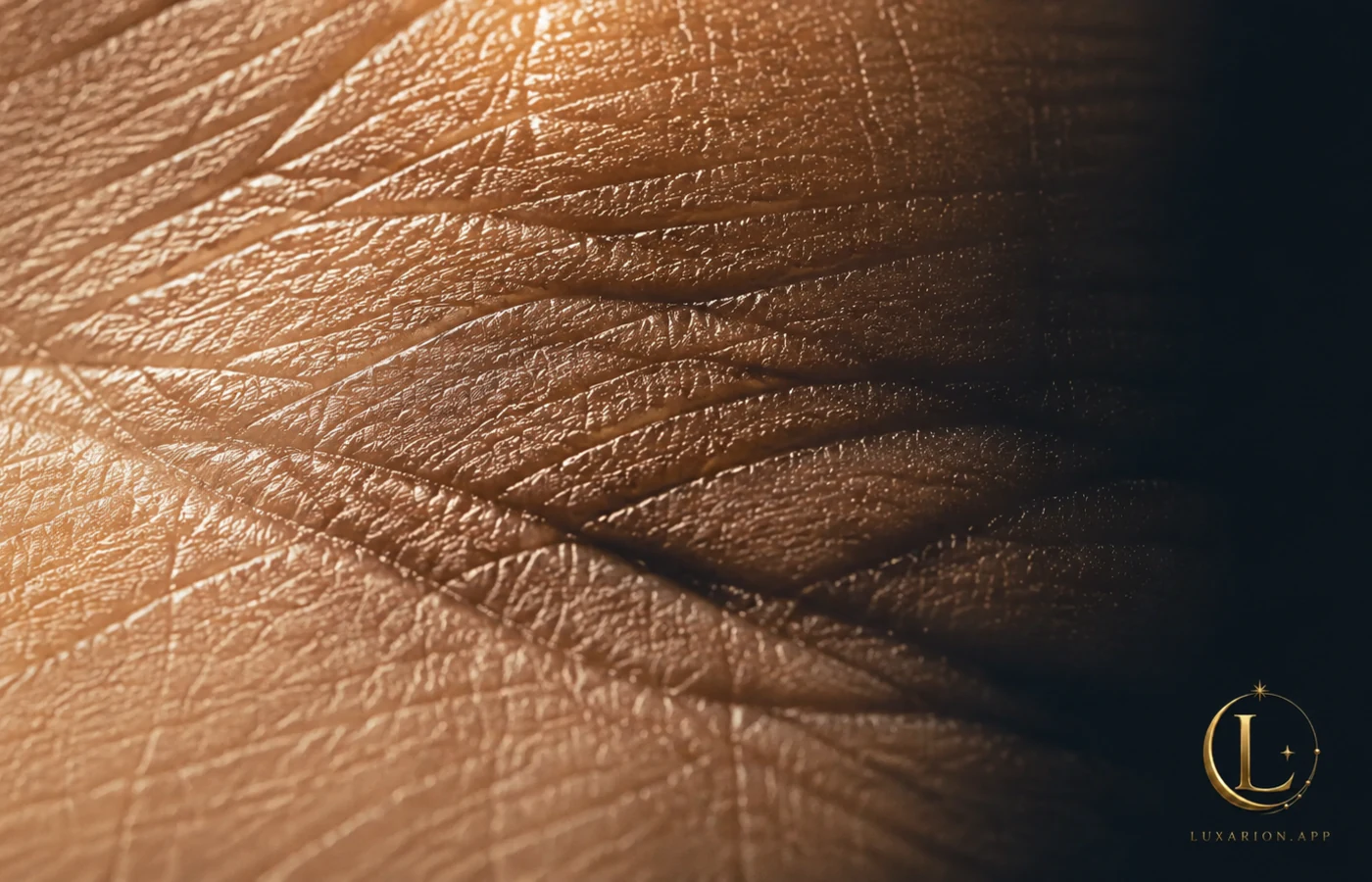
The older Indian and European traditions both record small marks at the edge of the hand and both associate them with unions, but neither reads them as a tally. What they read is quality: a clear line as a bond that held, a faint one as an attachment that did not take root, a line with a fork as a bond that divided, an island as a period of difficulty inside one.
The tally version appears in the popular literature of the last century, at the point where palmistry was being marketed as a parlour skill with fast, dramatic outputs. Counting is quick to teach and quick to demonstrate. A reading about how someone attaches is neither.
And the union marks are among the finer lines of the hand, which the tradition itself holds to change over years: new bonds mark the hand, and old ones fade. A reading tied to a fixed count misses that the hand is still being written — which is precisely why the article on how hands change is the companion to this one.
The reading the tradition already had is the one to use: read the marks for their clarity, depth and position, alongside the heart line.
The four things a hand actually reads about love
Here is the working frame, and it is what a practitioner is doing when they take your hand and turn it over.
1. How you attach. The heart line, as above. This is the primary reading and the one that carries most of the session.
2. What you have appetite for. The mount at the base of the thumb, traditionally the mount of Venus, read for warmth, physicality and vitality. A full, firm mount is read as a strong appetite for closeness and comfort; a flat one as a temperament that needs less and is easily overwhelmed by more. This is not a moral scale in the sources; it is a description of a set point.
3. How you express it. The thumb and the fingers, read together. A flexible thumb is read as adaptable and accommodating; a stiff one as a person who does not bend easily but who means what they commit to. The relative length of the fingers is read for whether affection is expressed in words, in doing, or in presence.
4. What has marked you, and what is forming. Interruptions, islands and changes in the heart line, and the depth of the union marks. These are read for what has already marked the person and — in the fine lines forming now — for what is coming; it is the part that changes most over a life.
Timing enters through the hand's own measures — the position of the union marks between the heart line and the base of the little finger, the phases along the heart line itself — and a practitioner gives it as a season of life. What a serious practitioner does not offer is a name, or a calendar date dressed as certainty.
The other marks people ask about
Three more features come up in almost every session, and all three are routinely over-claimed, so it is worth setting out what the older sources actually do with them.
The children lines. The fine vertical marks rising from the union lines are traditionally read as attachments to children — and, in the older sources, not only to one's own. They are fine lines, and what they are read for is orientation: whether a person's affections tend to extend to those they take responsibility for.
The girdle of Venus. A curved line arcing above the heart line, present in a minority of hands. The Victorian literature treated it as a warning about excessive sensitivity, which says more about the Victorians than about the mark. The steadier modern reading, and the one closer to the older Indian sources, is heightened responsiveness — a person who feels the temperature of a room quickly. That is an asset in some lives and exhausting in others, and the reading says so.
The ring of Solomon. A small arc at the base of the index finger, read as an aptitude for understanding other people. It is the one mark in this family that practitioners tend to mention with pleasure, and it appears often on the hands of people who end up doing work that involves listening.
The pattern across all three is the same one this article keeps returning to. Where a mark is read as a disposition and a direction, the reading is rich. Where it is reduced to a bare tally, it has been flattened.
The finger that carries the ring
A short digression that is genuinely charming and explains a habit you follow without thinking about it.
The wedding ring goes on the fourth finger of the left hand across much of Europe because of an old belief that a vein ran directly from that finger to the heart. It even had a name: the vena amoris, the vein of love. Roman writers record the idea, and it travelled through medieval Europe attached to the ceremony rather than to anatomy.
The vein is a Roman teaching rather than a surgeon's finding, and what it did is the point: it gave a gesture a reason, it fixed a custom that has now outlived its explanation by many centuries, and it did so by attaching the largest of human commitments to a specific point on the ring finger.
That is exactly what palmistry does, and this small history is the clearest available illustration of it: the hand is the part of the body where the traditions have always chosen to locate what a person is committed to. It is what we give, what we hold, what we shake on, what we put a ring on. The claim underneath the whole craft is that the hand carries what a person is given and what they make of it — inheritance and destiny, written where the body meets the world.
What a reading of this kind actually feels like
Worth describing, because the expectation set by the counting version leads people to the wrong kind of session.
A practitioner takes both hands, looks at them for longer than feels comfortable, and then asks a question. That is the point at which most people realise the reading is going to be about them rather than about a list. The question is usually about the heart line — does affection tend to be something you say, or something you do? — and the reading proceeds from your answer.
The reason it works that way is not evasion. It is that the same line reads differently depending on a fact only you have: whether the reserved shape is a temperament you are comfortable in, or one you have been trying to work against for years. The hand gives the shape; the person supplies the situation; the reading is made between them.
What you leave with is a description of how you love, and an indication of where it is tending — usually a sentence about how you attach that you recognise immediately and have never said out loud. People report that as the memorable part far more often than any specific claim, and the practitioners know it.
Both hands, and the question they answer together
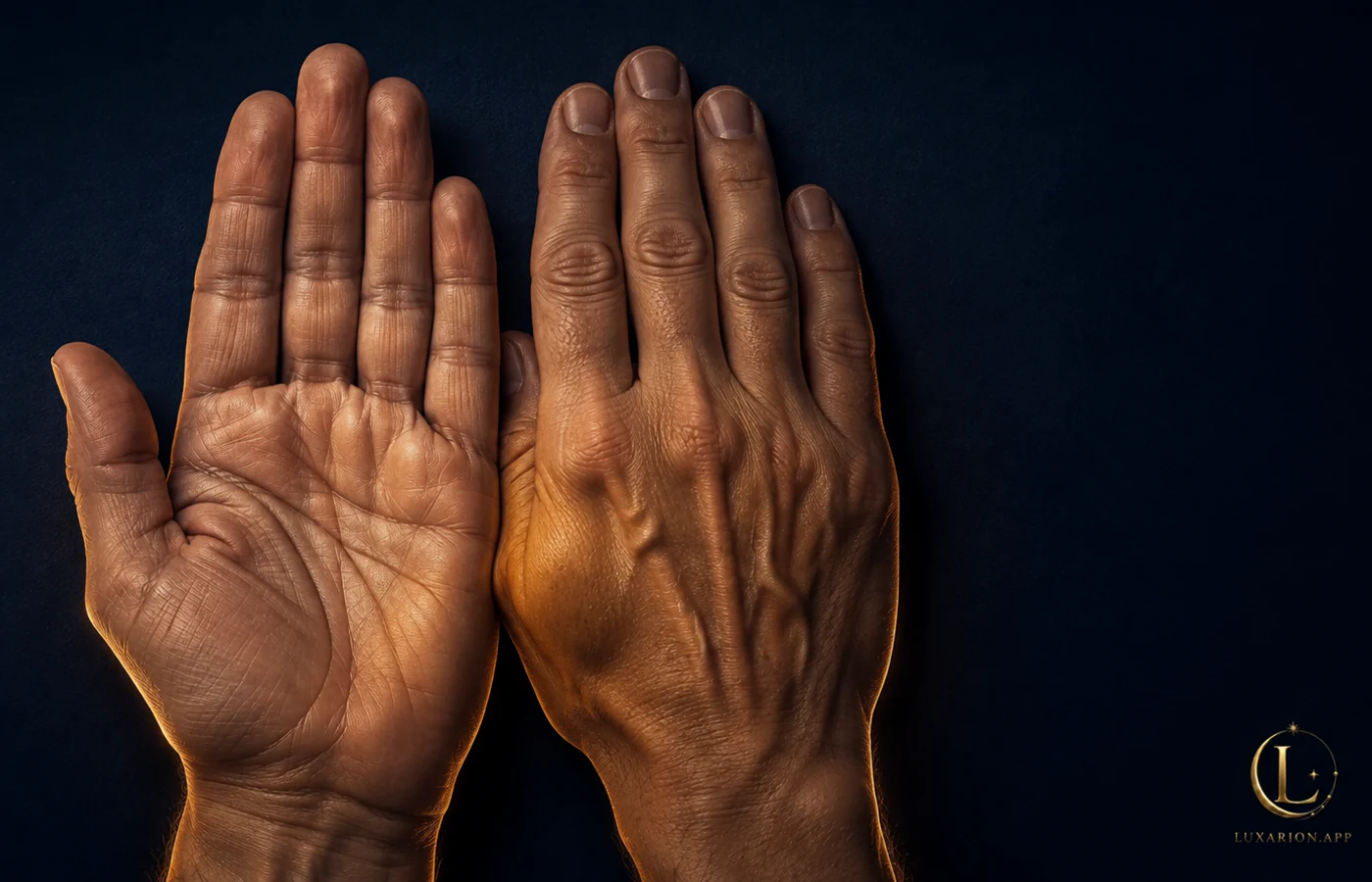
The two-hand rule is set out in full in the complete guide to reading a hand, and it matters here in one specific way that is worth stating on its own.
The convention is that one hand is read for what a person came with and the other for what they have made. Applied to love, that produces a genuinely revealing comparison: is your heart line the same shape in both?
Where the two agree, the reading is straightforward — a person whose way of attaching has been stable. Where they differ, and they often do, the difference is the reading. A heart line more curved in the active hand than the passive one is read as someone who has learned to express more than they were built to. The reverse is read as someone who has learned to hold back — and that reading, delivered gently, is one people tend to sit very still for.
That is the whole argument for looking at two hands rather than one, and it is why a reader who only glances at the one you offer is not doing the full thing.
What the hand records that a person forgets
One last observation, and it is the one that shows why the hand repays such close reading.
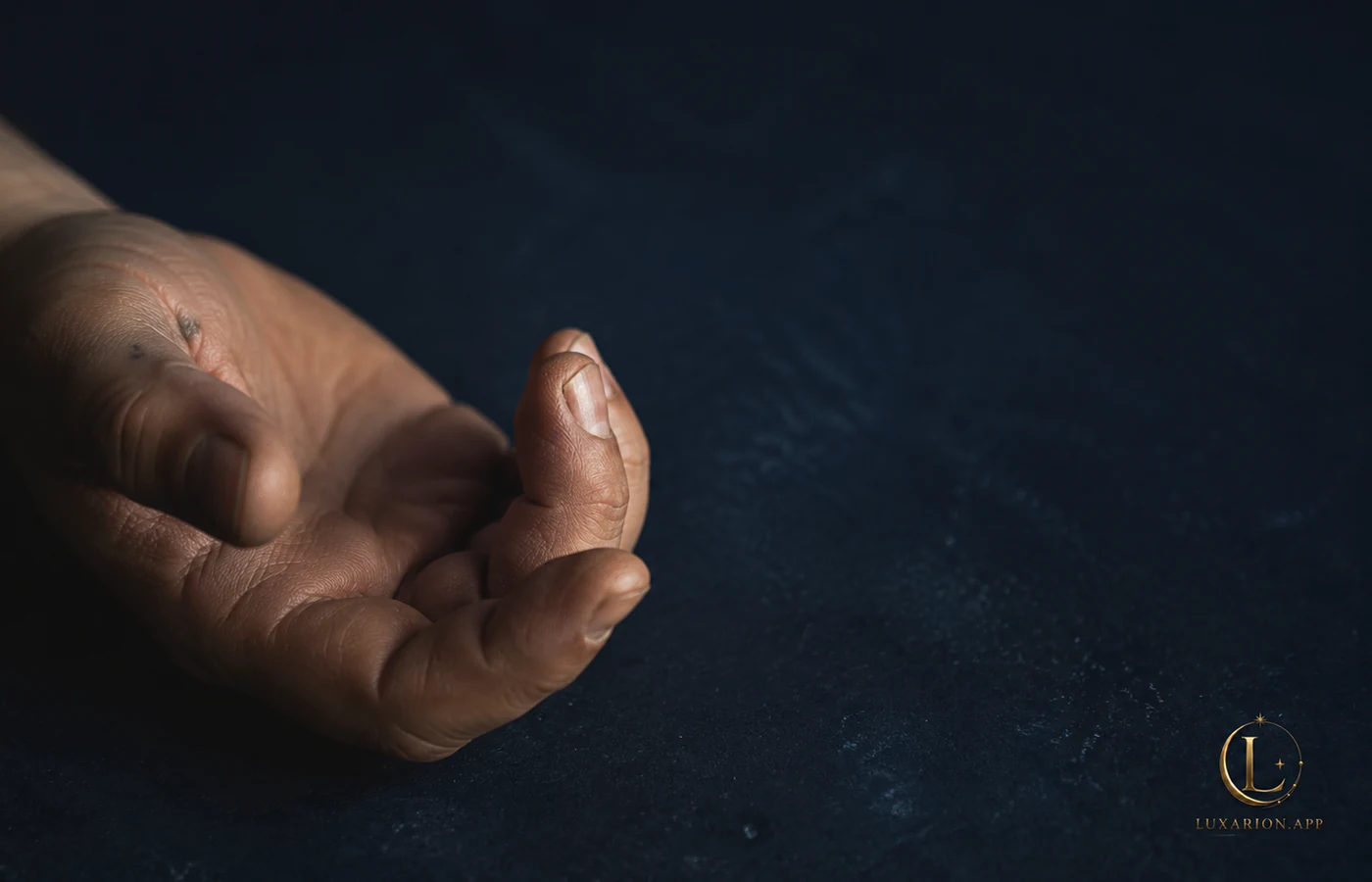
A hand carries a genuine record of a life, and — where the two hands part company — an indication of where that life is tending. The callus pattern tells you what someone does for hours a day. The flexibility of the joints tells you something about age and use. The way a hand rests when it is not being watched — open, closed, thumb tucked — is one of the most reliable pieces of unconscious signalling a person produces, and it is why practitioners look at how you put your hand down before they look at the lines on it.
Add the fact from the section above: some features are set before birth and never move, and others are written by living. A hand is therefore, quite literally, part inheritance and part biography.
And here is the part that matters for a reading about love specifically. People are unreliable narrators of their own attachments — we round our histories, we tell the version we have practised, and we edit out what did not fit. The hand does not do that. It holds the shape of how you have loved, whatever account you have practised, and that shape is often at odds with the story.
Which is why a good session so often turns at the moment the reader says something mild and the person goes quiet. The hand has spoken, in a register the person was not defending.
Where the craft comes from
Brief, because it explains why the same readings appear in places that never met.
Palmistry has two great streams. The Indian tradition, samudrika shastra, treats the hand as one chapter of a much larger science of bodily marks and is the older continuous line. The Western tradition passes through Greek and Latin writing on physiognomy, is absorbed into medieval and Renaissance European practice, and is systematised in the nineteenth century — Cheiro being the famous popular name and William Benham the more careful one.
The two streams agree across a distance neither crossed. Both place love in the upper transverse line. Both read the mount at the base of the thumb for vitality and warmth. Both distinguish the hand you were born with from the hand you have made. That agreement is the craft's own witness to itself.
The medical study of hands has, in the last century, arrived beside the tradition: the study of the ridges shows that some hand features form in the first months before birth and never change, while others record what a life has done — the distinction palmistry has always made.
Common questions
How many marriage lines do I have? A count is not the reading. Look at their clarity and depth alongside the heart line, and treat them as texture rather than as a number.
Can a palm reading tell me when I will meet someone? The hand carries timing in its own measures: the position of a union mark between the heart line and the base of the little finger is read for the period of life in which a deep bond forms, and a reader gives that as a season of life rather than a calendar date.
My heart line is broken. Is that bad? An interruption is read as a change rather than a wound — a point where the way you attach altered. Very often the person can name the year without prompting.
What does a long union mark mean? A clear union mark that runs well onto the mount below the little finger is read as a bond of long reach — one that shapes much of a life and is felt in every attachment after it. A short, clear one is a deep bond of a single season.
What if my two hands disagree? That is the most informative result available, and the section above is how it is read. Disagreement means development.
Does the hand say anything about a specific person? It speaks of the bonds that have marked you and the one that is forming — its depth, whether it holds, where it divides. To read the other person's side of a bond, a love consultation reads the bond itself, and a compatibility reading compares two charts.
Do the lines change? The major lines are stable in shape; the fine lines, including the union marks, genuinely change over years. That is the tradition's own position, not a modern concession.
Which hand should I look at? Both, always, and the comparison is the point. The full convention is in the guide.
Reading your own, and when to have it read
Start tonight with one hand under a good light and four observations rather than a count: where the heart line ends, whether it curves or runs straight, how deep it is, and whether it is one clear line or many fine ones. Write them down. Then do the other hand and note the differences.
Half an hour of that will tell you more than any list of line meanings, because you will have looked at the thing itself rather than at a diagram of somebody else's hand.
For the part that needs another person, a palm reading with Luxarion works from your own hands and your own account, and does what this article cannot: ask the question that turns a shape into a reading. And if what you are actually carrying is a question about one relationship rather than about how you attach in general, a love consultation reads that bond itself — what moves between you, and where it is heading.
If you want the whole craft rather than this one corner of it, the complete guide covers the four major lines, the mounts and the hand shapes, and the piece on how hands change is the argument underneath everything above about reading a hand forward as well as back.
The library teaches the craft. A reading applies it to you.
Get your personal reading