
Palm Reading: An Honest Guide to the Lines
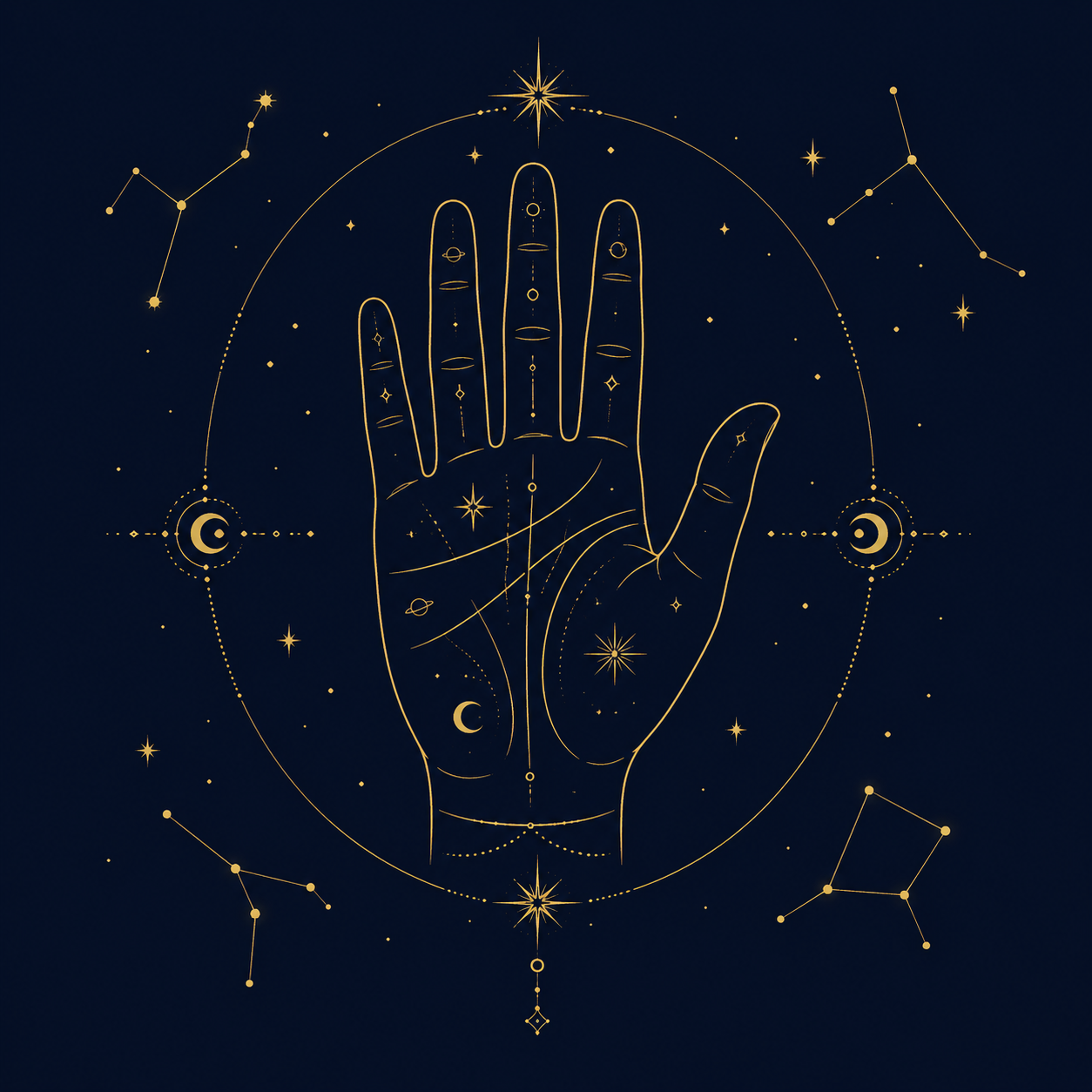
Four major lines, the mounts beneath them, and the one premise that separates honest palmistry from stage fortune-telling: the hand records tendencies, and hands change.
Palmistry has the worst reputation of the reading crafts and, oddly, the most honest premise. The stage version — lifespan promised from a crease — deserves the mockery it gets. The tradition underneath it, from Indian hasta samudrika through the Greeks to the Romani lineages of Europe, claims something humbler and stranger: the hand is a diary. It records how you have gripped, worked, hesitated, and held on — and, like a diary, it keeps being written. We have made that argument before in Hands Change; here is the vocabulary that goes with it.
The four major lines
The heart line, highest across the palm, is read for how feeling moves in you: a long curve toward the index finger was read as affection that leads; a straight, short line as feeling that follows thought. The head line below it carries style of mind — a line that plunges toward the wrist's mount of the Moon was the classical mark of imagination outrunning caution. The life line curves around the thumb, and here the tradition needs defending from its own reputation: it was never a ruler for lifespan. Its depth and sweep were read as vitality — the width of the arena your energy claims. And the fate line, when present (it often isn't, which itself was read), climbs the palm's center carrying questions of work and direction: where it begins, what crosses it, where it frays.
Beneath the lines: the mounts
The fleshy pads beneath the fingers — named for the planets, Venus at the thumb through Mercury under the little finger — were read as reservoirs: where your energy pools. A full mount of Venus was warmth and appetite for life; a pronounced Jupiter, ambition's seat. The mounts are the reason two palms with similar lines read differently — the same rivers crossing different countries.
Two hands, one argument
The full tradition always read both hands: the non-dominant as the inheritance — temperament as issued — and the dominant as the account of what you have done with it. The differences between your two palms are the most personal sentence in the whole reading, and the reason the craft's own logic rejects fatalism: if the hand were a verdict, the two would match.
Reading yours
You can trace your own four lines tonight, and it is worth doing — like learning the coffee symbol families, it changes what you notice. But self-reading has the usual defect: you will find what you fear. For the real thing, photograph both palms in daylight and have them read at Luxarion — the lines, the mounts, and the space between your two hands, read together, for you, with the tradition's one honest promise kept: tendencies, not sentences.
The library teaches the craft. A reading applies it to you.
Get your personal reading